
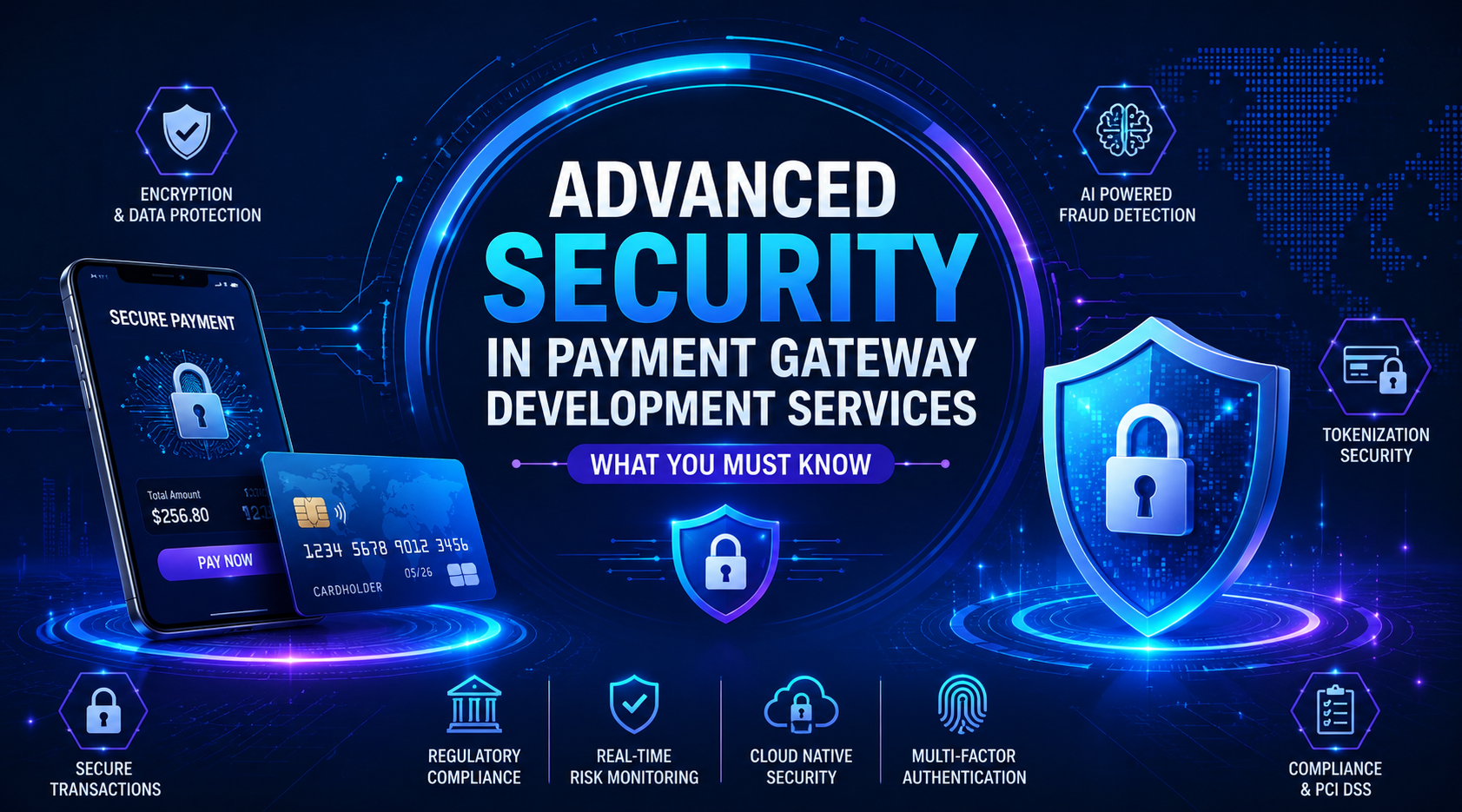
Every second, millions of dollars flow through digital payment systems, and lurking behind each transaction is a threat that never sleeps. Hackers, fraudsters, and cybercriminals are constantly evolving their tactics, targeting the most vulnerable points in the payment chain. If you are a business owner, a developer, or a decision-maker in the financial technology space, understanding the security architecture of payment gateways is no longer optional. It is survival. The rise of Payment Processing software solutions has completely transformed how businesses handle money, but with that transformation comes an enormous responsibility to protect sensitive financial data, customer trust, and business reputation at every level.
The Foundation of Payment Gateway Security: Why It Matters More Than Ever
Payment gateways are the digital bridges between a customer’s bank account and a merchant’s platform. They authorize transactions, communicate between financial institutions, and ensure that money moves from one place to another without error. But what most businesses fail to realize is that this bridge is also one of the most targeted attack surfaces in the entire digital economy. Cybercriminals know that payment gateways carry the highest value data, including credit card numbers, bank account details, personal identification information, and transaction histories.
The global cost of payment fraud exceeded 40 billion dollars in recent years, and the figure is climbing rapidly. Data breaches in the payment sector are not just financially devastating. They destroy brand credibility, invite legal consequences, and create lasting damage that no marketing budget can repair. For businesses operating at scale, a single security failure in a payment gateway can result in regulatory fines under frameworks like PCI DSS, GDPR, and regional financial compliance laws, all of which carry severe penalties.
Understanding what makes a payment gateway secure requires going beyond surface level encryption. It demands a deep dive into layered security models, real time fraud detection, tokenization strategies, and the governance frameworks that bind all of these elements together into a cohesive and defensible architecture.
Understanding PCI DSS Compliance as a Non Negotiable Standard
The Payment Card Industry Data Security Standard, known as PCI DSS, is the globally accepted framework that governs how payment systems should handle, store, and transmit cardholder data. Any business that processes card payments must adhere to this standard, and compliance is not a one time checkbox. It is an ongoing operational commitment.
PCI DSS compliance involves 12 core requirements spanning network security, access control, vulnerability management, and regular monitoring of all systems that handle cardholder data. Businesses must maintain firewalls, encrypt data transmissions over public networks, restrict access to cardholder data to the principle of least privilege, and regularly test their security systems through penetration testing and vulnerability scans.
What makes PCI DSS complex is that it must be applied uniformly across every component of the payment ecosystem. This includes third party integrations, cloud hosted services, mobile payment applications, and even the physical hardware used at point of sale terminals. Failing to secure even one node in this network creates a vulnerability that can be exploited. Payment gateway development services must be built on a PCI DSS architectural foundation, not as an afterthought added during a compliance audit.
Encryption and Tokenization: The Twin Pillars of Data Protection
Encryption and tokenization are two of the most powerful tools available in the security arsenal of any payment gateway. While both serve to protect sensitive data, they operate in fundamentally different ways and address distinct threat scenarios.
Encryption transforms readable data into an unreadable ciphertext using a cryptographic key. When a customer enters their credit card details on a checkout page, those details should be encrypted immediately using Transport Layer Security (TLS). This ensures that data in transit between the customer’s browser and the payment server cannot be intercepted and read by a third party. The latest standard, TLS 1.3, offers significant security improvements over its predecessors and should be the minimum accepted protocol for any modern payment gateway.
Tokenization, on the other hand, replaces sensitive card data with a unique identifier called a token. This token has no exploitable value on its own because it cannot be reverse engineered to reveal the original card data. When a merchant stores a token instead of an actual card number, they dramatically reduce the scope of their PCI DSS compliance obligations and minimize the damage that a data breach can cause. Even if an attacker gains access to a database full of tokens, they walk away with nothing usable.
Together, encryption and tokenization create a defense in depth strategy that protects data both in transit and at rest. Advanced payment gateway development services implement both of these mechanisms as standard practice, ensuring that sensitive financial data is never exposed at any point in the transaction lifecycle.
The Critical Role of Multi Factor Authentication in Securing Payment Systems
Authentication is the gatekeeper of every payment system. If an attacker can bypass authentication, no amount of downstream security can stop them. Multi factor authentication, or MFA, adds additional verification layers beyond the simple username and password combination, making unauthorized access exponentially more difficult.
In the context of payment gateways, MFA is essential at multiple access points. Merchant dashboards, administrative panels, API credentials, and customer accounts all represent potential entry points for attackers. Implementing MFA using a combination of something the user knows, such as a password, something the user has, such as a mobile device or hardware token, and something the user is, such as biometric verification, creates a formidable barrier against unauthorized access.
Adaptive authentication takes this concept even further by analyzing contextual signals such as device fingerprint, geographic location, time of access, and behavioral patterns to determine whether a login attempt is legitimate. If a merchant administrator typically logs in from a specific IP address in one country and suddenly attempts access from an entirely different geographic location, adaptive authentication can trigger additional verification steps or block access entirely pending review.
Payment gateway development services that incorporate MFA and adaptive authentication provide merchants and their customers with a significantly higher level of protection against account takeover attacks, one of the most common and damaging forms of payment fraud.
Real Time Fraud Detection and Machine Learning in Modern Payment Security
The sophistication of payment fraud has evolved dramatically over the past decade. Static rule based fraud detection systems that flag transactions based on simple thresholds and predetermined patterns are no longer sufficient against modern fraud techniques. Today’s payment security demands real time intelligence powered by machine learning and artificial intelligence.
Machine learning models in payment fraud detection analyze hundreds of variables simultaneously, including transaction amount, merchant category, geographic location, time of day, device type, historical spending patterns, and network relationships between accounts. These models learn continuously from new data, allowing them to detect emerging fraud patterns that no human analyst could identify at scale and speed.
Velocity checks monitor how frequently a single card or account is used within a given time window, flagging suspicious bursts of activity that suggest automated card testing or brute-force attacks. Behavioral biometrics analyze how a user interacts with a payment interface, their typing rhythm, mouse movement patterns, and navigation behavior, to distinguish between a legitimate customer and a fraudster using stolen credentials.
Anomaly detection algorithms establish baseline behavior for each merchant account and customer profile, generating alerts when transactions deviate significantly from established norms. These alerts can trigger automatic transaction holds, requests for additional verification, or real time notifications to fraud review teams who can make a final determination before a transaction is authorized.
Fintech solutions integration has become a critical enabler of advanced fraud detection capabilities, allowing payment platforms to connect with external data sources, threat intelligence feeds, and consortium fraud databases that collectively improve detection accuracy and reduce false positive rates, which is one of the most persistent challenges in automated fraud prevention systems.
API Security in Payment Gateway Integrations
Modern payment gateways are built around APIs, the programming interfaces that allow merchant platforms, mobile applications, and third party services to communicate with the payment processing infrastructure. While APIs enable the flexibility and scalability that modern commerce demands, they also introduce a significant attack surface that must be secured with precision.
API security in payment gateway environments begins with strong authentication mechanisms. OAuth 2.0 and API keys with strict access scoping ensure that only authorized systems can call payment processing endpoints. Every API request should be authenticated, authorized, and validated before any action is taken, and failed authentication attempts should be logged and monitored for signs of brute force activity.
Rate limiting prevents attackers from flooding an API with thousands of requests per second to test stolen card data or overwhelm the system. Input validation ensures that every piece of data submitted through an API call conforms to expected formats and lengths, preventing injection attacks that could manipulate database queries or command execution on the server side.
API gateways that sit in front of payment processing infrastructure act as an additional security layer, inspecting all incoming traffic, applying security policies, and routing requests to the appropriate backend services. They also provide a centralized point for logging and monitoring, which is essential for forensic analysis following a security incident.
Webhook security is another dimension that often receives insufficient attention. When a payment gateway sends event notifications to a merchant platform, those webhooks must be signed and verified to prevent an attacker from sending fraudulent event data that could trigger incorrect business logic, such as falsely confirming a payment that was never processed.
Data Privacy Regulations and Their Impact on Payment Gateway Architecture
Beyond PCI DSS, payment gateway development must navigate a complex landscape of data privacy regulations that vary by geography and industry. The General Data Protection Regulation in Europe, the California Consumer Privacy Act in the United States, and similar frameworks in countries around the world impose strict requirements on how personal data is collected, stored, processed, and shared.
These regulations require payment systems to implement data minimization principles, collecting only the personal data that is strictly necessary for the completion of a transaction and the fulfilment of legal obligations. They mandate clear and explicit user consent for data processing, the right of individuals to access and delete their personal data, and robust mechanisms for reporting data breaches to regulatory authorities within tight timeframes.
For Payment application development company entities operating in this space, compliance with these regulations is not simply a matter of legal risk management. It is an expression of ethical commitment to customer privacy and a competitive differentiator in markets where consumers are increasingly aware of and concerned about how their personal data is being used. Building privacy by design into the architecture of a payment gateway, rather than retrofitting compliance into an existing system, is the most effective and cost-efficient approach to meeting these obligations.
Data residency requirements add another layer of complexity, requiring that data about citizens of certain countries be stored and processed within those countries’ borders. This has significant implications for cloud architecture decisions, replication strategies, and the geographic footprint of payment processing infrastructure.
Third-Party Risk Management in Payment Ecosystems
No payment gateway operates in isolation. Every modern payment system relies on a network of third-party vendors, including cloud hosting providers, payment processors, fraud detection services, identity verification platforms, and customer support tools. Each of these third-party relationships introduces a potential security risk that must be actively managed.
Third party risk management in payment gateway environments begins with rigorous vendor due diligence. Before onboarding any third party service, security teams should conduct thorough assessments of the vendor’s security posture, reviewing their compliance certifications, security audit reports, data handling practices, and incident response capabilities.
Contractual security requirements should be embedded in every vendor agreement, specifying the minimum security standards the vendor must maintain, the notification timelines in the event of a security incident, and the payment gateway operator’s right to audit the vendor’s security controls. These contractual obligations create legal accountability and establish clear expectations for security performance.
Ongoing monitoring of third party relationships is equally important. Vendors that were compliant at the time of onboarding may allow their security posture to degrade over time, and changes in a vendor’s ownership, technology stack, or operational practices can introduce new risks that were not present at the time of the initial assessment. Regular reviews, continuous monitoring tools, and clearly defined offboarding procedures are all essential components of a mature third party risk management program.
Penetration Testing and Continuous Security Validation
Building a secure payment gateway is not a destination. It is a continuous journey that requires regular validation through adversarial testing and security assessment. Penetration testing, commonly called pen testing, involves engaging skilled security professionals to simulate the tactics, techniques, and procedures that real world attackers would use against a payment system.
Penetration testing for payment gateways should cover the full scope of the attack surface, including web application security, API security, network security, mobile application security, and social engineering resistance. Tests should be conducted both from an external perspective, simulating an attack from outside the network perimeter, and from an internal perspective, simulating the damage a compromised insider could cause.
Bug bounty programs complement formal penetration testing by engaging a global community of security researchers to continuously search for vulnerabilities in exchange for financial rewards. These programs have proven highly effective at uncovering security issues that internal teams and even professional pen testers may miss, simply because they bring a greater diversity of perspectives and attack methodologies to bear on the problem.
Automated security scanning tools provide continuous coverage between formal assessments, identifying common vulnerabilities such as outdated software libraries, misconfigured security headers, and exposed sensitive endpoints that could be discovered and exploited by opportunistic attackers. Integrating these tools into the software development pipeline through DevSecOps practices ensures that security issues are identified and remediated before they reach production.
Incident Response Planning for Payment Security Breaches
Despite best efforts, no payment gateway can guarantee that a security incident will never occur. What separates secure organizations from vulnerable ones is not simply the presence of defensive controls but the quality of their response when those controls are bypassed. A well designed incident response plan can mean the difference between a contained, recoverable security event and a catastrophic breach that triggers regulatory investigations, class action lawsuits, and irreparable reputational damage.
An effective incident response plan for payment gateway security begins with clear roles and responsibilities. Every member of the response team must know their specific duties during an incident, from initial detection and containment through eradication, recovery, and post incident analysis. Communication protocols must be established in advance, specifying who must be notified internally and externally, including regulatory authorities, card networks, affected customers, and law enforcement as appropriate.
Forensic readiness is a critical component of incident response preparation. Log retention policies must ensure that sufficient historical data is available to reconstruct the sequence of events during an incident. Forensic tools and procedures must be ready to deploy at a moment’s notice, and legal counsel must be engaged in advance to guide the response process in ways that preserve legal privilege and minimize liability.
Tabletop exercises and simulated breach scenarios allow response teams to practice their procedures in a low stakes environment, identifying gaps in the plan and building the muscle memory that enables effective action under the stress and time pressure of a real incident. These exercises should be conducted regularly and updated as the threat landscape, system architecture, and response team composition evolve over time.
The Future of Payment Gateway Security: Zero Trust and Beyond
The security architectures that served payment systems well in the past are no longer adequate for today’s threat environment, let alone tomorrow’s. The concept of a secure network perimeter, within which systems and users can be trusted by default, has been thoroughly invalidated by the proliferation of cloud computing, remote work, mobile devices, and sophisticated supply chain attacks.
Zero Trust architecture replaces the perimeter based security model with a principle of never trust, always verify. In a Zero Trust payment gateway, every request for access to a resource, regardless of whether it originates inside or outside the traditional network perimeter, must be authenticated, authorized, and continuously validated. This model dramatically reduces the lateral movement that attackers can exploit after gaining an initial foothold in a system.
Behavioral analytics, artificial intelligence, and automated response capabilities are converging to create payment security systems that can detect and respond to threats in real time, without waiting for a human analyst to review an alert. Automated playbooks can isolate compromised systems, revoke access credentials, and trigger escalation procedures in seconds rather than hours, significantly reducing the window of exposure during an active attack.
Quantum cryptography, while still in early stages of commercial deployment, represents the next frontier in payment security, promising encryption schemes that cannot be broken even by the immense computational power of quantum computers. Payment gateway developers who build cryptographic agility into their systems today will be better positioned to adopt quantum safe algorithms as they become standardized and commercially available.
The journey toward truly secure payment gateway development is continuous, demanding investment, expertise, vigilance, and a genuine commitment to protecting the financial wellbeing of every customer who trusts your platform with their payment information. Businesses that treat security as a strategic investment rather than a cost center will find themselves not only better protected but also more competitive in a market where trust is the most valuable currency of all.