Key Takeaways (TL;DR)
- Highly Recyclable: Automobiles are the most recycled consumer products in the world, with over 80% of a vehicle’s materials by weight being reused or recycled.
- The Four-Step Process: Auto recycling involves depollution (fluid removal), dismantling (salvaging usable parts), shredding (crushing the frame), and resource separation (sorting metals from plastics).
- Environmental Impact: Scrapping cars prevents toxic fluids from entering groundwater and significantly reduces the need to mine new iron ore and aluminum.
When a vehicle reaches the end of its economical or mechanical lifespan, it doesn’t just sit indefinitely in a junkyard. The modern auto recycling industry is a highly sophisticated, multi-billion-dollar network designed to extract maximum value from dead vehicles while minimizing environmental harm.
If you have ever wondered where your old vehicle goes after the tow truck takes it away, here is a behind-the-scenes look at the auto recycling process.
Step 1: Depollution (Environmental Protection)
Before any car can be crushed or stripped, it must be “depolluted.” A vehicle is full of hazardous materials that pose severe risks to the environment if allowed to leak.
Trained technicians carefully drain and safely store all hazardous fluids, including:
- Gasoline and diesel
- Engine oil and transmission fluid
- Antifreeze (coolant)
- Brake fluid and power steering fluid
- Freon and other harmful air conditioning refrigerants
In many cases, these fluids are filtered and reused, or safely neutralized by environmental processing centers.
Step 2: Dismantling and Parts Salvage
Once the car is drained of hazardous liquids, it moves to the dismantling phase. The goal here is to remove any component that still holds value or requires specialized recycling.
- Valuable Components: Catalytic converters (which contain precious metals like platinum and rhodium), alternators, starter motors, and intact body panels are removed for resale as used parts.
- Tires and Batteries: Lead-acid batteries are removed and sent to specialized recyclers (over 99% of car batteries are recycled). Tires are removed to be retreaded, burned for energy, or shredded to create playground surfaces and road base.
Step 3: Crushing and Shredding
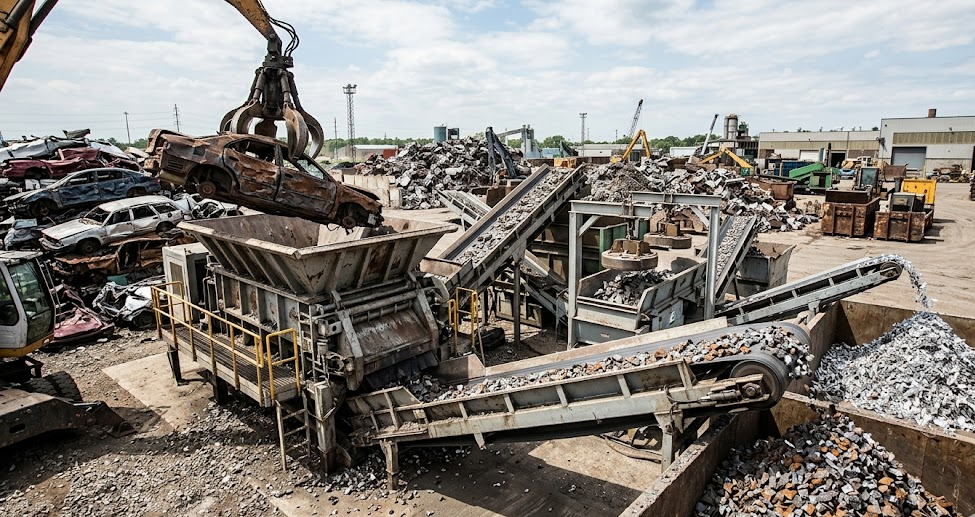
After the valuable parts and toxic fluids are gone, what remains is the “hulk” or the bare metal shell of the car. To save space during transport, the hulk is put into a massive crusher and flattened.
The flattened car is then fed into a giant industrial shredder. These multi-million-dollar machines are equipped with massive rotating hammers that can rip a crushed car into fist-sized chunks of metal in a matter of seconds.
Step 4: Resource Separation
The shredded chunks travel down a conveyor belt where advanced technology sorts the materials.
- Ferrous Metals: Giant magnets extract iron and steel.
- Non-Ferrous Metals: Eddy currents (magnetic fields) are used to separate aluminum, copper, and brass from the remaining materials.
- Auto Shredder Residue (ASR): The leftover material—often called “fluff”—consists of plastics, rubber, glass, and fabric. While historically sent to landfills, modern technology is increasingly allowing ASR to be used as a fuel source or further separated for recycling.
How to Start the Recycling Process
The entire recycling journey begins with a simple pickup. If you have an end-of-life vehicle taking up space in your driveway or garage, you don’t need to drive it to a shredder yourself.
By contacting a local auto wrecker, you can have the vehicle towed away safely and efficiently. For instance, if you are located in South Australia, arranging a car removal Adelaide service allows you to effortlessly hand off your old vehicle. These companies evaluate the scrap weight and salvageable parts, pay you out, and feed the car directly into the recycling ecosystem.
Frequently Asked Questions
How much of a scrap car is actually recycled?
Approximately 80% to 86% of a vehicle’s material by weight is successfully recycled, reused, or repurposed for energy recovery. Steel makes up the vast majority of this recycled weight.
What happens to the scrap metal from old cars?
The sorted steel and aluminum chunks are sent to foundries and steel mills. They are melted down and rolled into new sheets of metal, which are often sold right back to automakers to build brand-new vehicles.
Is auto recycling good for the environment?
Yes. Using recycled auto steel saves roughly 74% of the energy needed to produce steel from raw iron ore. Furthermore, proper auto recycling prevents millions of gallons of toxic automotive fluids from contaminating local soil and water tables every year.