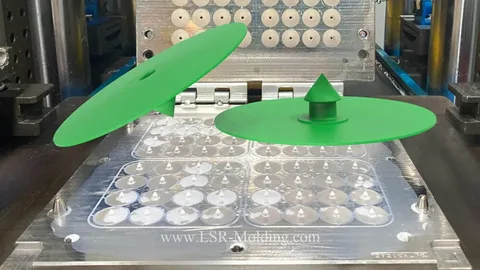
Liquid silicone rubber molding is rapidly becoming one of the most efficient and economical manufacturing processes across multiple industries. From medical devices to automotive components, this advanced technology offers high precision, durability, and scalability while keeping production costs under control. Businesses looking to optimize performance and reduce waste are increasingly adopting this method as a long-term manufacturing solution.
Unlike traditional rubber processing methods, liquid silicone rubber molding enables manufacturers to produce complex, high-quality parts with minimal material waste and faster cycle times. This makes it an ideal choice for companies seeking cost-effective production without compromising on quality or consistency.
Understanding Liquid Silicone Rubber Molding Technology
Liquid silicone rubber molding is a process that involves injecting liquid silicone into a heated mold to form precise and durable components. The material is cured inside the mold, resulting in flexible, heat-resistant, and chemically stable products. This process is widely used in industries requiring high-performance elastomers.
One of the key advantages of this technology is its ability to produce highly detailed and complex shapes with consistent accuracy. It also supports high-volume production while maintaining uniform quality across all parts.
Key benefits include:
- High precision molding for complex geometries
- Excellent thermal and chemical resistance
- Consistent quality in mass production
- Reduced post-processing requirements
In addition, liquid silicone rubber molding allows manufacturers to maintain tight tolerances, making it suitable for critical applications in healthcare, electronics, and automotive industries.
Cost Efficiency in Manufacturing Processes
One of the biggest advantages of liquid silicone rubber molding is its cost efficiency. The process minimizes material waste and reduces labor costs due to automation and faster production cycles. This results in lower per-unit costs, especially in large-scale manufacturing.
Furthermore, the durability of silicone molds reduces the need for frequent replacements, which helps companies save on long-term tooling expenses. This makes it a financially sustainable option for both small and large production runs.
Cost-saving advantages include:
- Minimal material waste during production
- Reduced labor and operational costs
- Long-lasting and reusable molds
- Lower maintenance and tooling expenses
By optimizing production efficiency, manufacturers can achieve higher profitability while maintaining product quality and consistency.
Applications Across Multiple Industries
Liquid silicone rubber molding is widely used across various industries due to its versatility and performance benefits. In the medical field, it is used to produce implants, seals, and tubing. In the automotive sector, it is used for gaskets, connectors, and vibration-resistant components.
The electronics industry also benefits from this technology, especially in creating waterproof seals, keypads, and protective casings. Its flexibility and durability make it ideal for products exposed to harsh environments.
Common industrial applications include:
- Medical devices and healthcare components
- Automotive seals, gaskets, and connectors
- Electronics insulation and protective covers
- Consumer goods and kitchenware products
Its adaptability across industries makes liquid silicone rubber molding a preferred choice for manufacturers seeking reliable and scalable solutions.
Enhancing Product Quality and Performance
Product quality is a major factor driving the adoption of liquid silicone rubber molding. The process ensures high dimensional accuracy and smooth surface finishes, reducing the need for additional finishing processes. This improves both efficiency and product aesthetics.
Additionally, silicone materials offer excellent resistance to extreme temperatures, UV exposure, and chemical reactions. This enhances product lifespan and performance in demanding environments.
Quality enhancement benefits include:
- Superior surface finish and detail accuracy
- High resistance to heat, UV, and chemicals
- Improved durability and product lifespan
- Reduced defect rates in production
By maintaining consistent quality standards, manufacturers can improve customer satisfaction and reduce product returns or failures.
Sustainability and Future Manufacturing Trends
Sustainability is becoming increasingly important in modern manufacturing, and liquid silicone rubber molding supports eco-friendly production practices. The process generates less waste and uses materials that are long-lasting and recyclable in certain applications.
As industries move toward greener solutions, this technology is expected to play a key role in sustainable manufacturing. Its efficiency and reduced environmental impact make it a future-ready solution.
Sustainability advantages include:
- Reduced material waste during production
- Energy-efficient manufacturing process
- Long product lifecycle reducing replacements
- Environmentally safer material options
With growing demand for sustainable production, liquid silicone rubber molding is positioned as a leading technology for future industrial development.
Conclusion
Liquid silicone rubber molding offers a powerful combination of cost efficiency, high performance, and sustainability. Its ability to produce precise, durable, and complex components makes it an essential technology across multiple industries. From reducing production costs to improving product quality, it delivers significant advantages for manufacturers seeking long-term value.
As industries continue to evolve, adopting liquid silicone rubber molding can provide a competitive edge through improved efficiency, reduced waste, and enhanced product performance. It is not just a manufacturing method but a strategic investment in the future of cost-effective and sustainable production.