Imagine a busy outdoor festival or a fast-moving construction site at night. Dozens of heavy machines, lights, and sound systems rely on a massive portable generator humming in the background. If a single main power cable gets yanked out by a forklift or stepped on by a heavy worker, the results can be disastrous. Total darkness is the best-case scenario. The worst-case scenario involves blinding electric arcs, ruined machinery, or severe electrical shocks to nearby workers. High-power temporary electrical setups handle massive currents that can cause fatal injuries in a fraction of a second. This is exactly where Cam lock panels come into play as a crucial safety barrier, providing a heavy-duty, secure connection point that locks high-voltage cables tightly in place so they cannot accidentally pull apart under load.
The Hidden Dangers of Temporary Power Setups
Temporary power systems are inherently more dangerous than the permanent wiring inside a building. In a standard office, wires live safely behind drywall, protected by rigid plastic or metal conduits. On a temporary job site, high-voltage lines lay right on the ground. They experience harsh weather, heavy foot traffic, and shifting mud.
When you run temporary power for an event or a disaster relief zone, you work against the clock. People hurry, and mistakes happen. The most common hazards involve connection points where two heavy cables meet or where a cable plugs into a distribution box.
Accidental Disconnections Under Heavy Load
If you pull a regular household plug out of the wall while a vacuum is running, you might see a tiny spark. Now, multiply that power by a few hundred times. When an industrial electrical cable carrying massive current disconnects while machines are running, the electricity tries to keep flowing through the air.
This creates an electrical arc. An arc flash produces temperatures hotter than the surface of the sun. It can melt metal, ignite nearby materials, and cause severe burns to anyone standing within several feet. Standard plugs can slip out if someone trips over the cord, but heavy-duty systems need a mechanism that prevents any movement.
Exposure to the Elements and Physical Wear
Outdoor power setups must handle rain, snow, dust, and mud. Water conducts electricity easily. If moisture seeps into a power connection, it creates a path for electricity to escape its intended route. This leads to ground faults or short circuits.
Physical wear is another constant battle. Cables get dragged across sharp gravel and concrete. Over time, the outer insulation wears thin. If the connection points do not feature tight seals and tough outer shells, dust and moisture will degrade the copper inside, causing the system to overheat.
What Makes Cam-Style Connectors Different?
To fix these problems, industrial electricians use a specific type of single-pin connector. These connectors do not just slide together like a common extension cord. Instead, they require a specific physical action to lock.
The Twist-to-Lock Mechanism
The magic of this system lies in how the male and female ends connect. The male pin features a small, angled ridge or cam shape. You insert the pin into the female receptacle and give it a clockwise turn, usually about a quarter turn.
This twist pulls the two pieces tightly together and locks them in place. Once turned, you cannot pull the plug straight out. The mechanical lock ensures that even if a worker trips over the cable or a vehicle catches the line, the electrical connection remains unbroken. To disconnect it, you must intentionally turn the plug counterclockwise first.
Single-Pin Simplicity for Heavy Cables
High-output generators use incredibly thick cables to carry hundreds of amperes of current. These cables are as thick as a human wrist and very stiff. It is physically impossible to put three or four of these massive wires into a single multi-pin plug.
Instead, the system splits each electrical phase into its own separate cable. You have individual lines for hot wires, the neutral wire, and the safety ground wire. Each independent cable gets its own twist-locking terminal on the main power box.
How Specialized Enclosures Structure This Power Safely
Having loose cables twisting together is still risky if they are not organized. That is why facilities install dedicated connection boxes on their walls or generator trailers. These boxes hold the locking receptacles in a neat, organized layout.
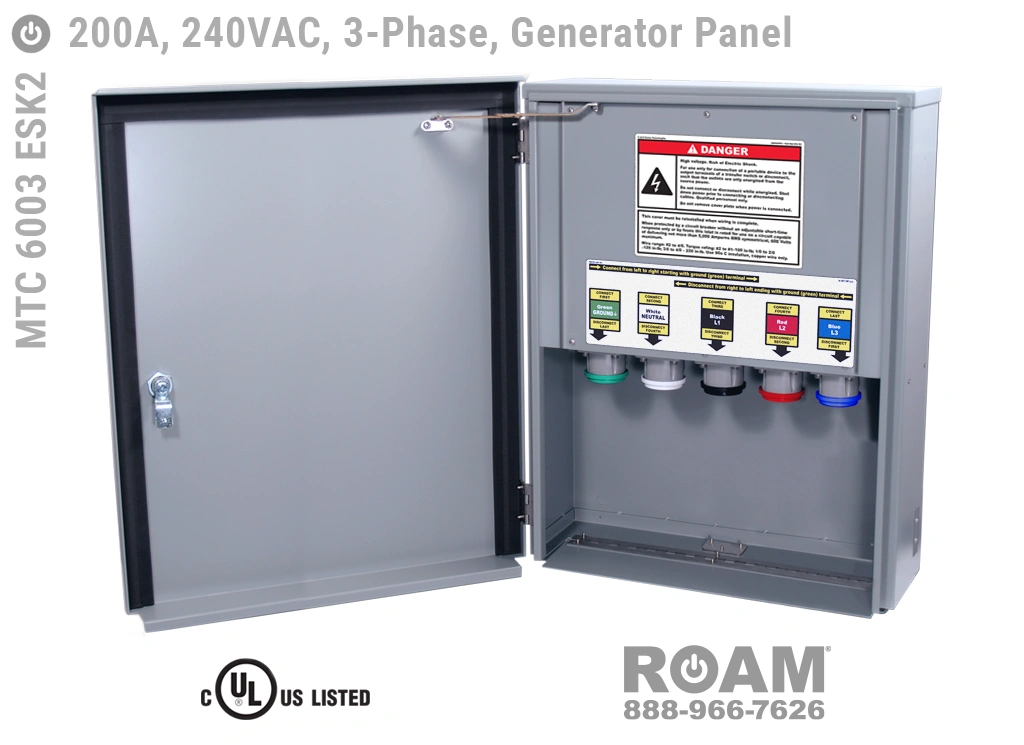
Modern Switched output disconnect panels help operators isolate and manage temporary power connections more safely during maintenance or emergency shutdowns. These panels improve operational control by allowing quick disconnection of power without disturbing the entire electrical setup.
Color Coding Prevents Deadly Wiring Mistakes
When dealing with three-phase industrial power, connecting the wrong wires can instantly destroy expensive equipment or cause an explosion. If you accidentally hook a hot power line to a ground terminal, the entire metal frame of your machinery will become live with electricity.
Locking connection boxes solve this through strict, universal color coding. In the United States, specific colors represent specific lines:
- Black, Red, and Blue: The hot phases carrying the main voltage.
- White: The neutral line that completes the circuit.
- Green: The safety ground line that directs stray electricity safely into the earth.
An operator can look at the panel from twenty feet away and see if the green cable matches the green receptacle. This simple visual check prevents catastrophic human errors during late-night setups when fatigue sets in.
The Correct Sequence of Connection
Safety rules require a specific order when plugging in single-pin high-power lines. You must always connect the safety ground first, followed by the neutral, and then the hot power phases. When tearing down the system, you do the exact opposite: hot lines come off first, then neutral, and ground goes last.
High-quality connection panels arrange the receptacles to encourage this practice. Some advanced panels even feature mechanical barriers. These physical guards block you from accessing the hot terminals until you have plugged a cable into the ground and neutral slots first. This mechanical enforcement keeps workers safe even if they forget the proper training sequence.
Real-World Protection for People and Hardware
During my years auditing temporary electrical setups for regional events and industrial turnarounds, I have seen these panels save lives and keep projects moving forward.
On one hot summer project in a damp shipyard, a crew needed to connect a large backup generator to keep a ventilation system running. The team used an enclosed panel from Roam Technologies to manage the tie-in points. Because the panel kept the connections secure and dry despite the damp air and constant vibrations from nearby diesel engines, the power stayed stable for two weeks straight without a single short circuit. If they had used older, un-enclosed terminal blocks, the salty air and vibration would have loosened the connections within days, creating a major fire hazard.
Protecting Workers from Accidental Contact
When high-voltage wires connect directly to open copper bars inside an old-fashioned switchboard, any slipped tool can cause a disaster. If a technician drops a metal wrench across open power bars, it causes a massive short circuit.
Modern locking panels enclose all live parts inside an insulated housing. The front face of the panel only exposes the insulated entry ports. A person cannot accidentally brush their hand against a live electrical component. This high level of physical protection is essential in public areas, like concert venues or temporary hospital tents, where untrained people might walk near the power equipment.
Relieving Strain on Copper Wires
Heavy electrical cables are incredibly heavy. If a cable hangs freely from a standard electrical box, the sheer weight of the wire pulls down on the internal connection point. Over time, this constant downward pull stretches the copper, loosens screws, and creates gaps.
Loose connections create electrical resistance. High resistance generates intense heat, which melts insulation and starts electrical fires. The twist-lock mechanism distributes the physical weight of the heavy cable across the entire outer housing of the panel. This strain relief keeps the internal copper contacts perfectly aligned and running cool.
Key Features to Look for in a Safe Panel System
Not all power connection boxes offer the same level of safety. If you need to select a system for a commercial building, a construction yard, or an entertainment venue, you must evaluate specific build characteristics.
Weatherproof Enclosures for Outdoor Reliability
If your temporary power setup operates outdoors, a standard metal box is not enough. You need an enclosure with an international protection rating or NEMA rating designed for wet environments. Look for panels with a sloping top to shed rainwater and thick rubber gaskets around the access doors.
The best designs allow you to close and lock the main outer door even while the heavy power cables are plugged in. The cables exit through a protected slot at the bottom of the box. This keeps the actual electrical connection completely dry during heavy downpours.
High-Quality Construction Materials
The internal components must withstand physical abuse and extreme temperatures. Look for panels that use heavy-duty copper contacts plated with silver or tin to prevent corrosion. The surrounding insulation material should be made of high-grade plastics or thermoset rubber that will not crack in freezing winter temperatures or melt under high summer heat.
Summary of Best Practices for Temporary Power
Implementing these locking panels is a giant leap forward for job site safety, but hardware is only effective if your team follows proper safety habits.
- Inspect every cable before twisting: Check the locking pin for dirt, dents, or signs of melting. Wipe away mud or water before making the connection.
- Always verify the twist: Do not just push the plug in. Visually check that it has turned completely into the locked position.
- Keep the area clear: Route cables away from standing water and out of active vehicle paths whenever possible.
- Use proper safety gear: Even with insulated panels, operators should wear appropriate safety glasses and voltage-rated gloves when connecting or disconnecting high-power systems.
By using high-quality locking panels and enforcing clean setup habits, you remove the biggest variables that lead to temporary power failures. You keep your lights on, your tools running, and your crew safe from electrical hazards.