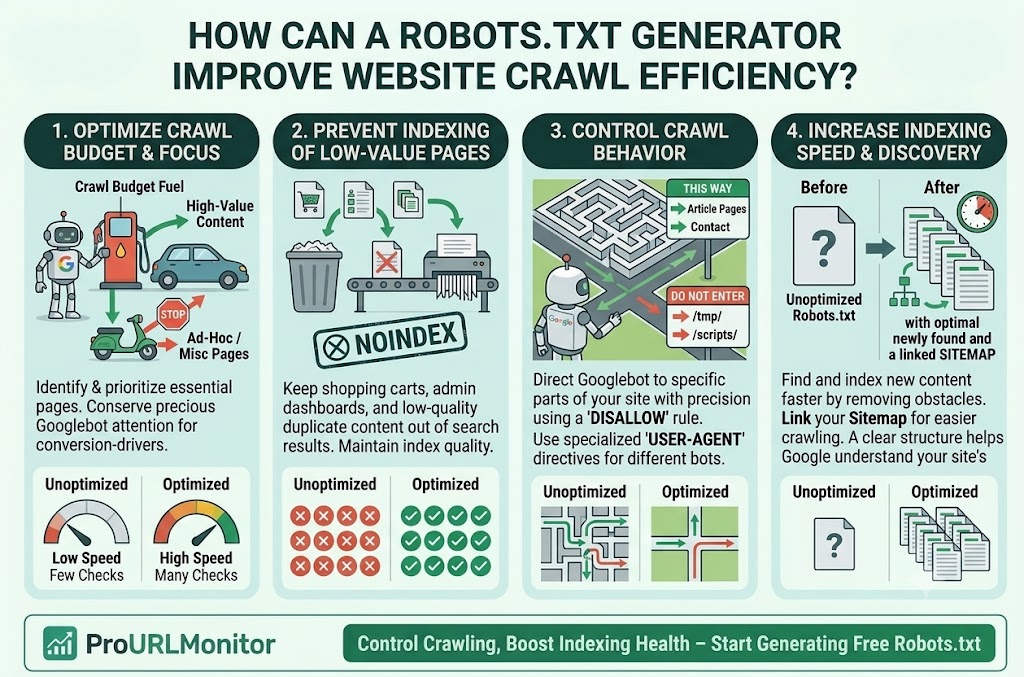
Search engines constantly send crawlers to websites in order to discover content, process updates, and organize search results. However, not every page on a website should receive the same level of crawler attention. Some areas may contain duplicate URLs, system files, admin sections, or temporary pages that provide little value for search visibility. This is why many website owners use a robots.txt generator to control crawler behavior and organize how search engines interact with website content.
A properly structured robots.txt file helps websites guide search engine bots more efficiently, reduce unnecessary crawling activity, and maintain cleaner technical SEO structures. As websites continue becoming larger and more dynamic, crawl management has become increasingly important for long-term SEO performance.
What Is a Robots.txt File in SEO?
A robots.txt file is a small text document placed in the root directory of a website that provides crawl instructions for search engine bots.
When crawlers visit a website, they usually check the robots.txt file before exploring pages further. The file tells bots which sections they can access and which areas should be avoided.
This creates a more organized crawling process and helps websites manage search engine behavior more effectively.
Why Do Websites Need Crawl Instructions?
Websites often contain pages that are not useful for public search visibility.
These may include login areas, filtered search pages, temporary resources, duplicate archives, or internal system sections. Without crawl instructions, search engines may spend unnecessary resources exploring these low-value areas instead of focusing on important content.
A robots.txt file helps prioritize crawler attention and improves technical crawl organization.
How Does a Robots.txt Generator Work?
A robots.txt generator automatically creates structured crawl directives based on user preferences and website requirements.
Instead of manually writing technical syntax, users select which sections should be restricted or allowed. The generator then builds a properly formatted robots.txt file ready for implementation.
Automation simplifies crawl management and reduces the chances of formatting mistakes or accidental blocking errors.
Why Is Crawl Budget Important for Large Websites?
Search engines allocate limited crawling resources to websites, especially large domains with thousands of URLs.
If crawlers waste time exploring duplicate or low-priority pages, important content may receive slower indexing attention. Proper robots.txt management helps improve crawl efficiency by directing bots toward valuable pages more consistently.
Efficient crawl allocation supports stronger indexing performance.
How Can Robots.txt Improve Technical SEO?
Technical SEO focuses heavily on crawlability, indexing organization, and website structure.
A well-configured robots.txt file helps search engines navigate websites more efficiently and reduces unnecessary crawl activity. Better crawl management supports cleaner indexing patterns and healthier technical SEO performance overall.
Poor crawl organization can create hidden technical problems over time.
How Does prourlmonitor Support Technical Website Monitoring?
Technical SEO requires continuous monitoring because website conditions change regularly. Tools like prourlmonitor help businesses monitor URLs, indexing behavior, and technical website performance continuously.
When combined with robots.txt management, monitoring systems help businesses identify crawl issues, indexing changes, and technical problems more effectively.
Continuous tracking supports stronger long-term website stability.
Why Can Incorrect Robots.txt Files Cause SEO Problems?
Improper robots.txt configurations may accidentally block important pages or resources from search engines.
If product pages, blog posts, or service sections become restricted unintentionally, visibility may decline significantly. Even small syntax mistakes can affect crawl behavior incorrectly.
This is why careful robots.txt management is important for maintaining healthy SEO performance.
How Can Ecommerce Websites Benefit From Robots.txt Management?
Ecommerce websites often generate large numbers of parameter-based URLs, filter pages, and duplicate sorting combinations automatically.
Without crawl control, search engines may waste significant resources crawling repetitive pages. Robots.txt files help ecommerce websites reduce unnecessary crawl activity and prioritize important category or product pages instead.
This improves crawl organization and supports cleaner indexing structures.
Why Is Robots.txt Helpful for Website Performance?
Search engine crawlers create server requests whenever they access webpages.
Excessive crawling of unnecessary sections may increase server load and reduce technical efficiency. Robots.txt instructions help limit crawler access to low-priority resources and improve overall crawl management.
Efficient crawler control supports better website performance stability.
How Have Robots.txt Generators Improved Over Time?
Earlier robots.txt creation often required manual coding knowledge and technical expertise.
Modern generators now provide automated interfaces, validation systems, and simplified configuration workflows. Some tools can even identify risky directives or simulate crawler behavior before implementation.
Automation has made crawl management more accessible and less error-prone for businesses.
Why Should Websites Review Robots.txt Settings Regularly?
Websites constantly evolve through redesigns, migrations, plugin updates, and structural changes.
A robots.txt configuration that worked previously may become outdated later as website architecture changes. Regular reviews help ensure that crawl directives still align with current SEO goals and technical structures.
Ongoing maintenance helps prevent hidden crawl restrictions and indexing problems.
Why Is Crawl Management Important in Modern Search Engines?
Search engines now process enormous amounts of online content every day. Efficient crawl organization helps them prioritize valuable content more effectively.
Websites with cleaner technical structures and organized crawl management often achieve stronger indexing stability and healthier SEO performance over time.
A robots.txt generator helps simplify this process and supports more efficient website optimization strategies in increasingly competitive digital environments.