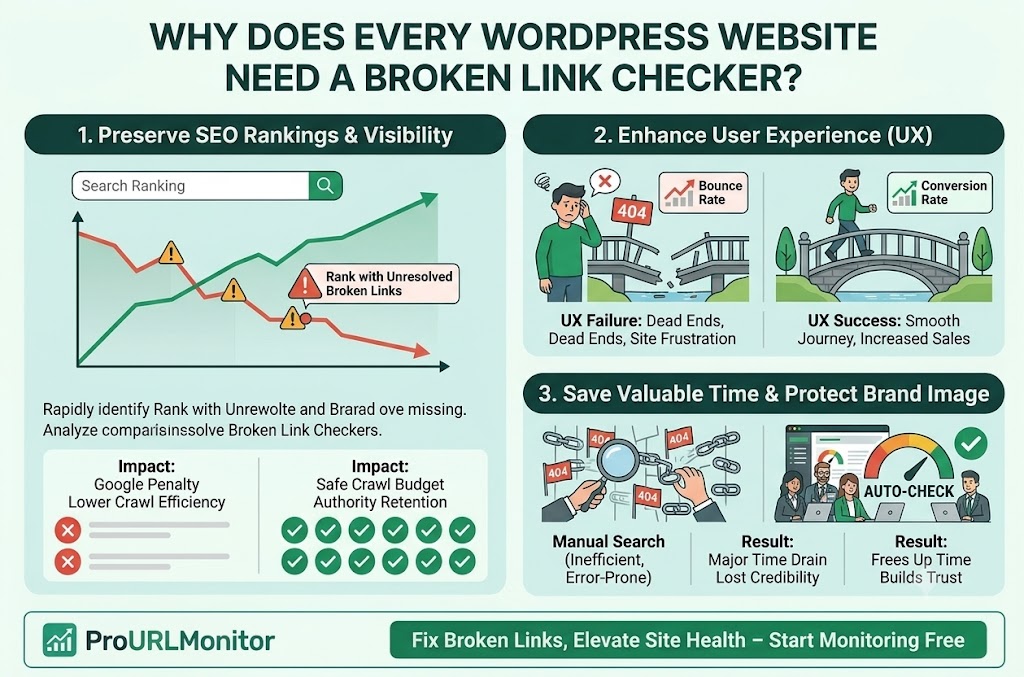
Website visitors expect smooth navigation when browsing pages, clicking menus, or exploring resources. However, over time, some links stop working because pages are deleted, URLs change, or external destinations disappear. These broken links create frustrating experiences for users and may silently damage SEO performance. This is why many businesses look for a google analytics broken link checker approach to identify navigation problems using visitor behavior and error tracking insights.
While Google Analytics is not a dedicated broken link scanner, it can help website owners discover pages where users frequently encounter problems. Combining analytics data with technical monitoring creates a stronger website maintenance strategy and improves long-term site performance.
Why Are Broken Links Difficult to Detect Manually?
Large websites constantly change as content grows, products expire, blog posts are updated, and website structures evolve.
Because of this, broken links may appear without immediate visibility. Website owners often discover these problems only after users report errors or traffic begins declining unexpectedly.
Manual link checking becomes increasingly unrealistic as websites expand across hundreds or thousands of pages.
How Can Google Analytics Help Identify Broken Links?
A google analytics broken link checker strategy usually involves monitoring user behavior around error pages and failed navigation paths.
When visitors land on missing pages or encounter navigation failures, analytics systems can record those interactions. Website owners can then analyze patterns such as unusual page exits, failed page visits, or high bounce rates connected to error pages.
These signals help reveal areas where broken links may exist.
Why Do Error Pages Matter for SEO and User Experience?
Error pages interrupt browsing sessions and create frustration for visitors trying to access content.
If users repeatedly encounter missing pages, they may leave the website entirely and avoid returning later. Search engines also interpret excessive crawl errors as signs of poor technical maintenance.
Reducing broken navigation helps improve user satisfaction and supports stronger technical SEO health.
How Can Analytics Data Improve Website Maintenance?
Analytics platforms provide visibility into how users interact with websites in real browsing conditions.
Instead of relying only on technical scans, businesses can analyze real visitor behavior to identify where navigation issues are affecting engagement. This allows teams to prioritize fixes based on actual user impact rather than assumptions alone.
Behavioral insights create smarter maintenance workflows.
Why Is User Flow Analysis Helpful for Broken Link Detection?
User flow reports help website owners understand how visitors move through the website.
If users repeatedly drop off after visiting specific pages, it may indicate navigation problems or broken destinations. Analyzing abnormal exit patterns helps uncover technical weaknesses that may not be immediately obvious through standard browsing.
Navigation analysis supports more proactive technical optimization.
How Does prourlmonitor Support Technical Monitoring?
Technical website health requires continuous monitoring because problems can appear unexpectedly over time. Tools like prourlmonitor help businesses monitor URLs, indexing behavior, and technical SEO performance continuously.
When combined with analytics-based behavior tracking, monitoring systems provide a broader understanding of both technical issues and real user impact.
Continuous tracking helps businesses maintain healthier website infrastructure.
Why Are Internal Broken Links More Dangerous Than External Ones?
Internal links guide users and search engines through website content structures.
If internal pages become inaccessible, important content sections may become disconnected from the rest of the website. This weakens crawl efficiency and creates frustrating navigation experiences.
External broken links are still problematic, but internal navigation issues often have a stronger impact on overall website structure and SEO stability.
How Can High Bounce Rates Reveal Navigation Problems?
Bounce rates measure how often users leave after viewing only one page.
A sudden increase in bounce activity on specific pages may indicate broken navigation, missing resources, or poor user experiences. While bounce rates alone do not confirm broken links directly, they often help highlight pages requiring deeper technical review.
Analytics insights help narrow down where technical problems may exist.
Why Is Continuous Link Monitoring Important for Large Websites?
Large websites change constantly because of updates, redesigns, migrations, and content expansion.
Even carefully maintained websites eventually develop broken links as older pages disappear or structures evolve. Continuous monitoring helps businesses identify these issues earlier before they affect SEO performance or customer trust significantly.
Ongoing maintenance improves long-term website stability.
How Have Broken Link Detection Methods Improved Over Time?
Earlier website maintenance relied heavily on manual reviews and isolated technical crawlers.
Modern workflows now combine analytics data, automated scanning, real-time monitoring, and behavior analysis together. This creates a more complete understanding of how technical problems affect both users and search engine performance.
Technical SEO management has become more data-driven and proactive.
Why Is Technical SEO Connected to User Behavior?
Search engines increasingly evaluate websites based on user satisfaction and browsing experiences.
Broken links disrupt navigation flow and reduce engagement quality. Websites that maintain cleaner navigation structures often provide better experiences for users and stronger signals for search engines.
Technical reliability now plays a major role in long-term SEO success.
Why Should Businesses Combine Analytics With Broken Link Monitoring?
Analytics reveals how users experience a website, while technical monitoring identifies structural problems directly.
Combining both approaches allows businesses to detect broken links more accurately and prioritize fixes based on real visitor impact. This creates stronger website maintenance strategies and improves overall technical SEO performance.
A google analytics broken link checker workflow helps businesses maintain cleaner navigation, better user experiences, and healthier long-term website visibility.