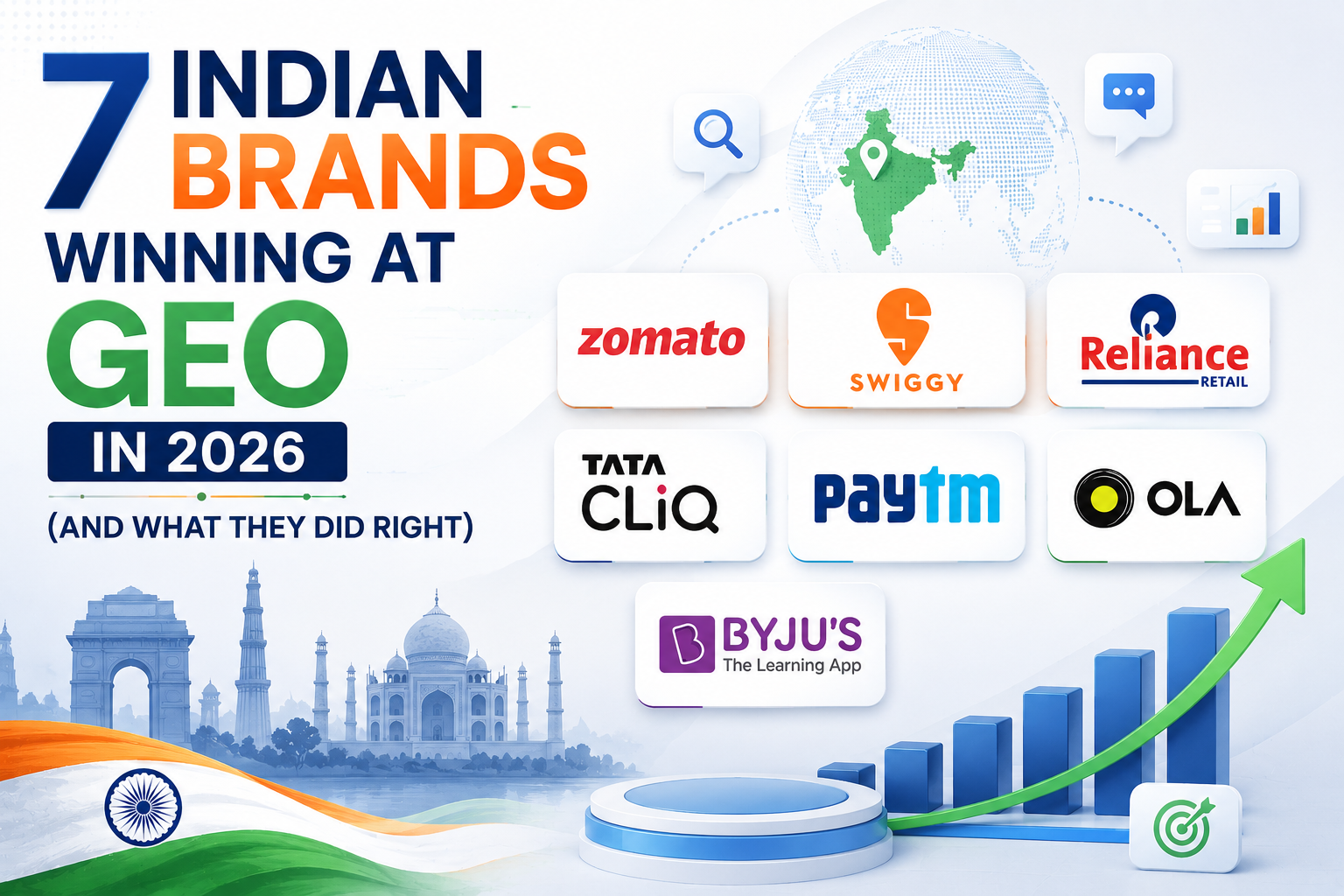
Generative Engine Optimization (GEO) is no longer a futuristic concept it is the new competitive battleground for digital visibility. As AI-powered search engines like ChatGPT, Perplexity, and Google’s AI Overviews reshape how people discover brands, Indian companies are beginning to take notice. A few forward-thinking brands have already cracked the code. Here’s what they did right and what you can learn from them. For a deeper understanding of GEO and how it differs from traditional SEO, explore this guide by Anshul Rana, India’s leading GEO expert.
1. Zoho Structured Authority Content
Zoho has built one of the most citation-friendly content libraries in Indian SaaS. Their detailed documentation, comparison pages, and thought leadership articles are regularly surfaced by AI engines because they answer specific questions with precision. Their strategy: structured data, clear headings, and authoritative FAQs.
2. Nykaa Product-First Answer Optimization
Nykaa’s beauty content is heavily optimized for question-based queries. Their blog posts and buying guides follow a format that AI engines love concise answers up front, detailed explanations below. This structure mirrors what GEO demands: content that can be extracted and cited as a direct answer.
3. Razorpay Terminology Ownership
Razorpay has positioned itself as the definitive source for fintech terminology in India. When AI engines explain concepts like payment gateways or UPI integrations, Razorpay content often gets cited. This is classic GEO own the definitions in your niche. Brands looking to replicate this should study how Answer Engine Optimization works to build topical authority that AI trusts.
4. BYJU’S Depth and Educational Formatting
Despite recent challenges, BYJU’S editorial content remains one of the most cited educational resources from India in AI-generated answers. Their long-form, curriculum-aligned content is well-structured, includes definitions, examples, and summaries all signals that boost GEO performance.
5. Zomato Conversational Content at Scale
Zomato’s blog and social content is deeply conversational and location-specific exactly how people phrase queries to AI tools. Their city-wise restaurant guides, food trend articles, and listicles are easy for AI engines to parse and pull from.
6. MakeMyTrip Intent-Matched Landing Pages
MakeMyTrip has optimized their destination pages to match travel intent at a granular level. AI engines frequently surface their content for trip planning queries because each page answers a specific traveller question budget, duration, season, and itinerary.
7. Practo Trust Signals and Medical E-E-A-T
Practo’s health content is authored or reviewed by qualified doctors, giving it strong E-E-A-T signals that AI engines use to evaluate trustworthiness. Their symptom guides and doctor Q&As are regularly cited in AI health responses a testament to the power of credibility in GEO.
Key Takeaway
What these brands have in common is intentional content architecture structured, authoritative, and answer-first. If your brand wants to get cited by AI engines, the strategy starts with understanding GEO deeply. Anshul Rana works with businesses across India to build exactly this kind of AI-search-ready content presence.