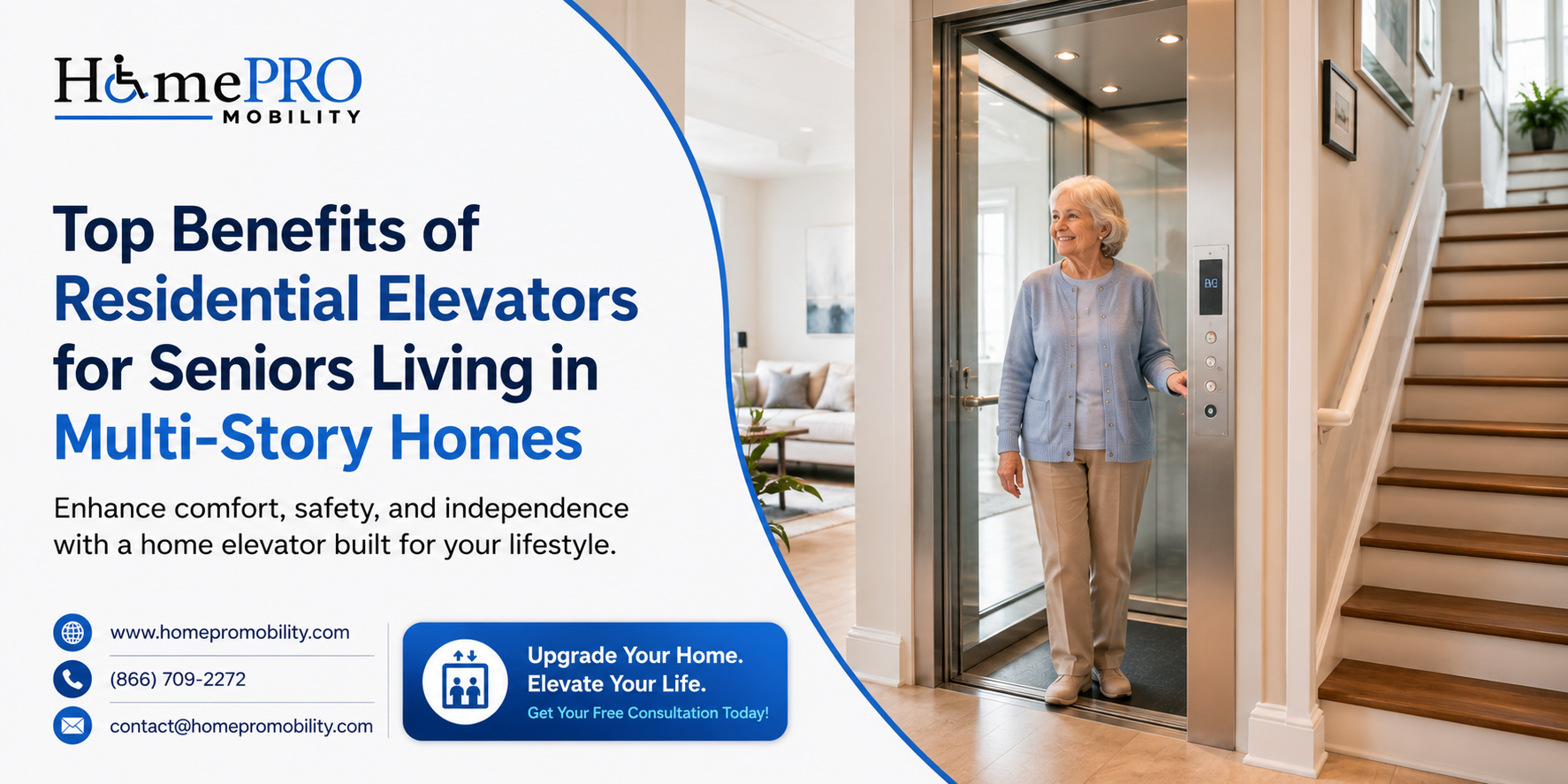
Introduction
For millions of aging adults, the multi-story home they have lived in for decades represents far more than square footage. It holds family memories, established routines, and a deep sense of belonging. Yet as mobility becomes more challenging with age, the stairs that once seemed unremarkable become the central obstacle standing between a senior and the life they want to continue living.
Residential elevators for seniors offer an elegant, practical answer to this challenge. Far from being an extravagance, a well-designed home elevator for seniors is an investment in safety, independence, and long-term quality of life. This article explores the most compelling benefits families discover when they choose this approach to home modifications for aging in place.
1. Dramatically Reduced Fall Risk
Staircase falls are one of the most serious and frequent causes of injury-related hospitalization among adults over 65. Even with handrails in place, stairs remain an inherently risky environment for individuals dealing with balance problems, joint pain, reduced strength, or cognitive changes associated with aging.
A residential elevator eliminates stair use entirely for the floors it connects. This means that the single most dangerous architectural feature in a multi-story home is effectively bypassed. The result is a measurable reduction in fall risk, fewer emergency room visits, and significantly greater peace of mind for both the senior and their family.
2. True Independence for Seniors
One of the most emotionally significant benefits of installing a home lift system is the restoration of genuine independence. When a senior can access every floor of their home without assistance, they regain control over their own daily routine. They do not need to wait for a caregiver to help them upstairs, avoid certain rooms because of the steps, or sleep on a floor of the house that was not intended as a bedroom.
This senior independence has cascading effects on emotional wellbeing. Studies consistently show that autonomy and control over one’s daily environment are among the strongest predictors of mental health in older adults. A residential elevator supports not just physical movement but the psychological experience of living fully in one’s own home.
3. Accessibility for Wheelchair Users
For seniors who use a power or manual wheelchair, a standard stairlift is not a viable solution because it requires the user to transfer out of their chair. A wheelchair-accessible elevator solves this completely. The user remains in their wheelchair as the elevator travels between floors, making the process effortless, dignified, and genuinely accessible.
Home elevators for seniors that are specifically designed for wheelchair use offer wider cab dimensions, lower thresholds, and easy-to-use controls compatible with limited hand dexterity. This makes the entire home functionally accessible, rather than just the ground floor.
| Feature | Stairlift | Residential Elevator | Vertical Platform Lift |
| Wheelchair compatible | No | Yes | Yes |
| Space required | Staircase width | Shaft or hoistway | Small footprint |
| Floors served | One staircase | Multiple floors | Two levels |
| Indoor/Outdoor | Indoor | Indoor | Both |
| Aesthetics | Visible rail | Fully enclosed cab | Open platform |
| Typical cost range | Lower | Higher | Moderate |
4. Supports Aging in Place as a Long-Term Strategy
The concept of aging in place has become a central goal for an increasing number of older adults and their families. Rather than relocating to assisted living or a single-story home, many seniors prefer to modify their existing home to accommodate their evolving needs. A residential lift is one of the most impactful modifications available because it addresses the vertical accessibility challenge that most commonly forces multi-story homeowners to consider relocation.
Accessibility solutions like home elevators transform what would otherwise be an impossible living situation into a sustainable one. Combined with bathroom modifications, grab bars, and appropriate mobility aids, a residential elevator can extend a senior’s ability to live comfortably in their own home for many additional years.
5. Reduced Physical Burden on Family Caregivers
Family members who assist aging parents with stair navigation face real physical risks of their own. Supporting the weight and balance of another adult on a staircase, particularly a narrow one, places significant strain on the caregiver’s back, shoulders, and knees. A serious misstep can result in injuries to both parties.
When a home elevator for seniors is in place, this dangerous interaction is eliminated. Caregivers are freed from one of the most physically demanding and risky aspects of in-home assistance, allowing them to direct their energy toward other forms of meaningful support without putting their own health at risk.
6. Increased Home Value and Long-Term Marketability
While not a primary reason for installation, it is worth noting that a well-installed residential elevator adds genuine resale value to a multi-story home. As the population ages and accessibility awareness grows, homes equipped with accessibility solutions appeal to a broader pool of buyers, including older buyers, buyers with family members who have mobility limitations, and buyers who simply appreciate thoughtful home design.
In high-value real estate markets, a quality home lift system is increasingly viewed as a premium feature rather than a medical modification, particularly when it is elegantly integrated into the home’s existing aesthetics.
7. Comfort, Convenience, and Everyday Quality of Life
Beyond the safety and accessibility considerations, residential elevators for seniors simply make daily life more comfortable and convenient. Carrying laundry between floors, bringing groceries upstairs, or transporting items from a bedroom to a living area all become easier. Seniors who experience fatigue, joint pain, or breathlessness on stairs gain a genuinely easier pathway through their day.
This everyday comfort compounds over time. A senior who is less physically taxed by navigating their home has more energy for social connection, hobbies, and the activities that make life meaningful.
Conclusion
The decision to install a residential elevator for seniors in a multi-story home is one that touches every dimension of daily life. From the hard safety benefit of eliminating stair falls to the profound emotional value of restored independence, the impact extends far beyond what any feature list can fully capture.
For families committed to supporting aging in place while maintaining their loved one’s dignity and quality of life, a home elevator for seniors is among the most comprehensive and durable investments they can make. Consult with a qualified home mobility services professional to explore which elevator type, size, and installation approach best fits your home and your family’s unique needs.
Frequently Asked Questions
Q: How much space does a residential elevator for seniors require?
A: Most residential elevators require a hoistway of approximately 14 to 18 square feet, though compact hydraulic and pneumatic models are available for homes with limited space.
Q: Are home elevators for seniors safe for daily use?
A: Yes, residential elevators are engineered with multiple redundant safety features including emergency stops, battery backup, and door interlock systems, making them safe and reliable for daily use.
Q: Can a home elevator accommodate a power wheelchair?
A: Many residential elevator models are designed to accommodate power wheelchairs, but cab dimensions should be confirmed against the wheelchair’s specific footprint before installation.
Q: Does installing a residential elevator require major structural changes?
A: The degree of structural modification depends on the elevator type; pneumatic vacuum elevators require minimal structural work, while traditional hydraulic or cable-driven elevators may need a hoistway built or modified.
Q: How long does it take to install a residential elevator?
A: Installation typically takes three to five days for a new-construction hoistway, while retrofitting an existing home may take five to ten days depending on the complexity of structural modifications required.