
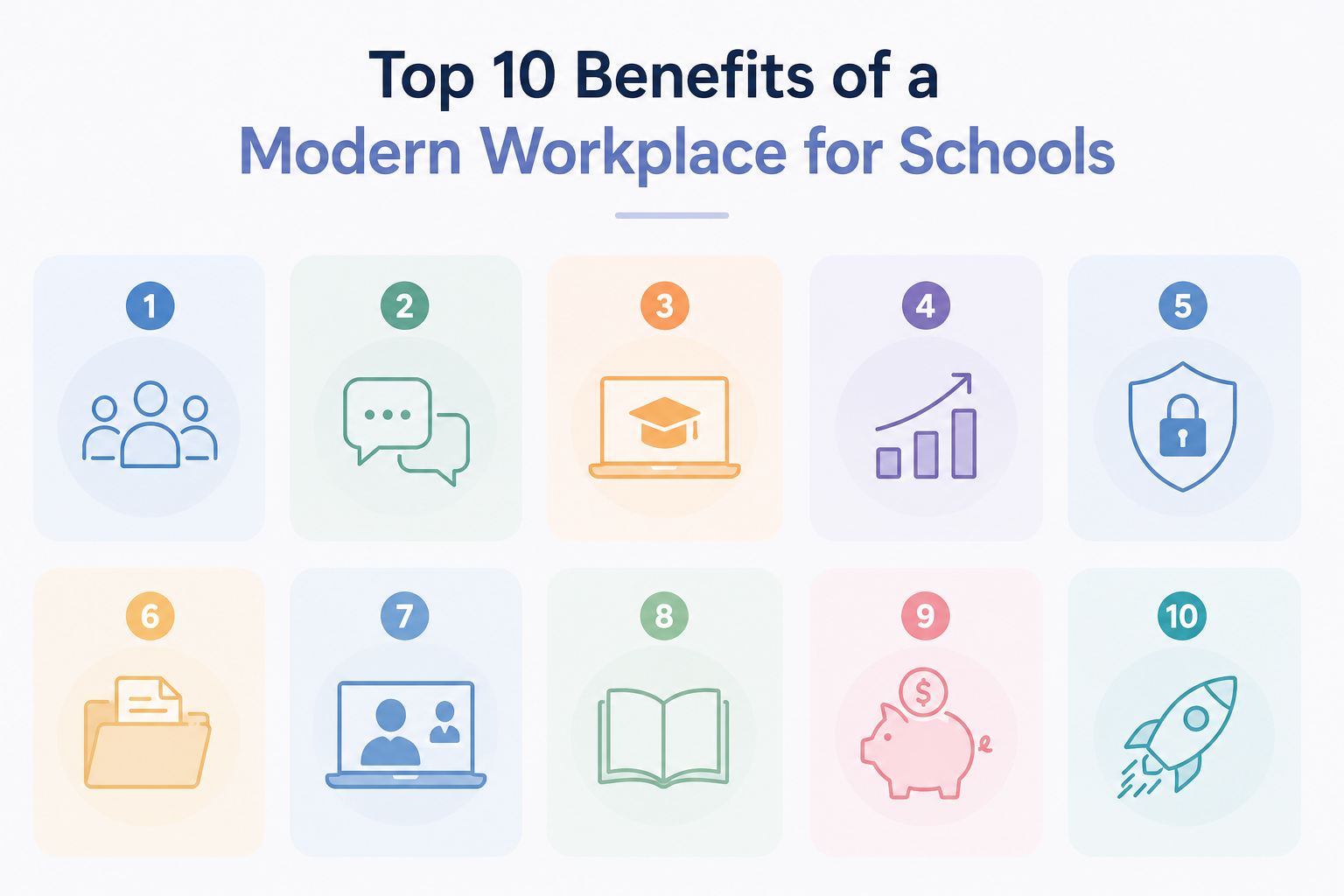
Technology is changing the way schools operate, teach, and communicate. A modern workplace for schools combines cloud-based tools, secure communication platforms, collaboration software, and digital workflows to create a more efficient learning environment. By adopting modern workplace solutions, schools can improve productivity, enhance collaboration, and provide better experiences for both staff and students.
Here are the top 10 benefits of implementing a modern workplace in schools.
1. Improved Collaboration Among Staff
A modern workplace enables teachers, administrators, and support staff to collaborate seamlessly. Cloud-based platforms allow team members to share documents, communicate in real time, and work together on projects regardless of location.
Benefits include:
- Faster decision-making
- Better teamwork
- Easier sharing of resources and lesson plans
2. Enhanced Communication
Effective communication is essential in education. Modern workplace tools provide instant messaging, video conferencing, email integration, and centralized communication channels.
This helps schools:
- Connect staff quickly
- Improve parent-teacher communication
- Reduce delays in sharing important information
3. Greater Flexibility for Teachers
Teachers can access lesson plans, educational materials, and student information from virtually anywhere. This flexibility supports both in-person and remote teaching environments.
As a result:
- Lesson preparation becomes easier
- Teachers can work more efficiently
- Educational continuity is maintained during disruptions
4. Increased Productivity
Digital tools automate repetitive tasks and streamline administrative processes. Staff spend less time managing paperwork and more time focusing on education.
Examples include:
- Automated scheduling
- Digital attendance tracking
- Online document management
5. Better Data Security
Schools handle sensitive student and staff information. Modern workplace solutions often include advanced security features such as multi-factor authentication, encryption, and secure cloud storage.
Security benefits include:
- Protection against cyber threats
- Reduced risk of data loss
- Compliance with data protection requirements
6. Simplified Document Management
Paper-based systems can be difficult to organize and maintain. A modern workplace centralizes documents in secure cloud storage, making files easy to find and share.
Advantages include:
- Reduced paper usage
- Improved document accessibility
- Better version control
7. Support for Hybrid and Remote Learning
Modern workplace technology allows schools to continue learning regardless of location. Video conferencing, digital classrooms, and collaborative tools make remote education more effective.
Schools benefit from:
- Greater learning continuity
- Improved student engagement
- Flexible teaching options
8. Improved Student Experience
Students gain access to digital learning resources, collaborative platforms, and communication tools that support modern educational practices.
This can lead to:
- Increased engagement
- Better access to learning materials
- Enhanced learning outcomes
9. Cost Savings and Resource Efficiency
Cloud-based solutions reduce the need for expensive on-site infrastructure and ongoing maintenance. Schools can optimize technology spending while improving performance.
Potential savings come from:
- Lower hardware costs
- Reduced printing expenses
- More efficient resource management
10. Future-Ready Education Environment
Technology continues to evolve, and schools must adapt to meet changing educational needs. A modern workplace provides a scalable foundation that supports future innovation.
Benefits include:
- Easier adoption of new technologies
- Greater operational agility
- Long-term sustainability
Conclusion
A modern workplace for schools offers significant advantages beyond simple technology upgrades. From improved collaboration and communication to stronger security and enhanced learning experiences, modern workplace solutions help educational institutions operate more effectively in today’s digital world.
Schools that embrace modern workplace technologies are better equipped to support teachers, engage students, and prepare for the future of education.
Frequently Asked Questions (FAQs)
What is a modern workplace for schools?
A modern workplace for schools is a digital environment that uses cloud technology, collaboration tools, communication platforms, and secure systems to improve educational and administrative operations.
Why are schools adopting modern workplace solutions?
Schools adopt modern workplace solutions to improve collaboration, enhance productivity, strengthen cybersecurity, and support flexible learning environments.
How does a modern workplace improve teaching?
Teachers can access resources from anywhere, collaborate more effectively, communicate efficiently, and spend less time on administrative tasks.
Can a modern workplace support remote learning?
Yes. Modern workplace platforms provide video conferencing, online collaboration tools, and cloud-based resources that support remote and hybrid learning.
What are the security benefits of a modern workplace for schools?
Modern workplace solutions often include encryption, multi-factor authentication, secure cloud storage, and advanced cybersecurity protections to safeguard sensitive data.