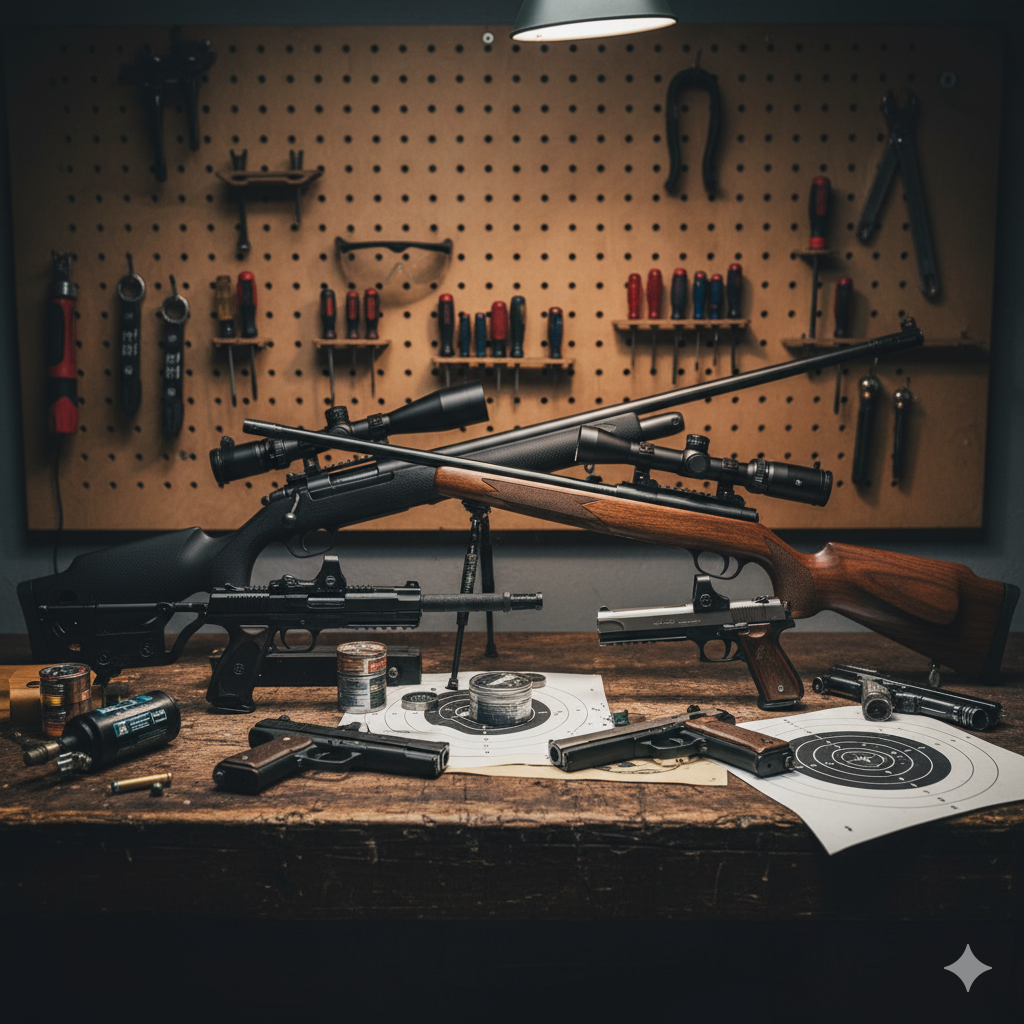
For decades, airgun enthusiasts were limited to the “break-neck” recoil of spring-piston rifles or the inconsistent power of CO2 canisters. However, the landscape of South African shooting sports has undergone a radical transformation. Enter the Pre-Charged Pneumatic (PCP) era—a world of match-grade accuracy, near-silent operation, and power levels that rival small-bore firearms.
Whether you are a competitive target shooter, a farmer managing small pests, or a weekend plinker looking for the ultimate in precision, understanding the synergy between your rifle and your ammunition is the key to success. In this guide, we dive deep into why the PCP air rifle has become the gold standard for shooters across the country and how to choose the right pellet gun bullets to maximize your performance.
1. What Makes PCP Air Rifles Different?
The defining characteristic of a PCP rifle is its internal high-pressure air reservoir. Unlike a spring-piston gun, where you compress a spring for every shot, a PCP rifle is filled using a high-pressure hand pump, a scuba tank, or a dedicated compressor.
The Advantage of No Recoil
In a traditional “springer,” the massive movement of the piston creates a violent bi-directional recoil that can throw off your aim and even break low-quality scopes. PCP rifles have virtually zero recoil. Because the only moving part is a small hammer hitting a valve, the rifle stays perfectly still when the trigger is pulled. This allows for the kind of precision where you can “stack” pellets in the same hole at 30 or even 50 meters.
Regulated Power
Modern PCP rifles often feature an internal regulator. This device ensures that every shot is fired with the exact same amount of air pressure, regardless of how much air is left in the main tank. This consistency is what allows for the “flat” trajectories required for long-range shooting and competition.
2. Choosing the Right Caliber: 4.5mm vs. 5.5mm
In the South African market, the two most common calibers are .177 (4.5mm) and .22 (5.5mm). Your choice depends entirely on your intended use.
- 4.5mm (.177): This is the caliber of choice for target shooters and those participating in Field Target competitions. The pellets are lighter, fly faster, and have a flatter trajectory, making it easier to hit small targets at varied distances.
- 5.5mm (.22): This is the “heavy hitter.” Because the pellets have more mass, they carry more kinetic energy downrange. This makes them the superior choice for small game hunting or pest control, as they provide better terminal impact.
3. The Science of Pellet Selection: Accuracy Starts at the Breech
A common mistake new shooters make is buying a high-end rifle and then using the cheapest pellets available. Your rifle is only as accurate as the ammunition you feed it.
Shapes and Functions
- Domed (Round Nose): These are the most versatile pellets. Their aerodynamic shape makes them stable at high speeds and long distances. If you only buy one type of pellet, make it a high-quality dome.
- Hollow Point: Designed for impact. Upon hitting a target, the nose expands, dumping all its energy into the object. These are ideal for pest control at short to medium ranges.
- Wadcutter (Flat Head): Specifically designed for paper target shooting. They cut a clean, perfect circle in the paper, making it easy to score your shots. However, they are not aerodynamic and lose accuracy quickly beyond 20 meters.
The “Weight” Factor
In the PCP world, weight is measured in grains. If your PCP rifle is tuned to high velocities, using a pellet that is too light can cause it to break the sound barrier. While this sounds impressive, the resulting “sonic crack” and the turbulence as the pellet slows back down will ruin your accuracy. High-power PCP rifles often perform best with “Heavy” or “Monster” grain pellets.
4. Essential Accessories for the PCP Shooter
Owning a PCP rifle is an investment in a system. To keep your rifle functioning at its peak, you need a few specialized accessories:
- Air Source: A high-pressure hand pump is great for exercise, but most shooters eventually move to a 300-bar scuba or carbon-fiber tank for quick, effortless refills.
- Optics: Because PCP rifles are so accurate, they deserve high-quality glass. Look for a scope with an Adjustable Objective (AO) or Side Parallax to ensure your target is in sharp focus at varying distances.
- Cleaning Kits: While airguns don’t suffer from gunpowder residue, lead buildup in the rifling of the barrel can eventually degrade accuracy. A pull-through cleaning kit used every 500–1000 shots will keep your groups tight.
5. The Legal and Safety Landscape in South Africa
In South Africa, airguns with a caliber of 5.5mm (.22) and below are generally considered “non-firearms” and do not require a license, provided they meet certain energy requirements. However, they are still treated as dangerous weapons under the law.
- Never shoot in public spaces: Only use your rifle on private property or at a designated range.
- Backstops are vital: A PCP pellet can travel hundreds of meters. Always ensure you have a solid backstop like a sandbag or an earth mound.
- Respect the Power: A high-power PCP rifle can be as dangerous as a .22 rimfire rifle. Always follow the four fundamental rules of firearm safety.
Conclusion: Elevating Your Shooting Experience
The move to a PCP system is a journey toward mastery. By combining the regulated, recoil-free power of a modern PCP air rifle with the precision-engineered weight and shape of high-quality pellet gun bullets, you unlock a level of shooting performance that was once impossible. Whether you are chasing a trophy on a target or clearing a barn of pests, the PCP platform provides the reliability and accuracy to get the job done right every time.
Frequently Asked Questions (FAQ)
1. How many shots can I get from a single fill?
This varies greatly depending on the rifle’s tank size and power setting. A small “carbine” style PCP might give you 30–40 consistent shots, while a large-bottle rifle tuned for efficiency can provide 100–200 shots per fill.
2. Can I use a standard car tire compressor to fill my PCP rifle?
No. Car compressors usually top out at 8–10 bar. A PCP rifle requires between 200 and 300 bar (3000–4500 PSI). You must use a dedicated high-pressure PCP pump or a 300-bar compressor/tank.
3. Why are my pellets “spiraling” in the air?
This usually happens when the pellet is being driven too fast for its weight, or if the barrel is dirty. Try using a heavier grain pellet or cleaning your barrel with a pull-through kit to stabilize the flight.
4. Do I need to lubricate my pellets?
Some competitive shooters use specialized pellet lubes to reduce lead fouling and increase consistency. While not strictly necessary for backyard shooting, it can provide a slight edge in high-level competitions.
5. Is it safe to leave air in the rifle’s tank?
Yes. In fact, it is recommended to keep some air in the tank (usually at least 50 bar) to keep the internal seals under pressure. This prevents the seals from drying out or shrinking, which causes leaks.
6. Can a PCP air rifle be used for self-defense?
While they are powerful, air rifles are not designed for self-defense. They are single-shot or magazine-fed sporting tools and lack the immediate stopping power and reliability required for defensive situations. For protection, dedicated non-lethal tools like stun guns or pepper spray are far more appropriate.