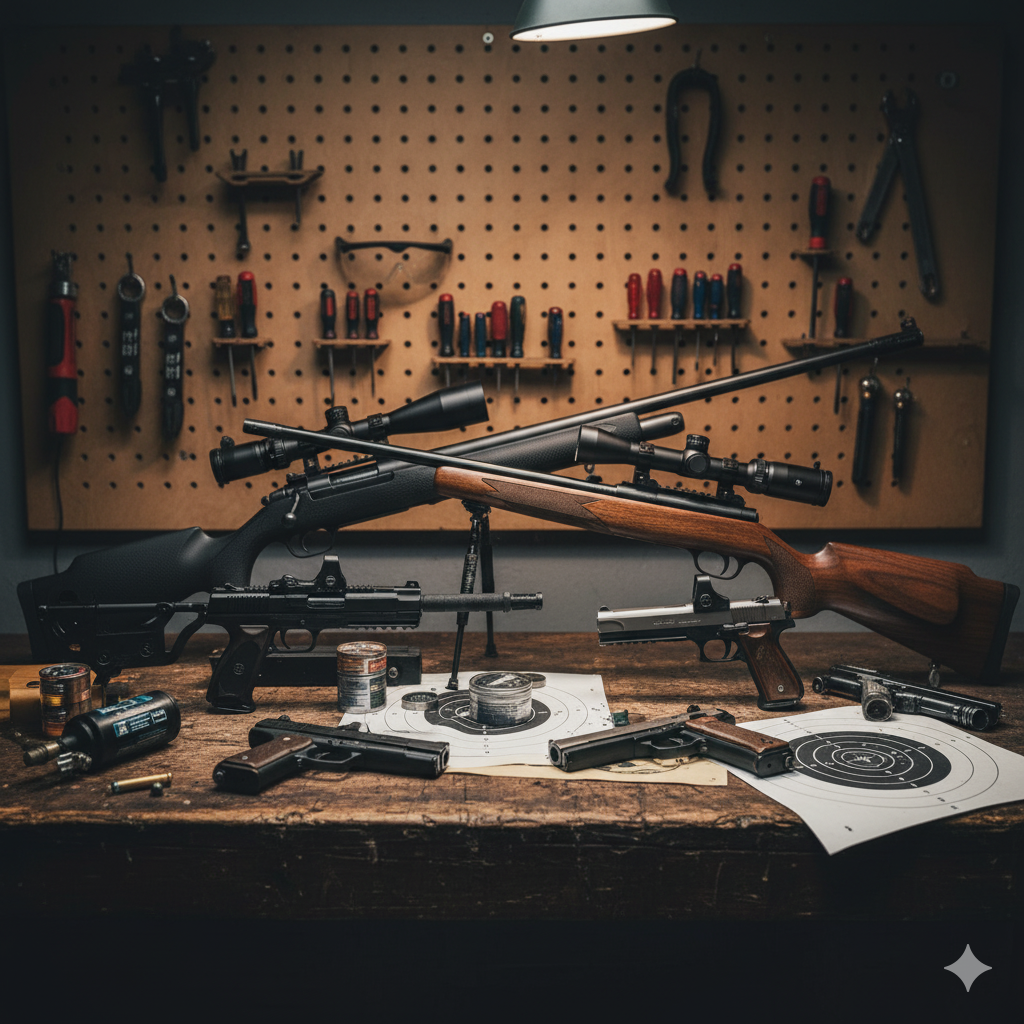
In an era where personal safety is a top priority for families and individuals alike, the market for non-lethal deterrents has seen a significant surge. For many, the idea of owning a traditional firearm comes with a heavy burden of responsibility, legal complexity, and the daunting potential for lethal accidents. This has led to a growing interest in alternative security measures that provide the appearance and sound of a firearm without the same level of terminal risk.
Among the most popular options in the non-lethal category are blank-firing guns and high-powered air rifles. While they serve very different tactical purposes, both offer unique benefits to those looking to bolster their home defense strategy. In this comprehensive guide, we will dive deep into the mechanics, psychological advantages, and practical applications of these tools to help you decide which fits your lifestyle.
Understanding Blank Guns: The Power of Psychological Deterrence
A blank gun is a non-lethal replica of a real firearm. It is designed to chamber and fire blank cartridges, which contain gunpowder but no projectile (bullet). When fired, the gun produces a realistic flash, a loud bang, and smoke, effectively mimicking the experience of firing a live weapon.
Why Use Blank Guns for Self-Defense?
The primary goal of blank guns for self defence is intimidation. In a high-stress confrontation, the “fight or flight” response is often triggered by sensory input. Most intruders are looking for an easy target; when faced with what sounds and looks like a lethal firearm, the psychological instinct is almost always to flee.
- Realism: Modern blank guns are often made from high-quality alloys, giving them the weight and feel of real semi-automatic pistols.
- Legal Accessibility: In many jurisdictions, blank guns do not require the same rigorous licensing as live firearms, making them an accessible entry point for home security.
- Safety: Because there is no projectile, there is no risk of a bullet passing through a wall and hitting an unintended target in another room.
Tactical Limitations
It is crucial to remember that a blank gun is a “bluff.” If an intruder is armed with a real weapon and is not deterred by the sound, a blank gun offers no physical stopping power. Therefore, it is best used as a first-line deterrent rather than a final line of defense.
The Role of High-Powered Air Guns in Home Security
While blank guns focus on sound, an air gun—specifically modern high-powered pellet rifles—focuses on precision and physical impact. Air guns have come a long way from the “BB guns” of our childhood. Today’s PCP (Pre-Charged Pneumatic) and gas-piston rifles are capable of incredible velocities.
Defensive Advantages of Air Rifles
While primarily designed for pest control and target shooting, certain air rifles are used as defensive tools in specific contexts.
- Physical Deterrent: A high-velocity lead pellet can cause significant pain and localized injury, which can serve to incapacitate or discourage an attacker without being inherently lethal (though safety must always be practiced).
- Quiet Operation: Many modern air rifles come with integrated silencers or “shrouded barrels.” This allows for discreet target practice at home, ensuring you are comfortable with the weapon without alerting the entire neighborhood.
- Low Cost of Operation: Unlike blank cartridges or live ammunition, pellets are incredibly inexpensive. This encourages frequent practice, which is the most critical factor in any self-defense scenario.
Precision vs. Panic
Unlike a blank gun, which is “point and click” for noise, an air rifle requires a steady hand and a calm mind. In a home defense situation, a long-barreled rifle may be harder to maneuver in tight hallways than a blank-firing handgun. However, for property defense—such as deterring an intruder before they reach your front door—the air rifle offers a distinct range advantage.
Comparative Analysis: Which One is Right for You?
Choosing between a blank gun and an air gun depends largely on your environment and your defensive philosophy.
| Feature | Blank-Firing Guns | Air Guns / Pellet Rifles |
| Primary Effect | Auditory and Visual Deterrence | Physical Impact and Accuracy |
| Projectile | None (Gas/Flash Only) | Lead or Alloy Pellets |
| Ease of Use | High (Semi-auto functionality) | Moderate (Requires aiming/loading) |
| Training Needed | Low | High (Marksmanship) |
| Legal Status | Generally less restricted | Varies by power/velocity |
Training and Safety: The Non-Negotiables
Whether you choose a blank gun for its psychological impact or an air rifle for its precision, the most important component of your safety is training.
1. Situational Awareness
A weapon is a tool, not a shield. The best way to survive an encounter is to avoid it entirely. Invest in motion-sensor lighting, sturdy locks, and security cameras alongside your defensive tools.
2. Muscle Memory
In a crisis, your fine motor skills will vanish. You must practice drawing your blank gun or aiming your air rifle until the motion becomes second nature. If you have to think about where the safety catch is, you are already behind the curve.
3. Safe Storage
Even non-lethal tools must be stored responsibly. A blank gun can cause serious injury if fired at point-blank range (due to gas pressure), and an air rifle can be dangerous in the hands of a child. Always use a lockable cabinet or a dedicated safe.
Conclusion: Crafting a Multi-Layered Defense
There is no “magic bullet” when it comes to personal safety. The most effective home security strategies are layered. A blank gun can provide the loud, immediate deterrent needed to end a confrontation before it escalates, while a high-powered air gun offers a means of precision practice and property protection.
By understanding the strengths and limitations of these non-lethal options, you can make an informed decision that provides peace of mind without the complexities of traditional firearm ownership. Stay vigilant, stay trained, and prioritize the safety of your household above all else.
Frequently Asked Questions (FAQ)
1. Can a blank gun actually hurt someone?
Yes. Although there is no projectile, blank guns expel hot gases and debris at extremely high pressure. If fired at close range (especially against the head or chest), they can cause severe burns, hearing loss, or even fatal injuries. They should always be treated with the same respect as a live firearm.
2. Is it legal to carry a blank gun in public for self-defense?
In many regions, carrying a replica or blank gun in public is restricted or illegal, as it can be mistaken for a real firearm by law enforcement, leading to potentially tragic misunderstandings. Generally, these tools are intended for home defense or theatrical use only. Always check your local bylaws.
3. Do I need a license to buy a high-powered air rifle?
This depends on your country and the power level (measured in Joules or Foot-Pounds) of the rifle. In some places, air guns over a certain velocity are classified as firearms. Always verify the specific regulations in your province or state before purchasing.
4. What is the “bang” like on a blank gun compared to a real gun?
The sound of a 9mm P.A.K. blank is nearly identical to a live 9mm round. It usually registers between 150 and 160 decibels. It is loud enough to cause temporary disorientation to an intruder and alert neighbors that something is wrong.
5. Can I use a blank gun to scare away aggressive animals?
Yes, blank guns are frequently used by hikers and farmers to deter aggressive dogs, baboons, or other wildlife. The loud report is usually enough to startle an animal and cause it to retreat without causing it physical harm.
6. Which is better for home defense: a pistol or a rifle?
For indoor environments, a pistol (blank-firing) is often easier to maneuver. However, a rifle (air gun) is superior for accuracy and property patrolling. Many homeowners choose to keep a blank pistol for immediate response and an air rifle for general property utility.