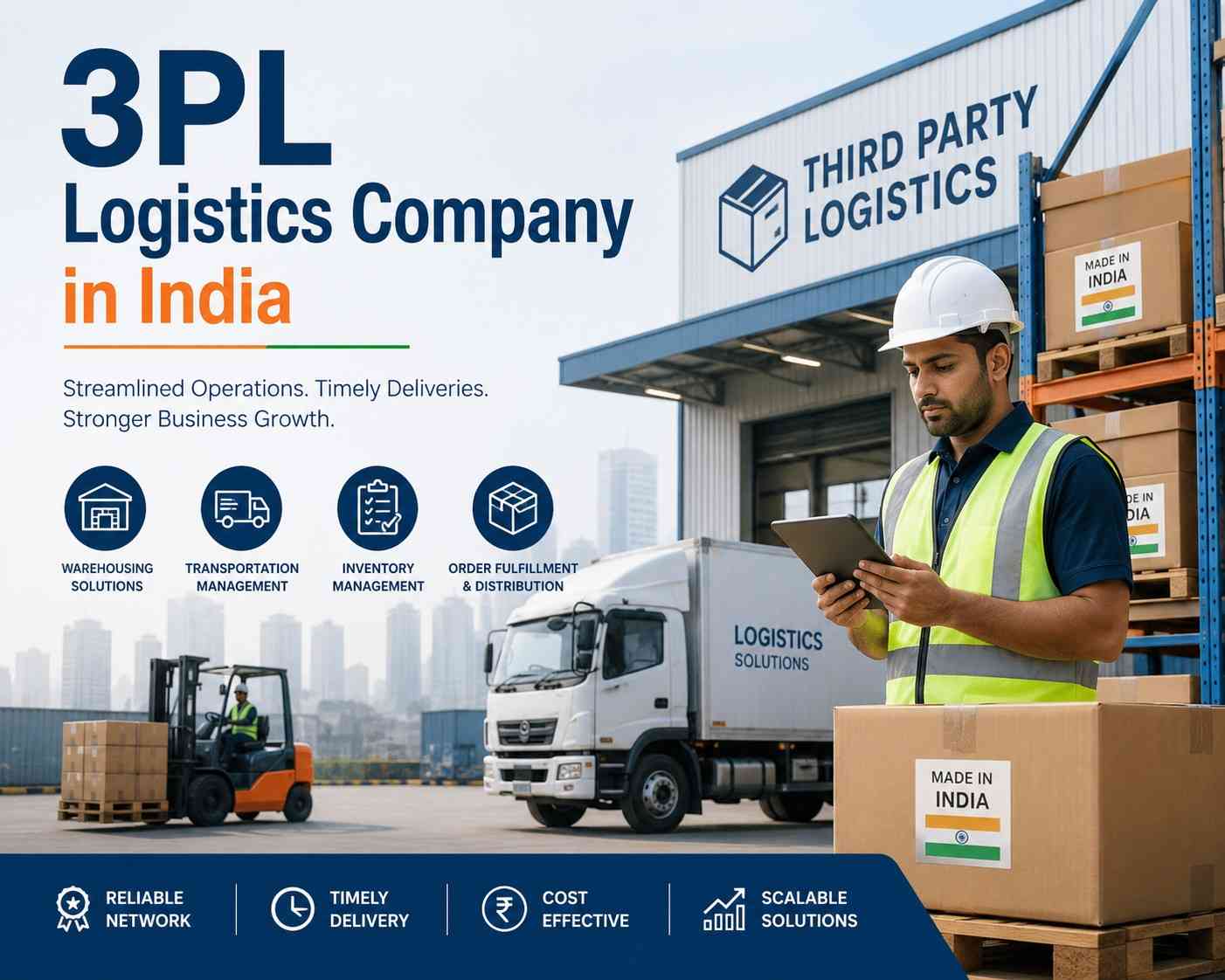
A warehouse can look perfectly organized during onboarding and become difficult to control three months later. Order volume rises, new SKUs arrive without clean master data, urgent dispatches bypass normal processes, and suddenly the inventory report no longer matches the physical stock. This is the point where the real capability of a 3PL logistics company in India becomes visible. Outsourcing logistics can reduce infrastructure pressure and improve reach, but only when the operating model is designed properly. A signed contract does not create a stable supply chain. Daily process discipline does.
Key Takeaways
- Cheap logistics becomes expensive when exceptions require constant manual intervention.
- Inventory accuracy depends on receiving and dispatch discipline, not software alone.
- Scaling exposes weak processes that low-volume operations can hide.
- Integration problems usually become operational problems before IT teams fix them.
- A 3PL relationship needs internal ownership even after operations are outsourced.
The Real Work Starts After the Warehouse Goes Live
Most 3PL transitions receive plenty of attention before launch. Teams discuss rates, storage requirements, service levels, system integrations, and expected order volumes. The problem is that these assumptions are often based on average demand and clean process flows. Real operations are rarely that cooperative.
Within weeks, urgent orders appear. Sales teams request priority dispatches. Procurement sends inventory without complete SKU information. Customer returns arrive in poor condition. Finance wants reconciliation reports in a different format. Every exception seems reasonable on its own, but together they start weakening the operating process.
A capable 3PL logistics company in India should challenge unclear workflows during implementation rather than accept every requirement and solve the consequences later. This is an important difference. Experienced operators know that flexibility without process control eventually creates confusion.
I have seen warehouse implementations go live on schedule while basic ownership questions remained unresolved. Who approves damaged stock? Who can authorize inventory adjustments? What happens when the ERP and warehouse management system show different quantities? These questions sound minor in meetings. During a month-end stock reconciliation, they are not minor at all.
Inventory Problems Usually Start Outside the Warehouse
When stock accuracy falls, warehouse staff are usually blamed first. Sometimes that is justified. Often, the problem started before the goods reached the facility.
A supplier may use an incorrect label. The purchase order may contain outdated SKU data. The system may treat two packaging sizes as one item. Returns may be received without a clear disposition process. Once these errors enter the warehouse flow, the team begins correcting them manually, and manual corrections are difficult to control at scale.
Good inventory management logistics services need clear receiving rules, cycle-counting routines, controlled stock adjustment rights, and proper reconciliation between physical and system inventory. Software helps, but it cannot decide whether damaged stock should be returned, quarantined, repaired, or made available for sale.
This is where operational ownership matters. A 3PL logistics company in India can manage warehouse execution, but the client still needs clear internal decisions on product data, inventory policy, demand planning, and exception approval.
The businesses with better inventory control are not always using the most expensive technology. Usually, they have fewer uncontrolled exceptions.
Affordable Logistics Is About Cost Behaviour, Not the Lowest Rate
The phrase affordable 3PL logistics solutions is often interpreted too narrowly. Procurement compares storage rates, handling charges, transportation rates, and sometimes minimum monthly commitments. Those numbers matter, but they do not explain how costs will behave when the operation changes.
Suppose order volume doubles but average order size falls. Picking activity increases even if total inventory movement remains similar. A pricing model that looked economical at the beginning can become expensive. The same issue appears with returns, special packaging, appointment deliveries, remote destinations, and seasonal manpower requirements.
One thing many teams underestimate is the cost of internal coordination. If five employees regularly spend time chasing stock reports, resolving billing disputes, and asking for shipment updates, the logistics arrangement is consuming resources that rarely appear in the vendor comparison sheet.
A mature 3PL logistics company in India should be able to explain cost drivers clearly. Experienced businesses also model different operating scenarios before signing long contracts. They ask what happens if order profiles change, not only what today’s shipment will cost.
What Experienced Teams Check Before Choosing a 3PL Partner
A vendor presentation can show warehouse capacity, technology dashboards, and impressive network coverage. None of that proves the operation will work for your specific business. Experienced teams spend time on the warehouse floor and examine how exceptions are actually handled.
They look at whether receiving processes are controlled, how damaged inventory is recorded, how dispatch cut-offs are managed, and whether escalation depends on one account manager. They also examine system integration carefully. An API connection is useful, but the more important question is what happens when the connection fails at 4 PM and hundreds of orders are waiting for allocation.
This is particularly important when evaluating end-to-end 3PL logistics services. The more functions a provider manages, the more dependencies exist between inventory, warehousing, order processing, transportation, returns, and reporting. One weak handover can affect the entire chain.
Businesses evaluating a third party logistics service provide should also ask who owns process changes after implementation. Operations evolve. New marketplaces are added, packaging changes, delivery promises become tighter, and reporting requirements increase. If every change requires an improvised workaround, operational debt begins accumulating.
A reliable 3PL logistics company in India does not eliminate every problem. No provider can. The better providers make problems visible early, maintain clear escalation paths, and prevent temporary workarounds from becoming permanent processes.
Scaling Requires Governance, Not Just More Warehouse Space
Growth creates a common misunderstanding: if the warehouse has enough space and manpower, the logistics operation can scale. Capacity is only one part of scaling.
As order volume increases, communication paths multiply. More people approve exceptions. More systems exchange information. Additional transport partners join the network. Customer service teams need faster updates. Finance wants cleaner reconciliation because transaction volumes are larger.
This is where 3PL logistics services in India can either support growth or become a constraint. The difference usually comes down to governance. Performance reviews need to examine recurring causes, not only monthly service percentages. Inventory variance should be investigated by process stage. Failed deliveries should be separated by actual cause instead of being grouped under a general delay category.
In reality, implementation is often easier than long-term operational management. A business can move inventory into a new warehouse over a planned weekend. Maintaining process consistency through festive peaks, staff changes, new product launches, and sudden sales campaigns is much harder.
The practical answer is not more meetings. It is better operational ownership. Both the business and its logistics partner need named owners for inventory, technology, transportation, billing, and escalation. Problems move faster when ownership is clear.
Conclusion
My view is simple: a good 3PL arrangement should make the business easier to operate as volume grows. If internal teams are spending more time managing the logistics provider every quarter, something in the operating model is wrong.
Companies still make the repeated mistake of outsourcing physical work while keeping processes unclear. The useful operational takeaway is to define ownership, exception rules, reporting standards, and cost behaviour before scaling begins. As supply chains become more connected and delivery commitments become tighter, the best 3PL logistics company in India will not simply be the one with the largest network. It will be the one capable of maintaining process control while the client’s business keeps changing.
FAQs
1. How should a business choose a 3PL logistics company in India?
Ans. Evaluate warehouse processes, inventory controls, system integration, reporting quality, escalation procedures, and cost behaviour at higher volumes. Pricing should be considered after operational fit is understood.
2. Are affordable 3PL logistics solutions suitable for growing businesses?
Ans. Yes, if the pricing model remains practical as order patterns change. A low initial rate can become expensive when returns, special handling, or manual coordination increase.
3. What do end-to-end 3PL logistics services usually cover?
Ans. They can include receiving, storage, inventory control, order processing, transportation, returns, and reporting. The real value comes from coordination between these functions.
4. Why do inventory records become inaccurate in outsourced warehouses?
Ans. Common causes include poor SKU data, receiving errors, uncontrolled adjustments, weak returns processes, and system mismatches. Regular reconciliation alone will not fix an unclear process.
5. What should a third party logistics service provide during disruptions?
Ans. The provider should offer early visibility, clear escalation, realistic recovery planning, and accurate communication. Hiding delays until the customer complains is a serious operational weakness.