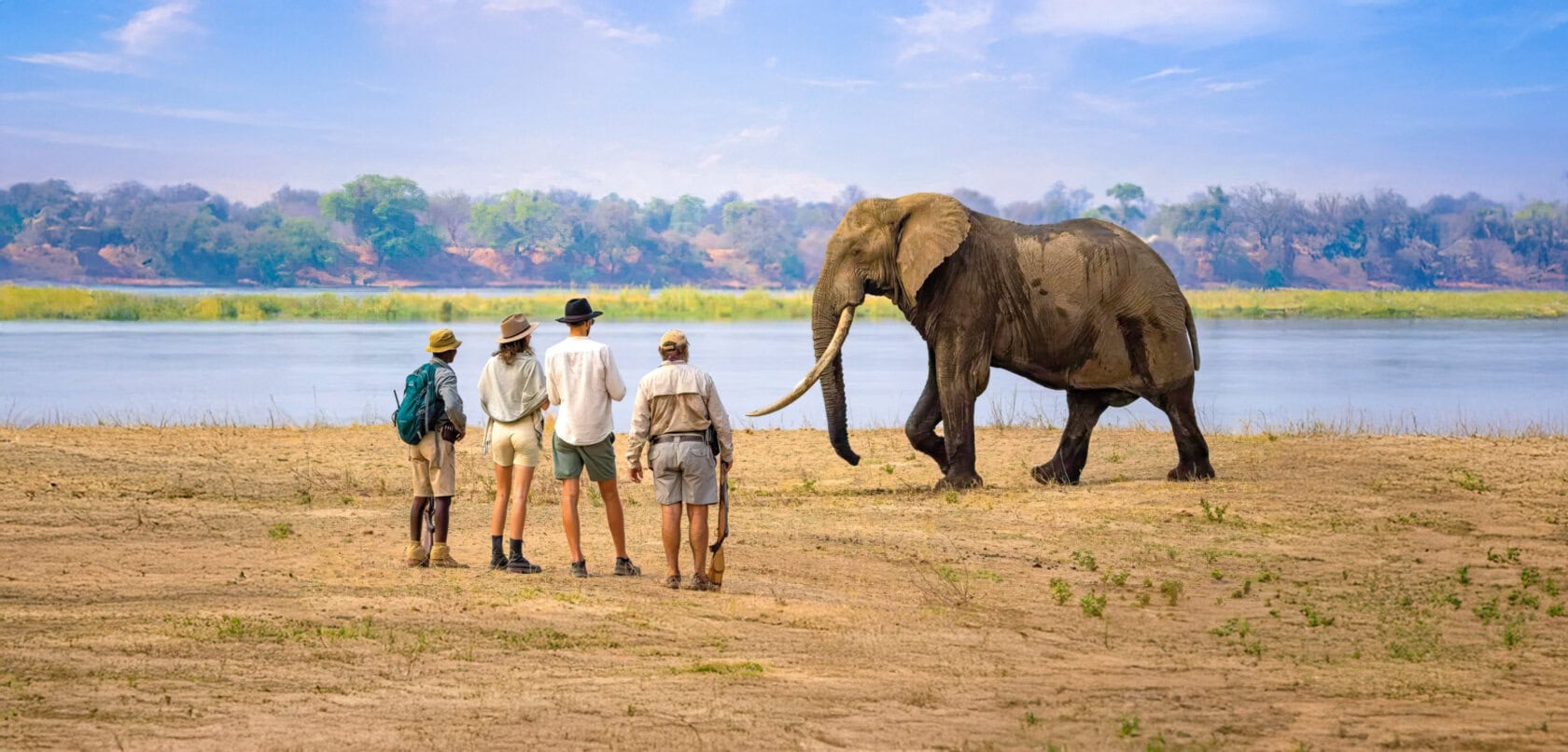
If you are looking for a travel destination that offers raw wilderness, jaw-dropping natural wonders, and wildlife encounters untouched by mass tourism, Zambia should be at the very top of your list. Often called the “real Africa,” this landlocked country in Southern Africa is the birthplace of the walking safari and home to one of the Seven Natural Wonders of the World.
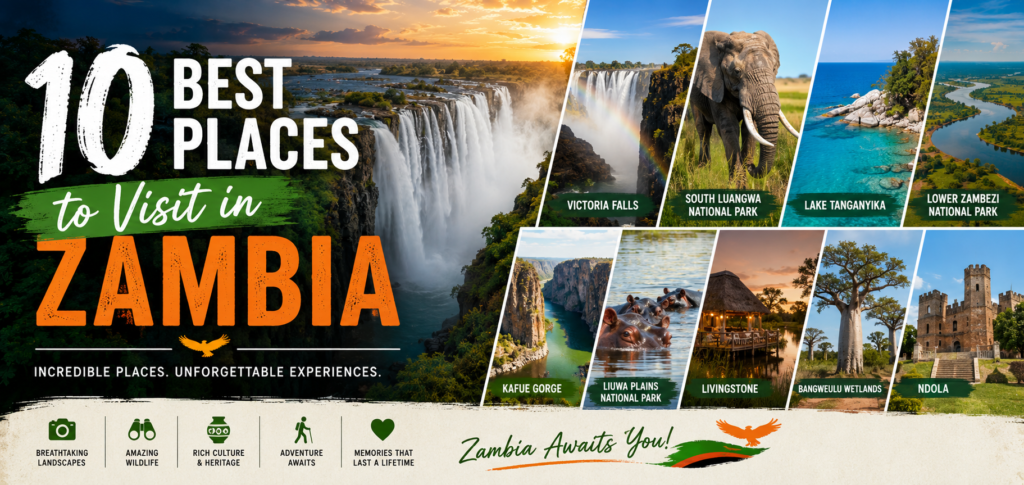
Planning a trip to a country with so much to offer can feel overwhelming. To help you map out your itinerary, we have put together this list of the ten best places to visit in Zambia, answering the most common questions travelers search for before they go.
1. Is Victoria Falls better from the Zambian side?
This is one of the most common questions travelers ask. Locally known as Mosi-oa-Tunya (The Smoke That Thunders), Victoria Falls straddles the border between Zambia and Zimbabwe.
While both sides offer incredible views, the Zambian side brings you incredibly close to the rushing water. Here, you can walk across the thrilling Knife Edge Bridge, which puts you right in the middle of the spray during high-water season (typically March to May).
If you visit between August and January, when the water levels are lower, you can also access the famous Devil’s Pool. This is a natural rock pool right on the lip of the falls where you can swim safely while watching the water plunge over 100 meters down right next to you.
2. Why is South Luangwa the home of the walking safari?
In the 1960s, conservationist Norman Carr pioneered the walking safari in South Luangwa National Park. The idea was simple: instead of watching wildlife from the back of a noisy vehicle, you step onto the ground, tune your senses to the bush, and track animals on foot with expert local guides.
South Luangwa is famous for its high concentration of leopards, which are frequently spotted on night drives. The Luangwa River is packed with thousands of hippos and crocodiles, while the plains are home to large herds of elephants, buffaloes, and the endemic Thornicroft’s giraffe, which you cannot find anywhere else on Earth.
3. Can you really canoe past hippos on the Lower Zambezi?
For travelers who love water-based adventures, Lower Zambezi National Park offers an experience unlike any other. The park lies directly across the river from Zimbabwe’s Mana Pools, creating a massive, unfenced sanctuary for wildlife.
The best way to explore this region is on a canoe safari. Drifting quietly down the channels of the Zambezi River allows you to glide past family herds of elephants drinking at the water’s edge, while keeping a safe distance from lazy pods of hippos. It is a peaceful yet deeply exciting way to see African wildlife up close.
4. How massive is Kafue National Park?
If you want to escape the crowds completely, Kafue is your answer. Covering an area roughly the size of Wales, Kafue is one of the largest national parks in Africa. Despite its massive size, it remains largely wild and receives far fewer visitors than other parks.
The jewel of Kafue is the Busanga Plains in the far north. These seasonal floodplains dry up to reveal lush grasslands that attract massive herds of puku, lechwe, and buffalo. These herds, in turn, draw in lions, cheetahs, and the elusive wild dog.
5. Where can you see the world’s largest mammal migration?
Most people think the Serengeti wildebeest migration is the largest on Earth, but the actual record belongs to a tiny, swampy reserve in Zambia called Kasanka National Park.
Every year between October and December, an estimated 10 million straw-colored fruit bats descend upon a single patch of forest inside Kasanka. At dusk, the sky turns completely black as millions of these giant bats take flight to feed on wild fruits. It is an extraordinary, surreal wildlife spectacle that every nature lover should witness at least once.
6. What makes Liuwa Plain National Park so unique?
Located in the remote west of Zambia, Liuwa Plain National Park is a vast, flat grassland that looks like it stretches on forever. It is one of the oldest conservation areas on the continent, dating back to the 19th century when the King of the Lozi people declared it a protected hunting ground.
Liuwa Plain hosts the second-largest wildebeest migration in Africa, where tens of thousands of blue wildebeest move across the plains in search of fresh grass. The park is also famous for its highly social spotted hyenas, which act as the dominant predators here.
7. Is Lake Kariba worth visiting?
Zambia may be landlocked, but it has its own “inland sea.” Lake Kariba is the largest man-made lake in the world by volume, created by damming the Zambezi River in the late 1950s.
It is the perfect place to wind down after a busy week of safaris. Many travelers rent a houseboat to cruise the lake, spend quiet afternoons fishing for the legendary tiger fish, and enjoy some of the most beautiful, golden sunsets you will ever see.
8. Why is North Luangwa National Park so exclusive?
While South Luangwa is popular, North Luangwa National Park is wild, raw, and highly exclusive. Public access is heavily restricted, and only a small handful of eco-friendly bush camps operate here.
North Luangwa is the only place in Zambia where you can track all of the “Big Five” (lion, leopard, elephant, buffalo, and black rhino) on foot. Thanks to dedicated conservation efforts, black rhinos were successfully reintroduced here in 2003, making it a vital sanctuary for endangered species.
9. What is there to do in the historic town of Livingstone?
Named after the British explorer David Livingstone, this historic town serves as Zambia’s adventure capital. Beyond its close proximity to Victoria Falls, the town itself is packed with cultural and historical charm.
You can visit the Livingstone Museum, the oldest and largest museum in the country, to view local archaeological finds, traditional tribal artifacts, and original letters written by David Livingstone himself. For thrill-seekers, the town offers white-water rafting down the Batoka Gorge, helicopter flights over the falls, and micro-light flights.
10. Where is the best spot for birdwatching near Lusaka?
Just a two-hour drive from the busy capital city of Lusaka lies Blue Lagoon National Park. This seasonal floodplain is a dream destination for birdwatchers, especially during the wet season when the landscape fills with water and thousands of migratory birds arrive.
Blue Lagoon is also famous for protecting large numbers of the Kafue Lechwe, a rare water-loving antelope that is entirely endemic to the Kafue flats.
How do I apply for a Zambia tourist visa?
To explore these incredible destinations, most international travelers will need a tourist visa. Fortunately, the government of Zambia has simplified this process by introducing an electronic visa (e-Visa) system, which allows you to apply online before you travel.
Applying for your visa on your own can sometimes be confusing, with strict photo requirements and document uploads that can lead to unexpected delays or rejections. That is where a professional service makes all the difference.
Why Choose Us for Your Zambia e-Visa?
- Reliable Travel Visa Services: Our global approach has assisted numerous travelers in successfully obtaining their official Zambia entry permits without the stress.
- Round-the-Clock Assistance: Have questions about your application? You can reach out to us 24/7, and our dedicated visa experts will respond to your queries within 72 hours.
- Experienced Visa Consultants: Get personalized, expert guidance to ensure your documents are completely accurate, maximizing the chances of your application being approved quickly.
- Efficient Visa Application Process: Skip the complicated paperwork. You can complete your Zambia Tourist e-Visa application in just a few minutes using our simplified, user-friendly online form.
Get your travel documents sorted early so you can focus on planning the adventure of a lifetime in wild Zambia!