Have you ever dreamed of visiting a place that feels completely detached from the rest of the world? Madagascar is exactly that. Floating in the Indian Ocean off the eastern coast of Africa, this massive island is so ecologically isolated that about 90% of its wildlife and plants cannot be found anywhere else on Earth.
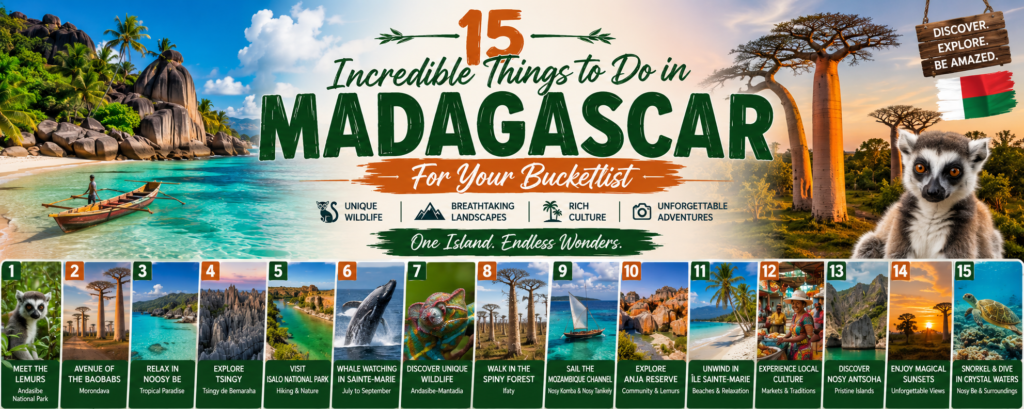
Whether you want to trek through jagged limestone “stone forests,” lock eyes with a curious lemur, or wind down on a quiet, white-sand beach, Madagascar offers a raw, unplugged adventure that is hard to match.
If you are ready to plan the trip of a lifetime, here are 15 incredible things to do in Madagascar that absolutely belong on your travel bucket list.
Why is Madagascar called a “microcontinent”?
Before dive-bombing into your itinerary, it helps to understand why this island feels so incredibly diverse. Madagascar is the fourth-largest island in the world, but scientists often call it a “microcontinent.” Because it split away from the African mainland and the Indian subcontinent millions of years ago, evolution took its own wild path here.
In a single trip, you can drive past lush, rain-drenched jungles, cross dry, desert-like canyons, and end your day on a tropical island. It is like visiting five different countries wrapped into one.
1. How do you visit the Avenue of the Baobabs at sunset?
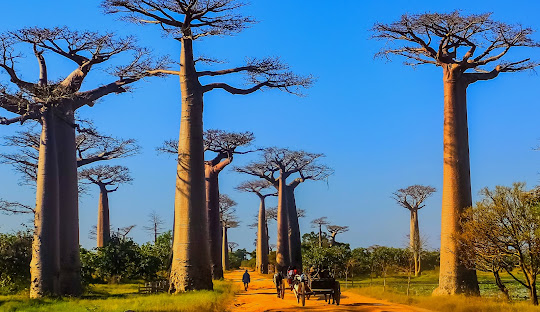
No trip to Madagascar is complete without standing beneath the giant, upside-down-looking trees of the Avenue of the Baobabs. Located near the western town of Morondava, this dirt road is lined with dozens of ancient, towering Grandidier’s baobabs—some of which are over 800 years old.
- How to experience it: Plan to arrive at least an hour before sunset. As the sun dips below the horizon, the sky turns brilliant shades of orange, pink, and purple, silhouetting these massive trees. It is a photographer’s dream.
- Pro tip: Stick around for 30 minutes after the sun disappears. The crowds usually rush back to their 4x4s, leaving you to enjoy the twilight and the rising stars in relative peace.
2. Where is the best place to see wild lemurs in Madagascar?
If you are coming to see lemurs, you are in luck—there are over 100 species of these playful primates scattered across the island. One of the absolute best places to see them up close is the Anja Community Reserve.
This community-run sanctuary is famous for its large populations of ring-tailed lemurs (yes, the ones with the iconic black-and-white striped tails). Because the local villagers protect this forest, the lemurs are incredibly relaxed around humans. You can watch them sunbathe on rocks, groom each other, and leap effortlessly through the trees just a few feet away from you.
3. Can you hike the razor-sharp stone forests of Tsingy de Bemaraha?
If you are looking for a true, adrenaline-pumping adventure, Tsingy de Bemaraha National Park is a must-visit. This UNESCO World Heritage site is famous for its “Tsingy”—massive, jagged, razor-sharp limestone needle formations that look like a stone forest.
- What to expect: You will wear a climbing harness and clip onto steel cables as you navigate suspension bridges, tight crevices, and steep ladders. It is physically demanding but utterly rewarding.
- Keep your eyes peeled: Even in this harsh, rocky landscape, you can spot rare Decken’s sifaka lemurs leaping between the sharp stone spikes.
4. Where can you find the ghostly, nocturnal Aye-Aye?
For the ultimate wildlife enthusiast, seeing the bizarre and elusive Aye-Aye in the wild is the ultimate prize. This nocturnal lemur is famous for its large eyes, bushy tail, and one exceptionally long, skinny middle finger used to tap on tree bark to find grubs.
To spot one, head to Aye-Aye Island (Nosy Mangabe), a small, heavily forested island reserve off the northeast coast. You will need to take a boat out and prepare for a dark, muddy, but incredibly exciting night walk with a local guide.
5. Where can you hear the haunting calls of the Indri lemur?
Imagine waking up in a misty rainforest to a sound that sounds like a cross between a whale song and a siren echoing through the canopy. That is the call of the Indri, the largest living lemur species.
To hear and see them, make your way to Andasibe-Mantadia National Park, a lush rainforest located just a few hours east of the capital. The Indri cannot survive in captivity, so this is one of the few places left on Earth to witness them singing to one another to mark their territory.
6. What is the best Madagascar island for a classic beach escape?
If you want to trade your hiking boots for flip-flops, set your sights on Nosy Be. Located off the northwest coast, this tropical island is Madagascar’s premier beach destination.
Nosy Be is often called the “Perfume Island” because of the sweet scent of ylang-ylang, vanilla, and coffee plantations drifting through the air. Here, you can relax on white sandy beaches, sip fresh coconut water, and enjoy incredibly fresh seafood at local beachside shacks.
7. Where can you swim with whale sharks and giant sea turtles?
While Nosy Be is great for relaxing, the surrounding smaller islands are where the real underwater magic happens.
- Nosy Sakatia: Known as the “Turtle Island,” you can walk right into the shallow water here with a snorkel and swim alongside massive green sea turtles grazing on seagrass.
- Nosy Tanikely: A protected marine reserve offering some of the clearest water and most colorful coral reefs in the country.
- Whale Shark Encounters: If you visit between October and December, you can join respectful, guided boat tours to snorkel alongside gentle, migrating whale sharks.
8. What makes Isalo National Park look like the American Wild West?
For a completely different landscape, travel south down the RN7 highway to Isalo National Park. This park looks like a scene straight out of an old western movie, featuring dramatic sandstone canyons, wind-carved rock formations, and sweeping grasslands.
The highlight of hiking Isalo is stumbling upon hidden, deep green oases. After walking through hot, dry canyons, you will suddenly find yourself at natural, cool, freshwater pools fed by waterfalls—the perfect place to jump in and cool off.
9. Where can you soak in natural hot springs and spot chameleons?
Nestled in a misty, mountainous rainforest, the town and national park of Ranomafana are famous for two things: incredible biodiversity and healing waters. In fact, “Ranomafana” translates to “hot water” in Malagasy.
After a morning of trekking through the dense forest to spot rare golden bamboo lemurs and colorful chameleons, you can spend your afternoon relaxing your sore muscles in the town’s natural, mineral-rich thermal hot springs.
10. How can you watch giant humpback whales up close?
If you plan your trip between July and September, you have a golden opportunity to visit Île Sainte-Marie (also known as Nosy Boraha) off the east coast.
During these months, hundreds of humpback whales migrate from the freezing Antarctic waters to the calm, warm channel of Sainte-Marie to calve and mate. You can take a boat excursion to watch these gentle giants breach, slap their tails, and sing just meters away from you.
11. What historical sites can you explore near the capital?
Before you head out to the jungles, spend a day exploring the rich history of Madagascar in and around the capital, Antananarivo.
The most sacred cultural site on the island is the Royal Hill of Ambohimanga, located just north of the city. This UNESCO-listed fortified royal settlement was the cradle of the Merina Kingdom. Walking through the stone gateways, old palaces, and sacred royal tombs gives you a deep appreciation for the spiritual and ancestral traditions that still shape Malagasy life today.
12. How can you experience a traditional Malagasy river safari?
For those who want to truly get off the grid, drifting down the Tsiribihina River by boat is an unforgettable journey.
Over the course of 2 to 3 days, you will float down the calm river in a traditional pirogue (wooden dugout canoe) or a simple motorized barge. You will camp on sandy riverbanks under the stars, swim under hidden jungle waterfalls, spot lemurs drinking from the river’s edge, and wave to local kids playing along the shore. It is slow travel at its absolute finest.
13. What is the mystery behind the Red Tsingy?
While the Grand Tsingy is dark grey and made of limestone, the Red Tsingy (Tsingy Rouge) in northern Madagascar is a completely different wonder.
Made of red clay, sand, and laterite, these delicate, needle-like spires were formed by centuries of erosion. They sit nestled inside a canyon, and when the sunlight hits them, they glow in brilliant hues of ochre, pink, and deep red. Because they are soft and fragile, they are constantly changing shape with the wind and rain.
14. What should you eat when visiting Madagascar?
Malagasy cuisine is a delicious, unique blend of African, Southeast Asian, and French influences.
- Rice (Vary): The absolute staple of any Malagasy meal. Locals often eat it three times a day!
- Zebu (Local Cattle): You must try zebu steak or Kitoza (dried, smoked zebu meat). It is incredibly flavorful and tender.
- Romazava: A comforting, traditional meat and leafy green stew flavored with ginger and local herbs.
- Street Food: Don’t miss out on Mofo Gasy (sweet, fried rice-bread cakes) paired with a fresh cup of local vanilla tea.
15. How do you navigate the vibrant markets of Antananarivo?
Before you pack your bags to go home, dive into the bustling energy of the Analakely Market or the local craft markets in Antananarivo.
It is a sensory overload of sights, sounds, and smells. It is also the perfect place to pick up high-quality souvenirs to remember your trip. Look for hand-woven raffia bags, local vanilla pods (some of the best in the world), beautiful wood carvings, and stunning, colorful Malagasy textiles called Lamba.
Do you need a tourist visa for Madagascar, and how do you get one?
Yes, almost all international travelers require a tourist visa to enter Madagascar. While you can technically queue up and buy one upon landing at the airport, navigating immigration after a long flight can be exhausting and stressful.
The smartest, most reliable way to secure your entry is to apply online beforehand. By obtaining your official Madagascar Tourist eVisa online, you can skip the long payment lines at airport immigration and head straight to the passport control desk to start your adventure sooner.
Why Choose Us for Your Madagascar eVisa?
Planning a trip to a remote island destination can feel overwhelming, but securing your travel documents shouldn’t be. We make the entire process smooth and worry-free:
- Reliable Travel Visa Services: Our global, proven approach has successfully assisted thousands of travelers in obtaining their official visas without the stress.
- Round-the-Clock Assistance: Got a question at 2 AM? Reach out to us 24/7, and our dedicated travel experts will respond with the help you need within 72 hours.
- Experienced Visa Consultants: Get personalized, expert guidance to double-check your documents and ensure your application is approved on the first try.
- Efficient Visa Application Process: No complicated government portals. Apply for your Madagascar eVisa in just minutes using our highly simplified, user-friendly form.
Ready to tick these 15 incredible experiences off your bucket list? Apply for your Madagascar Tourist eVisa today and get ready to step into a completely different world!