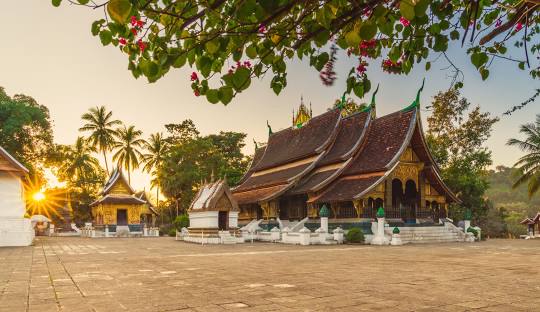
Laos is one of Southeast Asia’s best-kept secrets. Unlike its bustling neighbors, Thailand and Vietnam, this beautiful landlocked country moves at a wonderfully slow pace. From golden temples and mist-covered mountains to spectacular turquoise waterfalls, Laos offers an authentic and peaceful escape for travelers.
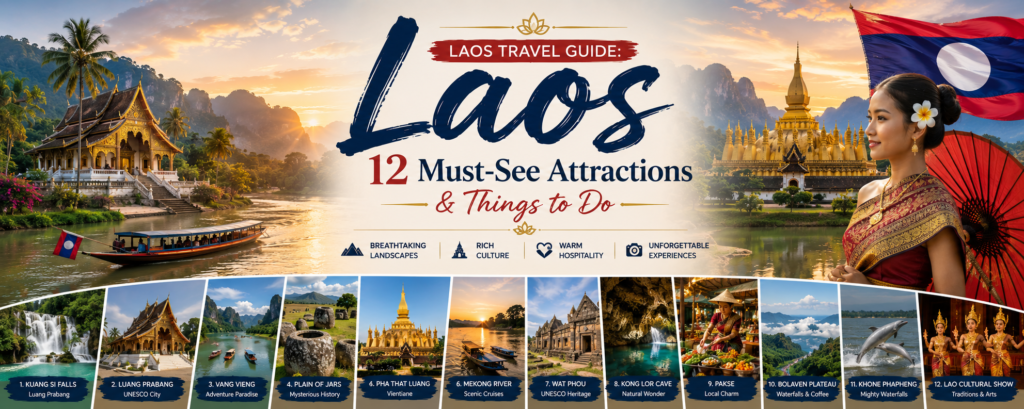
If you are planning your first trip, this comprehensive guide covers the absolute best things to see and do, along with answers to the most common questions travelers search for before they go.
1. What is the best time to visit Laos?
The ideal time to explore Laos is during the dry season, which runs from November to February. During these months, the weather is pleasantly cool and dry, making it comfortable to walk around historic towns, hike up viewpoints, and explore night markets.
If you visit between March and May, expect hot temperatures that can sometimes exceed 40°C (104°F). The wet season lasts from June to October. While rain can occasionally disrupt travel plans, it is also the time when the waterfalls are at their most powerful and the country’s countryside turns an incredibly vibrant green.
2. Do I need a visa to travel to Laos?
Yes, most international travelers need a tourist visa to enter Laos. While you can wait in long lines for a visa on arrival at major borders, getting your visa sorted online in advance is the smartest way to start your journey stress-free.
You can easily secure your travel authorization online via the Lao Tourist eVisa .
Why Choose Our Visa Services?
- Reliable Travel Visa Services: Our global approach has successfully assisted thousands of travelers in securing their official entry approvals without hassle.
- Round-the-Clock Assistance: Have a question? You can reach out to us 24/7. Our dedicated experts will respond to your queries within 72 hours.
- Experienced Visa Consultants: We review your documents carefully. Our expert guidance ensures your application is accurate, preventing common mistakes and ensuring acceptance.
- Efficient Visa Application Process: Skip the complicated government portals. You can apply for your Lao tourist visa in just a few minutes using our simplified, user-friendly form.
3. What are the best places to visit in Luang Prabang?
Luang Prabang is a beautiful UNESCO World Heritage town located where the Mekong and Nam Khan rivers meet. It is famous for its mixture of traditional Lao wooden houses and French colonial architecture. Here are the top three sights you cannot miss:
- Kuang Si Waterfall: Located about 29 km south of town, this is arguably the most beautiful waterfall in Southeast Asia. The water cascades down multiple limestone tiers into stunning, milky-blue pools. You can take a refreshing swim in designated areas or hike up to the very top for peaceful views.
- Mount Phousi: Right in the center of the town sits this 150-meter-tall hill. Climbing the 328 steps to the summit is a popular daily ritual. Once at the top, you get a panoramic, 360-degree view of the entire town, the surrounding mountains, and the winding Mekong River. It is the perfect spot for sunset.
- Wat Xieng Thong: Built in 1560, this is the most elegant temple in Luang Prabang. It represents classic northern Lao style, featuring sweeping roofs that brush close to the ground. Don’t miss the stunning “Tree of Life” mosaic made of colorful glass on the back wall of the main sanctuary.
4. How do I witness the Morning Alms Giving Ceremony?
The daily alms-giving ritual, known locally as Tak Bat, is a sacred Buddhist tradition in Luang Prabang that dates back centuries. Every morning at sunrise, hundreds of saffron-robed monks walk silently through the streets to collect food offerings (mostly sticky rice) from local residents.
If you want to observe or participate, it is vital to show respect:
- Dress modestly with your shoulders, chest, and knees fully covered.
- Keep a respectful distance and avoid getting in the path of the monks.
- Do not use camera flashes, as this disrupts the quiet solemnity of the ceremony.
- If you are not offering alms, stand quietly across the street to watch.
5. Is Vang Vieng still a party town or is it safe for outdoor adventures?
Years ago, Vang Vieng was notorious for wild riverside drinking. Today, the town has completely transformed into a world-class eco-adventure destination. Surrounded by dramatic limestone karst mountains and bright green rice paddies, it is a paradise for outdoor lovers.
- The Blue Lagoons: There are several natural limestone pools scattered around Vang Vieng, known simply as Blue Lagoon 1, 2, 3, and so on. The water is incredibly clear, cool, and perfect for a relaxing afternoon swim.
- Tham Phu Kham Cave: Located right next to Blue Lagoon 1, this deep, mysterious cave houses a beautiful bronze reclining Buddha inside its main chamber, lit naturally by a dramatic hole in the cave ceiling.
6. What are the best river activities in Vang Vieng?
The Nam Song River runs right through Vang Vieng, offering plenty of ways to enjoy the gorgeous scenery from the water.
- Kayaking: You can book a guided day trip to kayak down the gentle river rapids, taking in views of towering cliffs and small rural villages along the banks.
- Tubing: Renting a large rubber inner tube and floating down the calm sections of the river is still a popular, peaceful way to spend an afternoon. There are a few quiet, laid-back riverside wooden bars where you can stop for a cold Beerlao.
7. What is there to do in Vientiane, the capital of Laos?
Vientiane is one of the quietest and most relaxed capital cities in the world. It feels more like a large, leafy riverside town than a crowded metropolis. When visiting, make sure to see these two iconic landmarks:
- Pha That Luang (The Great Stupa): This spectacular gold-covered stupa is the national symbol of Laos and its most important religious monument. It dates back to the 3rd century, though it has been rebuilt several times. On a sunny day, the golden spire shines brightly against the blue sky.
- Patuxai Victory Monument: Often described as the “Arc de Triomphe of Vientiane,” this massive concrete archway was built to honor those who fought for independence from France. Ironically, it is designed using traditional Lao motifs. You can pay a small fee to climb to the top observation deck for a great view over the capital’s main avenues.
8. What is the mystery behind the Plain of Jars?
Located in the cool highlands of Xiangkhoang Province (near the town of Phonsavan), the Plain of Jars is one of the most mysterious archaeological sites in Southeast Asia.
Across the grassy plains, thousands of massive stone jars—ranging from 1 to 3 meters in height—are scattered in large groups. Scientists believe these giant stone vessels are over 2,000 years old and were used as part of ancient burial rituals, though local legends claim they were built by giants to brew rice wine to celebrate a great military victory. The area is a designated UNESCO World Heritage Site and offers a fascinating peek into ancient history.
9. Where are the 4,000 Islands in Laos and are they worth visiting?
Known locally as Si Phan Don, this beautiful river archipelago is located in the far south of Laos, right on the border with Cambodia. Here, the Mekong River expands to a width of nearly 14 kilometers, creating thousands of small islands, sandbars, and channels.
It is absolutely worth the journey if you want to unplug from the modern world. The two most popular islands for travelers are Don Det and Don Khon. There are no cars on these islands; instead, you rent a bicycle to ride through quiet pathways, look for rare freshwater Irrawaddy dolphins, watch spectacular river sunsets, and visit the thunderous Khone Phapheng Falls—the largest waterfall by volume in Southeast Asia.
10. What makes the Bolaven Plateau so special?
The Bolaven Plateau is an elevated region in southern Laos famous for its cool climate, lush landscapes, and world-class coffee plantations.
It is home to some of the country’s most dramatic waterfalls, including Tad Fane, a breathtaking double-drop waterfall that plunges over 120 meters down a sheer cliff face into a deep jungle gorge. If you are adventurous, you can even ride a high-altitude zipline right across the top of the canyon! The plateau is also dotted with organic coffee farms where you can take tours to learn how local farmers harvest and roast their unique beans.
11. Can you explore the incredible Kong Lor Cave?
For off-the-beaten-path adventurers, Kong Lor Cave in central Laos is an absolute must-visit. This giant limestone cave is over 7 kilometers long, and a fast-flowing river runs entirely through it.
To explore it, you board a small, wooden motorized boat with a local guide. Equipped only with a headlamp, you travel through the pitch-black cavern. The cave ceiling towers up to 100 meters above you in some parts, revealing massive chambers filled with dramatic stalactites and stalagmites. It is an incredibly thrilling, otherworldly journey that feels like a true expedition.
12. Is Laos safe for solo travelers?
Yes! Laos is generally considered one of the safest and most welcoming countries in Asia for solo travelers, including solo female travelers. The local people are famously polite, gentle, and helpful.
Violent crime is extremely rare. The most common issues are minor petty thefts, like bag-snatching from passing motorbikes in busy tourist areas. As long as you use basic common sense, keep an eye on your personal belongings, and avoid walking down unlit paths alone at night, you will have a safe and wonderful trip.
13. How much does a trip to Laos cost?
Laos is an incredibly budget-friendly destination. Your money will go a long way here:
- Budget Travelers ($30 – $40 USD per day): This budget easily covers a bed in a clean hostel dorm, delicious street food meals, local bus transport, and entry tickets to main attractions.
- Mid-Range Travelers ($60 – $100 USD per day): This allows you to stay in private, air-conditioned boutique hotel rooms, eat at nice sit-down restaurants, hire private drivers, and book guided outdoor tours.
14. What cultural etiquette should I follow in Laos?
Lao culture is deeply conservative and rooted in Buddhist values. Following a few simple guidelines will help you show respect to the locals:
- The Nop Greeting: To say hello, press your palms together in a prayer-like gesture near your chest and give a slight bow.
- Dress Modestly: When entering temples, your shoulders and knees must be covered. Always remove your shoes and hat before stepping inside a temple sanctuary or a local home.
- Mind Your Feet: In Buddhist culture, the feet are considered the lowest and dirtiest part of the body. Never point your feet at people, Buddha statues, or sacred objects. Similarly, the head is sacred—never touch anyone’s head, not even a child’s.
- Keep Your Cool: Showing public anger or shouting is looked down upon. Staying calm, smiling, and being patient will solve any travel issues much faster!