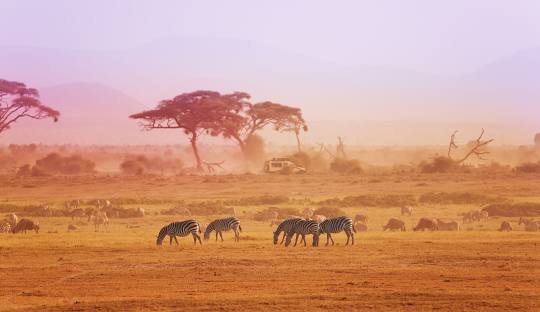
Planning a family vacation that satisfies toddlers, teenagers, and parents alike can feel like trying to solve a massive puzzle. You want something educational but thrilling, relaxing yet deeply adventurous. What if you could trade screen time for savanna sunsets, and crowded amusement parks for the wild, open plains of East Africa?

A 7-day family safari in Kenya is the ultimate bucket-list adventure that brings nature documentaries to life right in front of your children’s eyes. In this comprehensive guide, we will break down exactly how to plan a stress-free, engaging, and unforgettable one-week Kenyan safari with your loved ones, covering everything from kid-friendly wildlife spots to securing your official travel documents.
1. Why is Kenya the ultimate destination for a family safari?
Kenya is the undisputed birthplace of the traditional African safari. Unlike other destinations where thick bush makes wildlife spotting difficult, Kenya’s vast, open grasslands offer near-instant gratification. Your children won’t have to wait hours to see animals; often, they will spot elephants, zebras, and giraffes within minutes of entering a park.
Furthermore, Kenya’s tourism infrastructure is incredibly mature. The country features specialized family-friendly lodges, exceptionally trained local guides who love interacting with children, and diverse activities that go beyond sitting in a vehicle. From boat rides to cultural visits with the Maasai community, Kenya offers a rich, multi-sensory educational experience that textbooks simply cannot replicate.
2. What is the best 7-day Kenya family safari itinerary?
When traveling with kids, a successful itinerary balances thrilling wildlife viewing with minimal travel exhaustion. A classic Rift Valley and Maasai Mara loop is highly recommended for families because it keeps road travel manageable and offers highly diverse activities.
- Day 1: Arrival in NairobiArrive at Jomo Kenyatta International Airport. Check into a family-friendly hotel and rest after your flight. If you have energy, visit the Giraffe Centre to hand-feed endangered Rothschild giraffes.
- Day 2: Nairobi to Lake NaivashaTake a scenic $2$-hour drive to the Great Rift Valley. Embark on an afternoon boat safari on Lake Naivasha to see wallowing hippos and fish eagles, followed by a gentle walking safari among harmless zebras and giraffes on Crescent Island.
- Day 3: Lake Naivasha to Lake Nakuru National ParkDrive $1$ hour to Lake Nakuru. This fenced sanctuary is one of the best places in East Africa to guarantee sightings of both black and white rhinos, alongside thousands of pink flamingos lining the shores.
- Day 4: Lake Nakuru to Maasai Mara National ReserveTravel to the world-renowned Maasai Mara. Arrive at your family camp in time for a late afternoon game drive as the predators begin to wake up.
- Day 5: Full Day in the Maasai MaraSpend the day tracking the “Big Five” (lion, leopard, elephant, buffalo, and rhino). Pack a picnic lunch to enjoy under an acacia tree in the middle of the wild plains.
- Day 6: Cultural Maasai Village Visit & Bush WalksTake a break from long drives. Visit a traditional Maasai homestead (Manyatta), where the kids can learn how to make fire with sticks, try traditional beadwork, and join in the famous jumping dance.
- Day 7: Maasai Mara to Nairobi & DepartureEnjoy a final sunrise game drive, have breakfast, and fly or drive back to Nairobi for your evening flight home.
3. Which Kenyan national parks are most kid-friendly?
Not all wildlife reserves are created equal when it comes to younger travelers. For families, the top recommendations include:
- Maasai Mara: Unmatched wildlife density means children stay constantly engaged.
- Lake Naivasha: The lack of large predators allows for safe, guided walking safaris and boat rides, giving children the freedom to stretch their legs.
- Lake Nakuru: Excellent road systems, highly visible rhinos, and compact geographical size mean you don’t have to spend all day in the car to see incredible sights.
- Ol Pejeta Conservancy: Located near Mt. Kenya, this private conservancy offers unique experiences like visiting the last two northern white rhinos on earth and meeting rescued chimpanzees.
4. When is the best time of year to take kids on a safari in Kenya?
The best time for a family safari is during the dry seasons, which run from June to October and January to February.
The long dry season (July to October) coincides with the spectacular Great Wildebeest Migration in the Maasai Mara. During these months, the weather is pleasantly warm, the grass is short (making animals much easier to spot), and wildlife congregates around permanent waterholes. Additionally, fewer mosquitoes during the dry seasons significantly lowers malaria concerns for parents.
5. How much does a 7-day family safari in Kenya cost?
A family safari can be customized to fit several budget levels, but it generally falls into three tiers (estimated per person, excluding international flights):
- Mid-Range ($2,000 to $3,500 USD): Comfort-focused safari minivans or shared $4 \times 4$ vehicles, staying in beautiful, permanent tented camps or family lodges with swimming pools and en-suite bathrooms.
- Luxury ($4,500 to $8,000+ USD): Flying between parks via light aircraft (avoiding bumpy roads), private $4 \times 4$ land cruisers, and stay at high-end luxury lodges with private decks and dedicated family suites.
6. Is a Kenya safari safe for young children and toddlers?
Yes, a Kenya safari is incredibly safe when you travel with a reputable tour operator and follow basic safety guidelines. Professional safari guides are highly skilled at maintaining safe distances from wild animals.
However, for families traveling with toddlers (under 5 years old), you must keep in mind that many luxury tented camps are unfenced, meaning wildlife can wander through the grounds at night. For very young children, booking fenced lodges with solid walls rather than canvas tents is often the most comfortable option for anxious parents.
7. What should we pack for a 7-day family safari in Kenya?
When packing for the bush, the golden rule is to pack light, use soft-sided duffel bags, and focus on layers. Here is a quick family checklist:
- Clothing: Neutral-colored clothing (khaki, beige, olive green). Avoid bright whites (which attract dust) and dark blue or black (which can attract tsetse flies).
- Sun & Bug Protection: High-SPF sunscreen, wide-brimmed hats, polarized sunglasses, and kid-safe insect repellent.
- Gear: A pair of lightweight, child-sized binoculars for each kid so they don’t have to fight over yours.
- Entertainment: Sketchbooks, wildlife checklists, and small card games for down times at the lodge.
8. Do kids need a visa or an eTA to enter Kenya?
Yes. Kenya has transitioned away from its traditional paper visa system to a fully digital Electronic Travel Authorization (eTA).
All foreign travelers, including infants and newborn babies, must hold an approved eTA before boarding their flight to Kenya. The eTA is a mandatory entry requirement designed to streamline arrival processes at the airport.
9. How do we apply for a Kenya family visit eTA?
To make sure your family’s travel is authorized without any last-minute stress, you should apply for your travel authorization well in advance. Applying as a family group is highly recommended to keep your travel itineraries linked.
You can easily submit your applications through our simplified Kenya Family Visit eTA, designed specifically to take the headache out of government paperwork.
10. What documents are required for a Kenya family visit eTA?
To complete the application for each family member, you will need to prepare the following digital files:
- A passport valid for at least 6 months beyond your planned arrival date.
- A clear, recent passport-style photograph or a clear selfie.
- Your flight itinerary showing confirmed round-trip tickets.
- Proof of accommodation (such as your safari lodge bookings or an invitation letter if visiting family).
- A valid credit or debit card to cover the processing fees.
11. Why choose us to handle your family’s Kenya eTA application?
Navigating government portals with multiple family members can be overwhelming. We streamline the entire process so you can focus on packing your binoculars instead of stressing over paperwork.
- Reliable Travel Visa Services: Our global approach has successfully assisted numerous travelers in obtaining their travel authorizations quickly and securely.
- Round-the-Clock Assistance: Rest easy knowing you can reach out to us 24/7. Our visa and travel experts work around the clock and guarantee a helpful response within 72 hours.
- Experienced Visa Consultants: Every application is thoroughly reviewed by our team of experienced consultants to ensure zero errors and maximize the acceptance of your application.
- Efficient Visa Application Process: No complicated jargon or tedious forms. You can apply for your entire family’s eTA in minutes using our highly simplified online application form.
12. How can we keep our kids entertained during long game drives?
While seeing animals is exciting, sitting in a vehicle for $3$ to $4$ hours can test any child’s patience. Here are a few expert tips to keep the mood fun:
- Create a “Wildlife Bingo” Card: Print out pictures of local animals (lions, giraffes, dung beetles, weavers) before you go. Let the kids tick them off as they spot them.
- Engage with the Guide: Encourage your children to ask the guide questions. Kenyan guides have an absolute wealth of knowledge about animal behavior, folklore, and tracking.
- Incorporate “Micro-Safaris”: Take breaks to look at the small things—identifying animal tracks in the mud, looking at fascinating insects, or learning about the medicinal uses of local plants.
13. What healthcare precautions should families take before traveling?
Before departing on your family adventure, schedule a visit to a travel clinic or your family doctor at least $4$ to $6$ weeks prior to departure.
While the risk is manageable, Kenya is a malaria-endemic region. Your doctor may prescribe child-friendly malaria prophylactics. Additionally, make sure all standard childhood immunizations are up to date, and inquire whether a Yellow Fever vaccination is required based on your flight routing and country of origin. Always carry a well-stocked first-aid kit containing pediatric pain relievers, rehydration salts, and basic bandages.