
Introduction
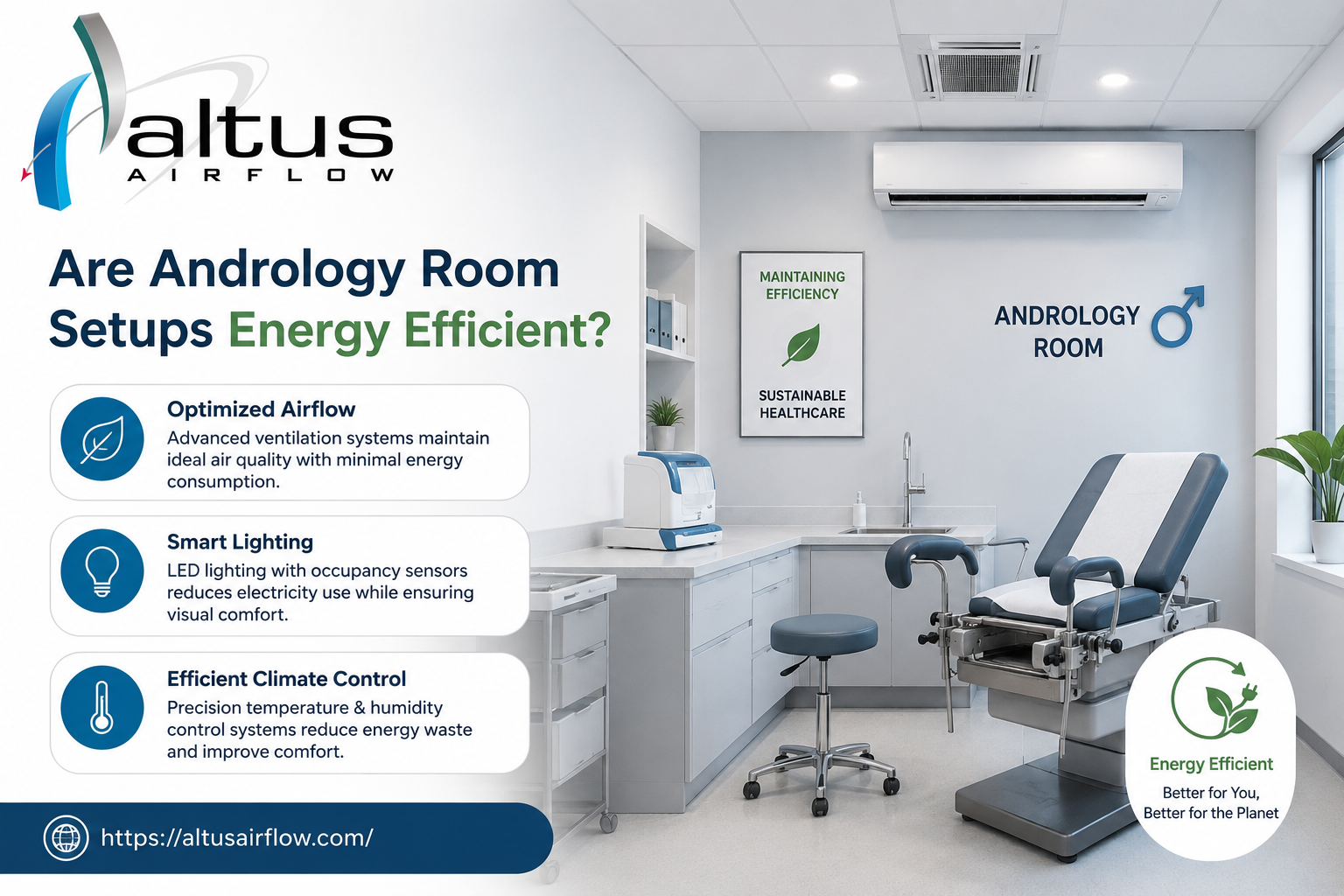
Energy efficiency has become a major priority for modern healthcare facilities as hospitals and fertility clinics seek to reduce operational costs while maintaining high standards of patient care and laboratory performance. Modern Andrology Room Setup Services are designed not only to create highly controlled laboratory environments but also to incorporate energy-efficient technologies that improve sustainability without compromising safety, precision, or regulatory compliance.
An andrology room is a specialized laboratory used for semen analysis, sperm preparation, cryopreservation, fertility assessments, and other reproductive procedures. These laboratories require continuous operation of HVAC systems, air filtration units, laboratory equipment, lighting, refrigeration, and environmental monitoring systems. Since many of these systems operate around the clock, energy-efficient engineering plays an important role in minimizing electricity consumption while maintaining optimal environmental conditions.
Why Energy Efficiency Matters
Healthcare laboratories operate continuously and consume significant amounts of electricity.
Energy-efficient infrastructure helps:
- Reduce operational expenses
- Improve sustainability
- Lower maintenance costs
Efficient laboratories provide long-term financial benefits.
Modern Laboratory Design
Professional Andrology Room Setup Services incorporate energy-saving principles from the earliest stages of project planning.
Careful engineering balances laboratory performance with reduced energy consumption.
Energy-Efficient HVAC Systems
HVAC systems account for a large portion of laboratory energy usage.
Modern systems provide:
- Smart ventilation
- Efficient temperature control
- Optimized airflow
Energy-efficient HVAC technologies reduce electricity consumption.
Variable Speed Fans
Many modern HVAC systems use variable frequency drives.
These systems automatically adjust fan speeds according to laboratory demand, reducing unnecessary energy usage.
Smart Temperature Control
Automated temperature management prevents excessive cooling or heating.
Benefits include:
- Stable laboratory conditions
- Lower energy consumption
- Improved equipment performance
Smart controls increase efficiency.
Humidity Management
Efficient humidity control systems regulate moisture levels without excessive energy usage.
Balanced humidity protects both laboratory samples and equipment.
HEPA Filtration Efficiency
Modern HEPA filtration systems are designed for both high performance and energy efficiency.
Proper filter maintenance also reduces airflow resistance and lowers energy consumption.
Intelligent Airflow Management
Advanced ventilation systems optimize airflow throughout the laboratory.
Balanced airflow reduces HVAC workload while maintaining contamination control.
Building Automation Systems
Many laboratories integrate automated building management technologies.
These systems monitor:
- HVAC performance
- Energy usage
- Environmental conditions
Automation improves overall efficiency.
Environmental Monitoring
Continuous environmental monitoring prevents unnecessary system adjustments.
Stable environmental conditions minimize energy waste.
LED Lighting Systems
Modern laboratories replace conventional lighting with LED technology.
LED lighting offers:
- Lower electricity consumption
- Longer service life
- Reduced maintenance
Lighting efficiency supports sustainability.
Motion Sensor Lighting
Motion sensors automatically switch lights on and off based on occupancy.
This reduces unnecessary energy usage during non-working hours.
Laboratory Equipment Selection
Energy-efficient laboratory equipment contributes significantly to lower operating costs.
Modern equipment includes:
- Low-power microscopes
- Efficient centrifuges
- Smart incubators
Efficient devices reduce electricity demand.
Refrigeration Systems
Specialized laboratory refrigeration units are now designed for lower energy consumption while maintaining precise temperature control.
Efficient refrigeration protects valuable laboratory materials.
Cryogenic Storage Efficiency
Advanced cryogenic storage systems improve insulation and reduce liquid nitrogen consumption.
Better efficiency lowers operational expenses.
High-Performance Insulation
Modern wall panels and ceiling systems improve thermal insulation.
Better insulation reduces HVAC workload.
Modular Construction
Modular laboratory construction minimizes energy loss through:
- Sealed wall systems
- Airtight joints
- Precision engineering
Efficient construction improves environmental stability.
Air Leakage Prevention
Well-sealed laboratories reduce unwanted air infiltration.
Improved airtightness supports HVAC efficiency and contamination control.
Predictive Maintenance
Smart monitoring technologies identify maintenance needs before equipment efficiency declines.
Preventive servicing improves system performance.
Efficient Air Handling Units
Modern air handling units consume less energy while maintaining required airflow rates.
Optimized engineering improves operational performance.
Heat Recovery Systems
Some advanced laboratories incorporate heat recovery technologies.
Recovered energy can be reused to improve HVAC efficiency.
Digital Energy Monitoring
Energy management software tracks:
- Electricity consumption
- Equipment performance
- Utility trends
Monitoring helps identify opportunities for savings.
Sustainable Materials
Many laboratory construction materials are selected for:
- Durability
- Thermal efficiency
- Environmental sustainability
Long-lasting materials reduce lifecycle costs.
Reduced Maintenance Costs
Energy-efficient systems often require less maintenance because they operate under optimized conditions.
Lower maintenance improves return on investment.
Regulatory Compliance
Modern laboratory engineering complies with energy efficiency guidelines alongside healthcare standards.
Compliance supports responsible facility management.
Future-Ready Infrastructure
Energy-efficient laboratories are designed for future technology upgrades.
Flexible infrastructure supports:
- Equipment expansion
- Smart automation
- Sustainable operations
Future readiness protects investments.
Environmental Benefits
Lower energy consumption contributes to:
- Reduced carbon emissions
- Sustainable healthcare practices
- Environmental responsibility
Green laboratories benefit both healthcare providers and communities.
Long-Term Cost Savings
Although energy-efficient technologies require initial investment, they generate long-term savings through:
- Reduced electricity bills
- Lower maintenance expenses
- Extended equipment life
Financial benefits continue throughout the laboratory’s lifespan.
Importance of Professional Planning
Professional Andrology Room Setup Services ensure that HVAC engineering, environmental controls, lighting, laboratory equipment, insulation, and digital automation work together to maximize both laboratory performance and energy efficiency.
Integrated planning creates sustainable laboratory environments.
Conclusion
Modern andrology room setups are designed to be highly energy efficient without compromising laboratory quality, environmental stability, or patient safety. Advanced HVAC systems, intelligent automation, LED lighting, efficient laboratory equipment, optimized airflow management, thermal insulation, digital monitoring, and predictive maintenance all contribute to reducing energy consumption while maintaining strict laboratory standards. These technologies help fertility clinics lower operational costs, improve sustainability, extend equipment lifespan, and support long-term healthcare excellence through responsible infrastructure planning.
Altus Airflow specializes in delivering advanced laboratory infrastructure that combines energy-efficient engineering, intelligent environmental control systems, and modern healthcare technologies. Through innovative design and integrated engineering solutions, Altus Airflow helps fertility clinics develop sustainable andrology laboratories that achieve outstanding performance, regulatory compliance, and long-term operational efficiency.
FAQs
1. Are Andrology Room Setup Services energy efficient?
Yes. Andrology Room Setup Services use energy-efficient HVAC systems, LED lighting, smart automation, HEPA filtration, efficient laboratory equipment, and optimized environmental controls to reduce electricity consumption while maintaining laboratory performance.
2. How do HVAC systems improve energy efficiency?
Modern HVAC systems use automated controls, efficient airflow management, and variable speed fans to reduce energy usage.
3. Why is LED lighting used in andrology rooms?
LED lighting consumes less electricity, lasts longer, and provides consistent illumination.
4. Can automation reduce laboratory energy costs?
Yes. Automated monitoring and smart controls optimize equipment operation and minimize unnecessary energy consumption.
5. Does modular construction improve energy efficiency?
Yes. Modular construction improves insulation, reduces air leakage, and supports efficient HVAC performance.
Read Our Previous Blog —————>What role does HVAC play in turnkey cardiac OT solutions?