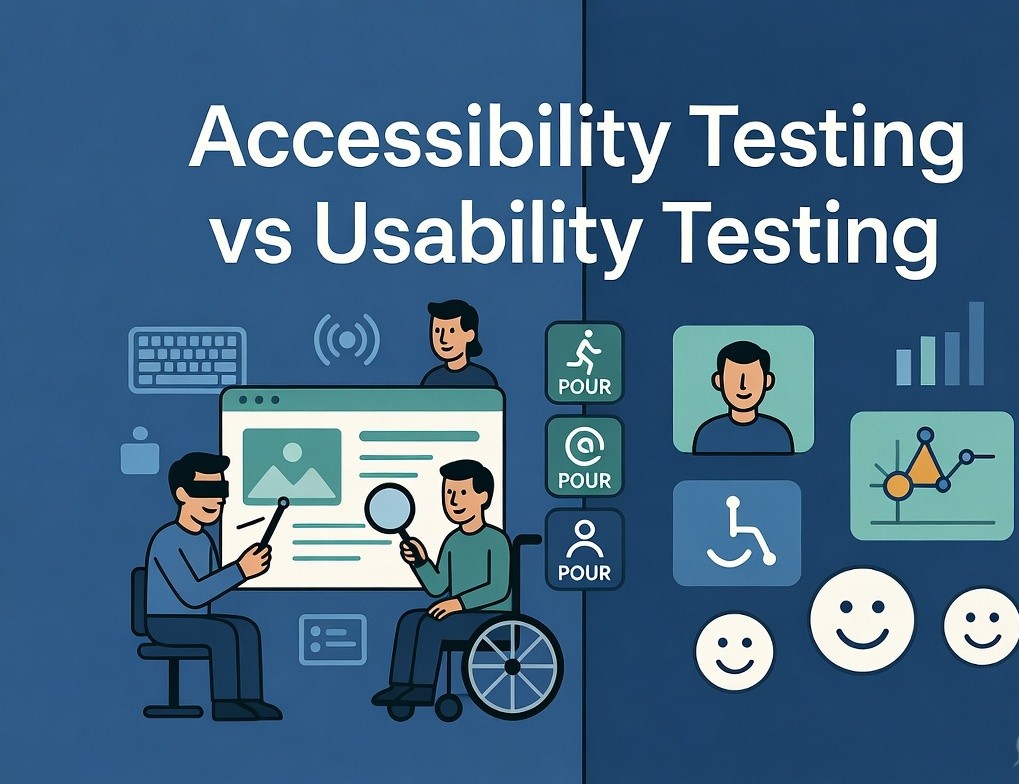
In an increasingly digital world, businesses must ensure their websites, apps, and online platforms are usable by everyone. Accessibility Testing plays a vital role in achieving this by identifying and removing barriers that prevent people with disabilities from fully engaging with digital content. Far from being just a compliance checkbox, Accessibility Testing delivers substantial business advantages, from broader customer reach to stronger brand reputation and reduced legal exposure.
With over 1 billion people worldwide living with some form of disability, and many more benefiting from accessible design (including aging users or those with temporary impairments), ignoring accessibility means leaving significant revenue on the table. This comprehensive guide explores the multifaceted benefits of Accessibility Testing, practical implementation strategies, tools, best practices, and real-world impacts for modern businesses.
What is Accessibility Testing?
Accessibility Testing is the process of evaluating digital products—websites, mobile applications, and software—to ensure they are usable by individuals with visual, auditory, motor, cognitive, or other impairments. It verifies compatibility with assistive technologies such as screen readers, keyboard navigation, voice recognition, and magnification tools.
The foundation of Accessibility Testing lies in the Web Content Accessibility Guidelines (WCAG), developed by the World Wide Web Consortium (W3C). WCAG is organized around four core principles, often remembered as POUR:
- Perceivable: Information must be presented in ways users can perceive (e.g., alt text for images, sufficient color contrast).
- Operable: Interface components must be navigable and usable (e.g., full keyboard accessibility).
- Understandable: Content and navigation must be clear and predictable.
- Robust: Content must work reliably with current and future assistive technologies.
Common standards referenced in laws include WCAG 2.1 or 2.2 Level AA. Accessibility Testing combines automated scans, manual reviews, and user testing with assistive technologies to catch both technical issues and real-world usability problems.
Types of Accessibility Testing include:
- Automated testing for quick identification of common issues.
- Manual testing with screen readers (e.g., NVDA, VoiceOver, JAWS) and keyboard-only navigation.
- User testing involving people with disabilities for authentic feedback.
Legal and Regulatory Drivers for Accessibility Testing
Compliance is a major driver. In the United States, the Americans with Disabilities Act (ADA) applies to digital experiences, with Title II and Title III covering public entities and places of public accommodation. Section 508 requires federal agencies and contractors to meet accessibility standards. Similar regulations exist globally, such as the European Accessibility Act (EAA).
Lawsuits have surged in recent years, with thousands filed annually, many targeting e-commerce sites. Proactive Accessibility Testing significantly mitigates these risks by addressing issues before they lead to costly litigation.
Key Benefits of Accessibility Testing for Businesses
1. Expanded Market Reach and Increased Revenue
Accessibility Testing unlocks a massive audience. In the U.S. alone, about 1 in 4 adults has a disability, representing substantial spending power. Globally, the disability market influences trillions in economic activity. Companies prioritizing accessibility often report higher conversion rates, lower cart abandonment, and increased customer loyalty.
Accessible design frequently improves overall usability, benefiting all users—including those on mobile devices or in low-bandwidth situations. Studies show businesses that enhance accessibility can see notable revenue uplifts through broader customer acquisition and better engagement metrics.
2. Enhanced Brand Reputation and Customer Loyalty
Demonstrating a commitment to inclusion builds trust and positive brand perception. Consumers increasingly favor companies that support social responsibility. Accessibility Testing signals that your business values every customer, fostering loyalty and encouraging recommendations.
3. Improved SEO and Search Visibility
Many accessibility practices align with SEO best practices. Proper heading structures, descriptive link text, alt attributes, and semantic HTML help search engines better understand and rank content. As a result, Accessibility Testing often leads to higher organic traffic and better search performance.
4. Reduced Legal and Financial Risks
The cost of defending or settling accessibility lawsuits can reach tens or hundreds of thousands of dollars per case, plus remediation expenses. Regular Accessibility Testing helps organizations stay ahead of requirements, lowering the likelihood of legal action and associated negative publicity.
5. Better User Experience and Higher Engagement
Accessibility improvements—such as clearer navigation, readable fonts, and logical structure—enhance experiences for everyone. This leads to longer session times, higher goal completion rates, and improved customer satisfaction scores.
6. Innovation and Competitive Advantage
Focusing on Accessibility Testing encourages thoughtful design and development, often resulting in more innovative, user-centered products. Companies leading in inclusion differentiate themselves in crowded markets.
7. Talent Attraction and Employee Productivity
Inclusive digital tools support employees with disabilities, boosting morale, retention, and productivity. An accessible workplace signals a progressive culture attractive to diverse talent.
Integrating Accessibility Testing with Performance Testing
For holistic digital quality, businesses should combine Accessibility Testing with Performance Testing. While Accessibility Testing ensures equitable access, Performance Testing verifies speed, scalability, and stability under various loads. Together, they create robust applications that are both inclusive and high-performing. For instance, an accessible site that loads slowly under traffic fails to deliver value to users relying on assistive technologies. Linking these efforts in your QA strategy maximizes ROI (see our guide on Performance Testing vs Load Testing for deeper insights).
This integration is especially valuable in e-commerce, SaaS, and public-facing platforms where both usability and responsiveness directly impact conversions.
Tools and Methods for Effective Accessibility Testing
Popular tools include:
- axe DevTools: Comprehensive automated scanning with CI/CD integration.
- WAVE: Visual feedback for quick issue identification.
- Google Lighthouse: Accessibility audits alongside performance metrics.
- Screen readers like NVDA and VoiceOver for manual validation.
Best results come from combining automated checks (catching ~30-60% of issues) with manual and user testing.
Best Practices for Implementing Accessibility Testing
- Shift Left: Incorporate accessibility early in design and development.
- Automate Where Possible: Run scans in CI/CD pipelines for continuous feedback.
- Conduct Regular Audits: Test after major updates and periodically.
- Involve Real Users: Gather feedback from people with disabilities.
- Train Teams: Educate designers, developers, and testers on accessibility principles.
- Monitor and Maintain: Use ongoing tools to track compliance post-launch.
- Document Efforts: Maintain records for compliance and continuous improvement.
Real-World Examples and Case Studies
Businesses across sectors have realized gains from Accessibility Testing. E-commerce platforms have reported double-digit improvements in conversion rates after remediation. Public entities avoiding lawsuits through proactive testing have saved significant resources. Companies like those highlighted in inclusion studies show higher revenue and innovation when prioritizing accessibility.
One retailer improved session metrics and goal completions substantially by addressing accessibility barriers, demonstrating clear ROI.
Challenges and How to Overcome Them
Common obstacles include perceived high costs, lack of expertise, and integration complexity. However, early investment in Accessibility Testing is far cheaper than late-stage fixes or legal penalties. Start small, leverage free/open-source tools, and scale with expert support or training. Partnering with specialized vendors can accelerate progress.
The Future of Accessibility Testing in Business
As regulations evolve and user expectations rise, Accessibility Testing will become even more central to digital strategy. Advances in AI-assisted testing tools promise faster, smarter detection, while growing awareness of inclusive design will drive innovation. Businesses that embrace Accessibility Testing today will lead tomorrow’s inclusive digital economy.
Conclusion
Accessibility Testing offers transformative benefits for businesses: wider market access, stronger legal protection, improved SEO, enhanced user experiences, and positive brand impact. By making digital products usable for everyone, companies not only fulfill ethical and legal responsibilities but also unlock new growth opportunities.
Investing in Accessibility Testing—ideally alongside complementary practices like Performance Testing—positions your business for long-term success in a diverse, digital-first world. Start auditing your platforms today and turn inclusion into a competitive advantage.
Click Here For More Blogs