In today’s digital world, conversations between customers and brands are rarely limited to phone calls or emails. Instead, users interact with chatbots and virtual assistants — two technologies that have revolutionized how businesses communicate.
While both help automate interactions and improve response times, they aren’t the same. Understanding the difference between chatbots and virtual assistants can help businesses choose the right tool for better customer engagement and smarter automation.
Understanding Chatbots
Chatbots are software programs designed to simulate human conversation. They follow scripts, respond to set keywords, and handle repetitive questions like “Where’s my order?” or “What are your business hours?”
These tools are often found on websites, messaging apps, or social media pages. A well-designed chatbot can guide users through simple processes such as order tracking, appointment booking, or FAQ responses — all without requiring a human agent.
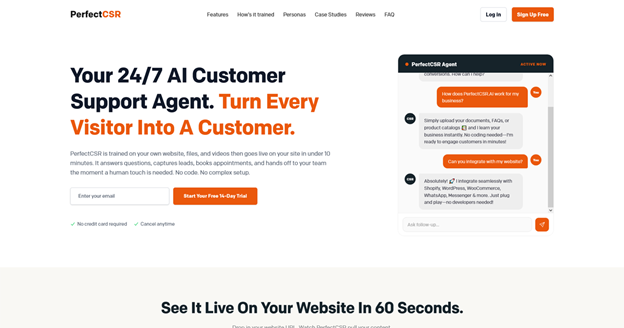
In essence, a chatbot is like your customer service rep who never sleeps. It provides quick, consistent answers and frees your team from handling basic queries. Platforms like PerfectCSR.ai take this a step further by blending automation with personalization, allowing businesses to create chatbot experiences that feel natural and on-brand.
What Are Virtual Assistants?
Virtual assistants, on the other hand, are more advanced. They don’t just answer questions — they learn, adapt, and perform complex tasks using artificial intelligence and natural language processing (NLP).
Think of Siri, Alexa, or Google Assistant. These tools can interpret context, understand follow-up questions, and even integrate with multiple apps to perform actions like booking flights, checking schedules, or sending reminders.
In a business setting, virtual assistants can handle tasks like scheduling meetings, managing CRM entries, or giving data insights. They function like digital team members rather than just customer service tools.
The Key Difference: Purpose and Depth
While both technologies revolve around AI-driven communication, the main difference lies in purpose and depth.
- Chatbots are typically built for customer engagement, sales assistance, and basic support. They operate within predefined rules and workflows.
- Virtual assistants are broader in scope. They can handle cross-functional tasks, understand intent, and use machine learning to improve with time.
For example, a chatbot might help a customer check their order status on an eCommerce site. A virtual assistant could integrate with the same platform, track order data, predict delivery times, and notify the customer proactively.
Chatbots in Action: Enhancing Customer Experience
Chatbots have become essential in eCommerce, healthcare, real estate, and hospitality. They allow businesses to be available 24/7, reduce waiting times, and handle large volumes of inquiries simultaneously.
A platform like PerfectCSR.ai gives brands the flexibility to design chatbots that don’t sound robotic. Instead, they respond using the brand’s tone, creating smooth and personalized conversations that build trust with customers.
By integrating seamlessly with websites, CRMs, and social media channels, chatbots can engage leads, assist customers, and even collect valuable data to improve future service.
Virtual Assistants in Action: Driving Productivity
Virtual assistants are not limited to one function or channel. They’re intelligent enough to perform actions across tools and systems.
For example:
- A banking virtual assistant can help users check balances, make payments, and even recommend saving strategies.
- In a corporate setting, a virtual assistant might handle meeting scheduling, data reporting, or workflow automation.
While chatbots mainly focus on conversations with customers, virtual assistants are built to assist users — whether that’s a customer, employee, or executive.
How AI Has Blurred the Line Between the Two
With rapid advances in artificial intelligence and natural language processing, the gap between chatbots and virtual assistants is narrowing. Many chatbots now use AI to understand intent, handle follow-up questions, and personalize responses — features that were once exclusive to virtual assistants.
Tools like PerfectCSR.ai are great examples of this evolution. They combine the instant response power of a chatbot with the adaptive intelligence of a virtual assistant. The result is a system that understands context, feels human, and grows smarter with every interaction.
This evolution means businesses don’t always have to choose one over the other. Instead, they can deploy intelligent hybrid systems that serve both functions seamlessly.
Choosing the Right One for Your Business
Deciding between a chatbot and a virtual assistant depends on your business goals and the complexity of customer interactions.
Ask yourself:
- Do you need quick, automated responses for common queries? A chatbot will do.
- Do you want deep task automation, cross-platform integration, and context-aware conversations? Then a virtual assistant is a better fit.
- Or do you want both — automation and personality? That’s where hybrid tools like PerfectCSR.ai come in.
PerfectCSR.ai is designed for businesses that want a single solution capable of scaling communication, automating workflows, and delivering natural, brand-consistent conversations. Whether it’s helping customers with support queries or assisting internal teams with data-driven insights, it bridges the gap between chatbots and virtual assistants beautifully.
The ROI of Intelligent Conversations
Both chatbots and virtual assistants offer clear returns on investment when implemented effectively. Businesses using them report:
- Lower operational costs by reducing manual support.
- Faster response times and improved customer satisfaction.
- Increased lead conversion through personalized engagement.
- Data-driven decisions powered by analytics from every chat.
What’s most impressive is how these tools free up human agents to focus on high-value, emotional, and strategic tasks — areas where empathy and creativity matter most.
Beyond Automation
At the end of the day, it’s not about choosing a chatbot or a virtual assistant — it’s about using the right combination to elevate human potential.
Automation should never feel cold or mechanical. When powered by a platform like PerfectCSR.ai, it becomes personal, empathetic, and aligned with your brand’s voice.
That’s the true difference — not just between chatbots and virtual assistants, but between businesses that automate tasks and those that automate relationships.
FAQsWhat is the main difference between a chatbot and a virtual assistant?
Chatbots handle basic, rule-based conversations, while virtual assistants use AI to understand context and perform complex tasks.
Can chatbots and virtual assistants work together?
Yes, many modern solutions like PerfectCSR.ai blend both — offering quick replies and intelligent, personalized interactions.
Which is better for customer support — chatbot or virtual assistant?
For quick FAQs, chatbots work best; for deeper, context-aware support, virtual assistants deliver more value.
Are chatbots cheaper to implement than virtual assistants?
Generally, yes. Chatbots are simpler and more affordable, while virtual assistants require advanced AI integration.
How does PerfectCSR.ai stand out among chatbot platforms?
PerfectCSR.ai combines chatbot speed with virtual assistant intelligence, creating human-like, brand-consistent conversations.