
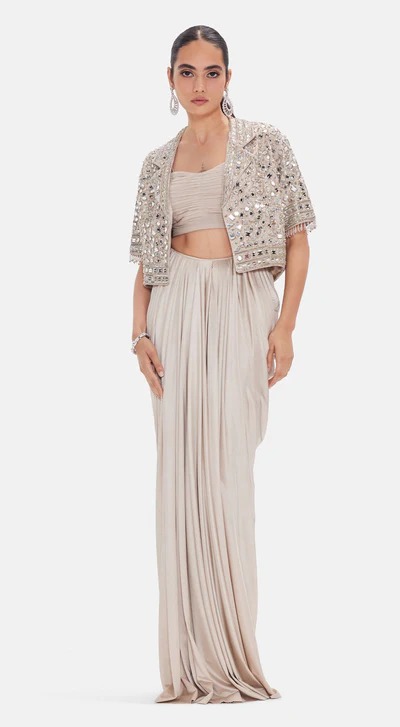
Diwali in the US comes with a particular set of logistics that Diwali in India simply doesn’t. There’s the drive to a friend’s house in the suburbs, the office Diwali celebration squeezed into a lunch hour, the community puja at a rented hall, and the family Zoom call with relatives back home — sometimes all on the same day. Add in the fact that most of these moments will end up photographed and shared within minutes, and outfit choices for Diwali in America carry a different kind of pressure than they once did.
The Travel Problem Nobody Talks About
Unlike in India, where you might get dressed at home and walk or take a short cab ride to a nearby celebration, Diwali in the US often means multiple car rides, sometimes across several hours, sometimes across state lines to visit family. Your outfit needs to survive that journey without looking like it.
This rules out a lot of traditionally favored Diwali fabrics. Delicate chiffon wrinkles the moment you sit in a car for twenty minutes. Heavily embellished pieces with loose embroidery can snag on seatbelts. Long, voluminous skirts get caught in car doors more often than anyone likes to admit.
What works instead are fabrics with natural resilience — silk blends, well-structured cotton-silk, and crepe — that hold their shape and drape through hours of sitting, standing, hugging relatives, and posing for photos.
Photographing Well in 2026
Diwali photography has changed. It’s no longer just the one official family photo near the diyas — it’s iPhone portraits in golden-hour light, Instagram reels of you twirling in your outfit, candid shots at the dance floor, and the inevitable group photo that ends up as everyone’s profile picture for the next month.
A few design choices consistently photograph better than others:
Movement-friendly silhouettes. Flared kurtas, anarkalis, and palazzo sets that move when you do create far more dynamic, flattering photos than stiff, structured pieces.
Jewel tones over pastels. Diwali lighting — string lights, diyas, candles — tends to wash out pastel shades. Rich jewel tones like emerald, deep maroon, royal blue, and gold-accented fabrics photograph with far more depth and warmth.
Subtle shimmer, not full sequins. A little metallic thread or foil print catches candlelight beautifully without creating the harsh flash-back glare that head-to-toe sequins often do in indoor photography.
Clean necklines for jewelry to shine. Statement jhumkas and layered necklaces photograph best against simpler necklines, rather than competing with heavy embroidery at the collar.
Building a Diwali-Ready Outfit Strategy
Given how many different settings a single Diwali day might involve, many people are moving away from one elaborate, single-purpose outfit and toward versatile pieces that can flex across the day. A well-constructed contemporary indian clothing edit is particularly useful here, since pieces are designed to handle the realities of a long, multi-stop celebration day without losing their shape or shine.
A practical approach: choose a base outfit — a structured kurta set or fitted anarkali — that can survive the full day’s travel and activity, then layer in transformation pieces. A statement dupatta for the formal puja portion of the evening. Heavier jewelry and a clutch swap for the party later. A jacket layer for the inevitable evening chill if you’re somewhere up north.
What to Avoid
A few common Diwali outfit mistakes are worth naming directly. Avoid anything that requires constant readjustment — pallu pins coming loose every twenty minutes will ruin your evening and your photos. Skip fabrics that show every sweat mark if your celebration involves dancing (synthetic blends are often the worst offenders here). And be cautious with very light colors if there’s any chance of food-related mishaps at a potluck-style gathering, which, let’s be honest, most Diwali parties are.
The Emotional Weight of Getting Dressed for Diwali Abroad
There’s something worth acknowledging here too. For many in the diaspora, Diwali outfit shopping isn’t just about the photos — it’s one of the few times of year that buying and wearing Indian clothing feels effortless and joyful rather than like an obligation reserved for weddings. Getting it right, in a way that feels both authentically Indian and genuinely “you,” matters more than the logistics alone might suggest.
Packing for Multi-Stop Diwali Travel
Many Indian-American families don’t celebrate Diwali in just one location — there’s often a drive to one relative’s home for the daytime puja, then a separate community celebration in the evening, and sometimes a second family gathering the following weekend for relatives who couldn’t make the actual date. This means Diwali outfits frequently need to be packed and transported, not just worn around the house.
A few packing strategies help here. Roll rather than fold structured pieces to minimize crease lines, and pack your most delicate or embellished item on top of your bag rather than at the bottom where it can get compressed. Bring a travel-size fabric steamer or a portable wrinkle-release spray if you know you’ll be changing in a car or unfamiliar bathroom. And always pack one backup option, even if it’s simpler than your main outfit — a forgotten zipper or an unexpected stain has derailed more than one Diwali evening, and having a reliable backup removes that entire category of stress.
Coordinating With Family Without Losing Individuality
Diwali photos often involve coordinated family dressing — not matching outfits exactly, but a shared color palette across the group. This is another reason jewel tones work so well: a family can each choose deep red, gold, emerald, and royal blue respectively, creating a cohesive but not identical look across the group photo, which tends to photograph far better than five different pastel shades competing for attention.
Final Thoughts
Diwali in America asks more of an outfit than Diwali anywhere else — it has to survive the commute, perform across multiple settings, and hold up under both candlelight and camera flash. Choosing pieces built with resilience, movement, and warmth of tone in mind isn’t just a styling preference anymore; it’s practically a requirement for celebrating well across an American Diwali day.