
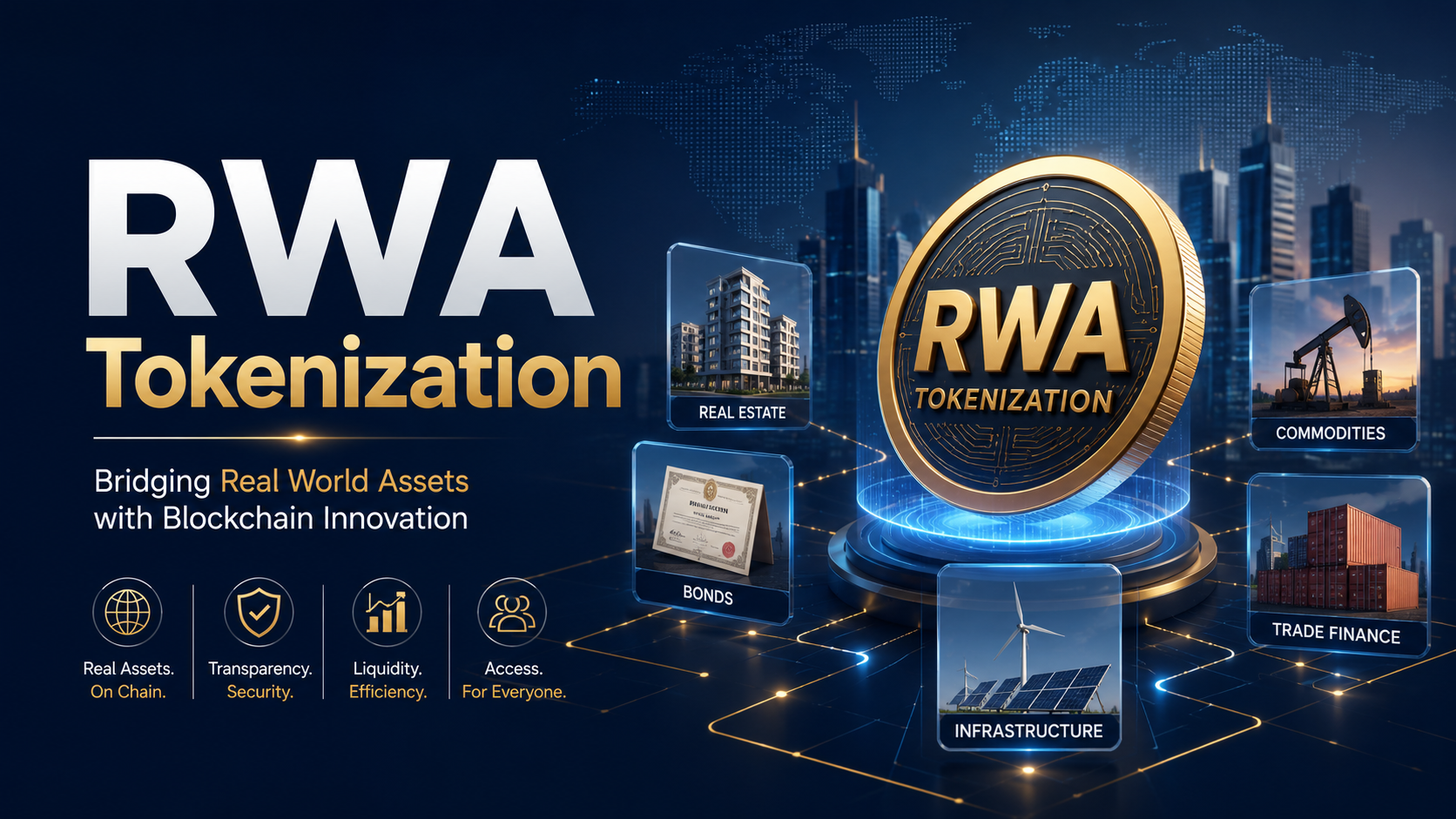
The financial industry is undergoing a major transformation as traditional institutions explore blockchain-powered solutions to improve efficiency, accessibility, and innovation. Among these advancements, Real World Asset (RWA) tokenization is emerging as a powerful technology that enables banks to digitize physical and financial assets and integrate them into modern digital ecosystems. Banks have historically managed assets such as loans, bonds, real estate, commodities, and securities through centralized infrastructure. While these systems provide stability, they often involve lengthy settlement processes, high operational costs, and limited transparency.
Real World Asset tokenization allows banks to represent these assets as blockchain-based digital tokens. These tokens can improve asset management, enhance liquidity, automate financial operations, and create new digital finance products. By leveraging RWA tokenization, banks can bridge traditional finance with blockchain technology and build more efficient financial systems.
What Is Real World Asset Tokenization?
Real World Asset tokenization is the process of converting ownership rights, financial claims, or economic value of physical and traditional financial assets into digital tokens stored on a blockchain.
These assets may include:
- Real estate properties
- Government and corporate bonds
- Loans and credit instruments
- Commodities such as gold
- Private equity investments
- Trade finance assets
- Carbon credits
Each token represents a specific share, ownership interest, or claim related to the underlying asset.
Smart contracts manage the issuance, transfer, compliance rules, and settlement of these tokens, creating a programmable financial infrastructure.
Why Banks Are Exploring RWA Tokenization
Banks operate within complex financial environments where efficiency, security, and compliance are critical. Traditional systems often require multiple intermediaries to verify transactions, maintain records, and complete settlements.
RWA tokenization helps banks address several challenges by enabling:
- Faster settlement processes
- Improved transparency
- Automated compliance management
- Fractional ownership models
- New investment opportunities
- Enhanced liquidity for traditional assets
As digital finance continues to expand, real world asset tokenization provides banks with a pathway to modernize their operations while maintaining regulatory standards.
How Banks Can Leverage Real World Asset Tokenization
1. Tokenizing Traditional Financial Assets
Banks hold billions of dollars worth of assets, including loans, bonds, securities, and investment products. Tokenization allows these assets to be converted into digital representations that can be managed more efficiently.
For example, banks can tokenize:
- Corporate bonds
- Treasury securities
- Mortgage-backed assets
- Loan portfolios
- Investment funds
Tokenized financial assets enable faster transfers, improved recordkeeping, and automated settlement.
This creates a more efficient asset management environment.
2. Improving Securities Issuance and Distribution
Traditional securities issuance involves multiple stages, including underwriting, registration, settlement, and distribution.
Through RWA tokenization, banks can issue digital securities directly on blockchain networks.
Smart contracts can automate:
- Investor verification
- Ownership tracking
- Interest payments
- Dividend distributions
- Compliance requirements
This reduces administrative complexity and improves the overall securities lifecycle.
3. Creating Tokenized Investment Products
Banks can use asset tokenization to develop innovative investment products for customers.
Examples include:
- Tokenized bonds
- Tokenized real estate funds
- Digital investment portfolios
- Fractional asset products
These products allow customers to access investment opportunities with lower entry barriers.
For banks, this creates new revenue streams and strengthens customer engagement.
4. Enhancing Liquidity of Illiquid Assets
Many traditional assets are difficult to trade quickly. Real estate, private credit, and alternative investments often require lengthy transaction processes. Tokenization introduces liquidity by enabling fractional ownership and digital trading mechanisms. Banks can create platforms where investors buy and sell tokenized assets more efficiently. This unlocks value from assets that were previously difficult to monetize.
5. Streamlining Cross-Border Payments and Settlement
Cross-border financial transactions often involve multiple banks, clearing systems, and settlement networks.
RWA tokenization simplifies these processes by enabling blockchain-based asset transfers.
Benefits include:
- Faster transaction completion
- Reduced intermediary costs
- Improved transaction visibility
- Lower settlement risks
Banks can create more efficient international financial services using tokenized assets.
6. Automating Compliance Through Smart Contracts
Compliance is one of the most important areas for banks. Traditional compliance processes often require extensive manual verification.
Tokenization allows compliance rules to be embedded directly into smart contracts.
Banks can automate:
- Know Your Customer (KYC) verification
- Anti-Money Laundering (AML) checks
- Investor eligibility requirements
- Transfer restrictions
This reduces operational costs while improving regulatory control.
7. Expanding Access to Alternative Investments
Many investment opportunities have historically been available only to institutional investors or wealthy individuals. Tokenization enables fractional investment models where customers can access smaller portions of alternative assets.
Banks can offer customers exposure to:
- Commercial real estate
- Private equity
- Infrastructure projects
- Commodity-backed assets
This creates more inclusive investment ecosystems.
8. Improving Collateral Management
Banks rely heavily on collateral for lending activities. However, managing collateral can involve complex verification and administrative processes. Tokenized assets provide real-time visibility into ownership and asset status.
Banks can use tokenized assets for:
- Digital collateral management
- Faster loan approvals
- Automated asset verification
- Improved risk assessment
This increases efficiency in lending operations.
9. Developing Blockchain-Based Lending Solutions
Tokenized assets can become new forms of digital collateral. Banks can create lending products where customers use tokenized assets as security for loans.
Examples include:
- Real estate-backed digital lending
- Tokenized bond-backed financing
- Asset-backed credit facilities
This creates more flexible lending models while improving asset utilization.
10. Connecting Traditional Banking With DeFi Infrastructure
Although decentralized finance (DeFi) and traditional banking operate differently, tokenization creates opportunities for integration.
Banks can explore regulated blockchain-based financial services such as:
- Digital asset lending
- Tokenized liquidity markets
- Automated financial products
- Blockchain-based settlement systems
This allows banks to participate in emerging digital finance ecosystems while maintaining compliance.
Benefits of RWA Tokenization for Banks
1. Operational Efficiency
Tokenization reduces manual processes by automating asset management, settlement, and reporting.
2. Lower Transaction Costs
Blockchain infrastructure reduces dependency on multiple intermediaries, lowering operational expenses.
3. Improved Transparency
Blockchain provides real-time visibility into asset ownership, transfers, and transaction history.
4. New Revenue Opportunities
Banks can create new products, services, and marketplaces around tokenized assets.
5. Better Customer Experiences
Digital ownership models provide customers with faster access, improved flexibility, and broader investment choices.
Challenges Banks Must Address
1. Regulatory Compliance
Financial regulations around tokenized assets are still developing across different jurisdictions. Banks must ensure that tokenized products comply with securities, banking, and data protection laws.
2. Integration With Existing Infrastructure
Banks operate on complex legacy systems. Integrating blockchain solutions with existing platforms requires significant technical investment.
3. Cybersecurity Risks
Tokenized assets rely on blockchain networks, wallets, and smart contracts. Strong security measures are necessary to protect digital assets.
4. Market Adoption
Widespread adoption requires participation from regulators, financial institutions, investors, and technology providers.
5. Standardization Issues
Different blockchain platforms may use different token standards and frameworks, creating interoperability challenges.
Future Outlook: Banks and the Tokenized Financial Economy
The adoption of Real World Asset tokenization is expected to accelerate as banks continue exploring digital finance solutions.
Future banking ecosystems may include:
- Blockchain-based asset marketplaces
- Tokenized investment services
- Digital securities platforms
- Automated settlement networks
- AI-powered asset management systems
As regulatory frameworks mature, tokenization could become a fundamental component of modern banking infrastructure.
Banks that successfully integrate RWA tokenization will be better positioned to deliver faster, more accessible, and innovative financial services.
Conclusion
Real World Asset tokenization represents a major opportunity for banks to modernize financial services and adapt to the growing digital economy. By converting traditional assets into blockchain-based tokens, banks can improve liquidity, automate processes, expand investment access, and create new financial products. Although challenges related to regulation, security, and infrastructure remain, RWA tokenization is becoming an important bridge between traditional banking and blockchain-powered digital finance. As financial markets continue evolving, banks leveraging tokenization will play a key role in shaping the future of global finance.