
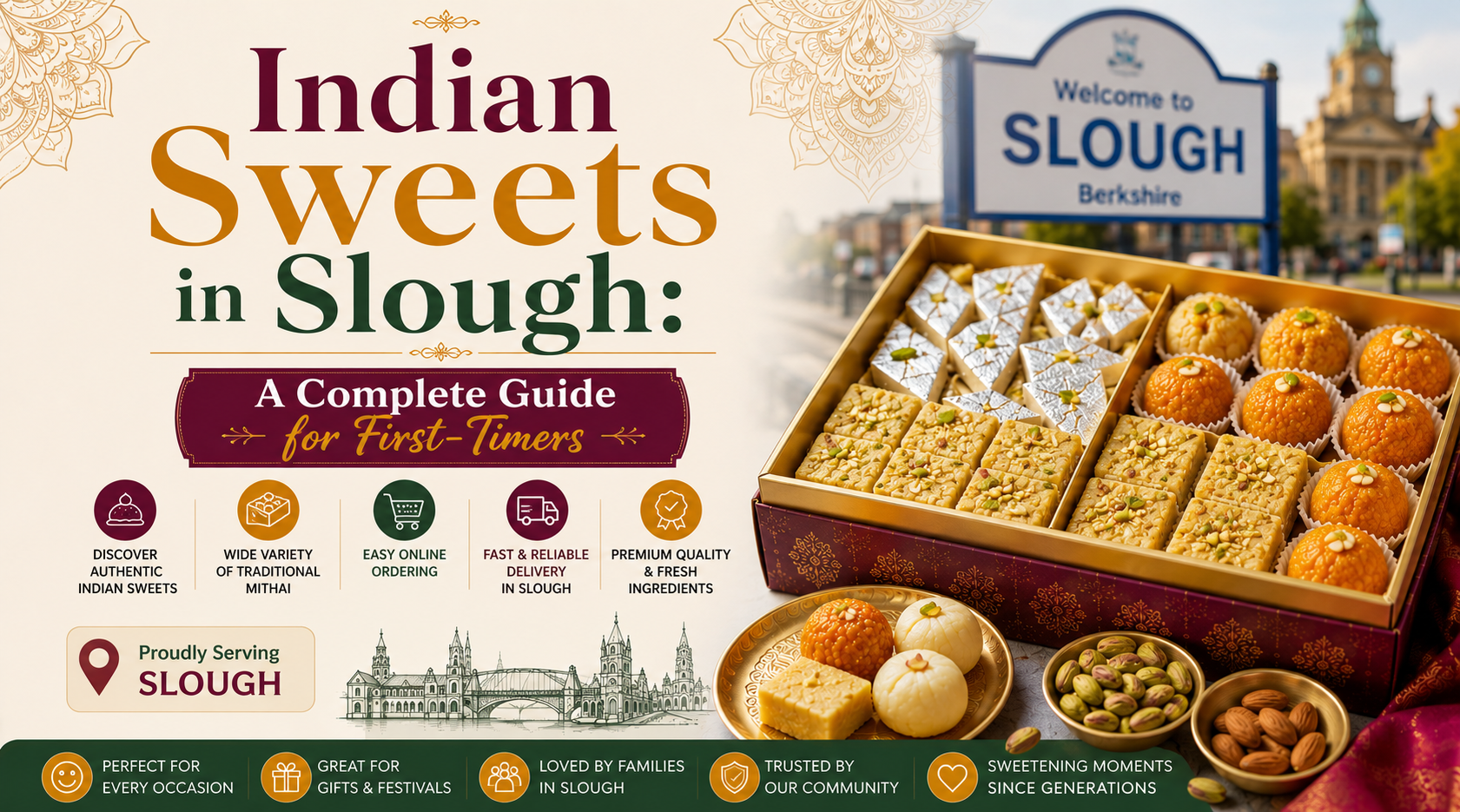
Walk down certain stretches of Slough and you’ll catch it before you see it: the smell of ghee, cardamom, and sugar syrup drifting out of a shop doorway. If you’ve never explored Indian sweets before, that smell is your first clue that you’re in for something special.
Slough has one of the largest South Asian communities in the UK, and with it comes a sweets scene that rivals anything you’d find in Leicester or parts of London. For first-timers, though, the sheer variety can feel overwhelming. What’s the difference between barfi and burfi (spoiler: nothing, just spelling)? Why does gulab jamun come swimming in syrup? Is jalebi supposed to be crunchy or soft?
This guide breaks it all down.
Why Slough Became an Indian Sweets Hotspot
Slough’s Indian community dates back decades, built by waves of migration from India, East Africa, and Pakistan. Wherever South Asian families settle in numbers, sweet shops tend to follow, because mithai (the umbrella term for Indian sweets) isn’t just dessert. It’s woven into weddings, festivals, birthdays, and even simple Tuesday evenings when someone just wants a taste of home.
Over the years, that demand turned into a proper industry. Family-run shops started supplying not just Slough but neighbouring towns too, competing on freshness, recipe authenticity, and how quickly they could get sweets from the kitchen to the counter. That competition is good news for you. It means the quality bar in Slough is genuinely high.
The Sweets You Need to Know
Gulab Jamun
Soft, deep-fried dough balls made from khoya (reduced milk), soaked in rose or cardamom-scented sugar syrup. This is usually the first sweet people try, and for good reason. It’s warm, sticky, and instantly comforting.
Barfi
A dense, fudge-like sweet that comes in dozens of flavours: pistachio, coconut, besan (gram flour), and kaju (cashew) are the most common. Barfi is often cut into diamond or square shapes and topped with edible silver leaf for special occasions.
Jalebi
Bright orange, spiral-shaped, and deep-fried, then soaked in syrup. The best jalebi has a crisp shell that gives way to a syrupy centre. Get it fresh and warm if you can. Cold jalebi loses most of its charm.
Rasgulla
Spongy cheese balls (made from chhena) soaked in a light, watery syrup rather than the thick syrup used for gulab jamun. Rasgulla is lighter and less sweet, which makes it a good starting point if you’re worried about sugar overload.
Ladoo
Round, ball-shaped sweets made from various bases like besan, semolina, or coconut. Boondi ladoo and motichoor ladoo are two popular versions, both made from tiny fried droplets of batter bound together with syrup.
Kaju Katli
A premium cashew-based sweet, thin and diamond-cut, often finished with silver leaf. It’s smoother and less sweet than barfi, and it’s usually the pricier option on the counter, which tells you something about how it’s regarded.
What to Expect on Your First Visit
Indian sweet shops don’t always work the way a typical UK bakery does. A few things to know before you walk in:
Sweets are usually sold by weight, not by piece. You’ll often see prices per kilogram or per 250g, so it helps to have a rough idea of how much you want before you order.
Many shops separate their savoury snacks (samosas, pakoras, namkeen) from their sweets counter, even though both are displayed together. Don’t be shy about asking what’s fresh that day. Staff will usually tell you straight if something’s been sitting since morning.
Boxes matter. If you’re buying for a gift or a festival, ask about presentation boxes. Most shops in Slough offer these, and they make a noticeable difference for occasions like Diwali or Eid.
Freshness varies by sweet. Milk-based sweets like barfi and peda don’t keep as long as syrup-soaked ones like gulab jamun, which actually improve slightly after a day of soaking. If you’re not eating everything same-day, ask the shop which ones travel and store best.
Finding the Right Shop
Not every sweet shop in Slough is created equal, and first-timers won’t always know how to judge quality just by looking through the glass counter. A few signs of a shop worth trusting: high turnover (sweets that don’t sit around for days), visible hygiene standards, and staff who are happy to explain what’s in each item.
If you want a reliable starting point, Best Indian sweets in Slough is a good place to see what a well-stocked, quality-focused counter actually looks like. It gives you a benchmark for comparing other shops in the area too.
Buying Indian Sweets Without Leaving Home
Not everyone has time to browse a shop in person, especially around festival season when queues can stretch out the door. Online ordering has become a genuinely useful option for people in Slough who want fresh mithai delivered without the wait.
If that sounds like you, you can order Indian sweets online in Slough and skip the queue entirely. It’s a practical option for last-minute gifting or when you’re catering for a family event and don’t want to juggle multiple shop visits.
A Few Tips for First-Timers
Start small. Buy a mixed box of 4-5 varieties rather than committing to a full kilo of one sweet. This way you get a proper introduction without wasting money on something you might not love.
Ask about sugar levels. Some shops offer “less sweet” versions of classics like gulab jamun and rasgulla, which suit palates that aren’t used to the intensity of traditional syrup-based sweets.
Pair sweets with chai. Indian sweets are rich, and a cup of masala chai cuts through that richness nicely. Many shops sell tea alongside their sweets counter for exactly this reason.
Don’t judge by looks alone. Some of the plainest-looking sweets, like plain barfi or peda, are often the most technically difficult to get right. A shop that nails the simple stuff is usually doing something right behind the scenes.
Why Local Names Matter
When it comes to a niche market like Indian mithai, reputation travels fast within the community, and one name that keeps coming up among regulars in Slough is Maharaja Sweets UK. Shops that build that kind of word-of-mouth trust tend to earn it through consistency: same taste, same freshness, visit after visit.
Final Thoughts
Indian sweets aren’t just a dessert category. They’re a doorway into a much bigger food culture, one built on festivals, family gatherings, and recipes passed down for generations. Slough happens to be one of the better places in the UK to start exploring that world, thanks to its long-standing South Asian community and the shops that have grown up around it.
Go in with an open mind, try a few things you can’t pronounce, and don’t be afraid to ask questions at the counter. That’s how everyone starts.