
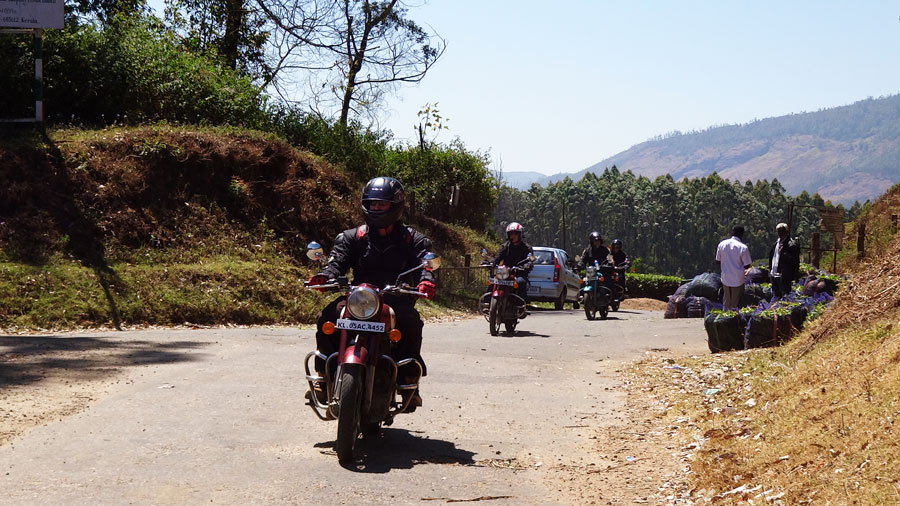
A motorcycle tour to the Himalayas tends to fall into one of two categories: it either happens, or it stays a someday plan that quietly fades year after year. Some riders spend years gathering information, waiting for the perfect window, and never actually book anything. Others decide on a whim, reach out to an operator within days, and find themselves on a bike in the mountains within a couple of months. The mountains themselves aren’t going anywhere but the gap between planning and actually committing is where most Himalayan motorcycle plans quietly die.
This blog focuses on the practical side of planning a motorcycle tour to the Himalayas, choosing the right region, timing it correctly, preparing physically, and understanding what a structured operator like Royal Bike Riders actually handles on your behalf. The goal isn’t to romanticize the mountains, but to help riders make a plan that actually turns into a trip.
Choosing the Right Himalayan Region
The Himalayas aren’t a single destination; they stretch across roughly 2,400 kilometres, spanning sub-regions with dramatically different road conditions, altitude profiles, cultures, and seasonal windows. Choosing the right region for a first motorcycle tour to the Himalayas depends heavily on riding experience, available time, the kind of landscape a rider wants to be surrounded by, and how much infrastructure they need to feel comfortable at the end of a long day.
Ladakh is the region most riders choose for their first Himalayan tour, and for good reason. The scenery is unmatched, the routes are well-documented, and the supporting infrastructure guesthouses, mechanics, fuel stops are more developed here than almost anywhere else in the high mountains. Combined with Tibetan Buddhist culture, extreme terrain, and legendary passes, it consistently delivers an experience that exceeds expectations, which is why it remains the centrepiece of most Himalayan tour offerings.
Spiti Valley is usually the choice for riders returning for a second Himalayan tour, harder, quieter, more demanding on both rider and machine, but proportionally more rewarding. Uttarakhand offers a gentler introduction, with forested roads, layered culture, and generally lower altitudes, making it a good option for riders who want Himalayan terrain without the full high-altitude commitment. The Northeast — Sikkim, Arunachal Pradesh, and Meghalaya sits at the frontier end of the spectrum: extraordinary riding, developing infrastructure, and a level of genuine discovery that the more established routes can no longer offer.
Timing the Tour Correctly
One of the most common planning mistakes is booking a motorcycle tour to the Himalayas without properly accounting for seasonal limits. High-altitude routes Manali to Leh, the Spiti circuit, and the Nubra and Pangong extensions from Leh are only accessible roughly between late May and mid-October. Outside that window, the passes sit under metres of snow, and no motorcycle gets through regardless of the machine or the rider’s determination. This isn’t a minor inconvenience; it’s a hard physical limit.
Within that open season, conditions still shift considerably. Late May and June bring clear roads but cold nights temperatures at 4,500 metres can dip below zero even in early June. July and August are peak seasons, with the most reliable infrastructure but also the heaviest traffic and highest accommodation prices. September is often considered the best riding month, crowds thin out, the light takes on a different quality as autumn sets in, passes are at their most stable, and the first high-altitude snowfall adds a dramatic edge that summer doesn’t have. Early October remains possible on most routes, though it requires flexibility given the risk of sudden early closures.
Physical Preparation
Altitude is the factor most riders underestimate, and it’s also the one most likely to cut a Himalayan motorcycle tour short. Above 3,500 metres, physical exertion becomes noticeably harder than at sea level. Riding a motorcycle already involves continuous physical engagement, and on the broken sections and technical passes that define Himalayan riding, fatigue builds faster than most lower-altitude riders expect.
It helps to prepare cardiovascular fitness in the months leading up to departure, including some longer rides of four to six hours so that extended saddle time feels familiar before the tour even begins. The core altitude sickness protocol is simple and non-negotiable: ascend gradually, hydrate well beyond what thirst alone signals, avoid alcohol for the first 72 hours at altitude, and take any symptoms seriously rather than pushing through them. Experienced road captains are trained specifically in recognizing and managing altitude-related issues, and a rider being sent back down when needed is always the right call, even if it doesn’t feel that way at the moment.
Gear for a Motorcycle Tour to the Himalayas
Layering is the fundamental principle behind Himalayan riding gear. A valley at the start of the day might sit at 24°C, while a pass crossed that same afternoon could be closer to 4°C with wind chill. A textile jacket with a removable thermal liner, a mid-layer fleece, and a moisture-wicking base layer together cover the full range of Himalayan temperatures far better than a single heavy jacket, which tends to be too warm in the valleys and not adaptive enough on the passes.
Waterproofing isn’t optional, even in the technically dry season. Rain at altitude carries a cold that’s different from rain at lower elevations, and getting wet at 4,000 metres without a way to dry off before nightfall is a genuine safety concern. Waterproof over-gloves, rain pants, and a jacket cover all belong in the essential kit. Sunscreen matters just as much UV intensity increases by roughly ten percent for every 1,000 metres of elevation gained, meaning riders at 5,000 metres are exposed to significantly more ultraviolet radiation than they would be at sea level.
What an Organized Tour Handles for You
A motorcycle tour to the Himalayas with Royal Bike Riders typically includes well-maintained Royal Enfield motorcycles, an experienced lead rider who has personally ridden the route that same season, a mechanical support vehicle with a qualified mechanic on hand, pre-arranged accommodation selected for both location and reliability, and permit paperwork for restricted areas handled entirely in advance. Riders can choose between fixed-departure group tours and custom private tours for individuals or smaller groups both built on the same core infrastructure, differing mainly in scheduling flexibility and group dynamics.
Do’s for Planning and Riding a Himalayan Tour
Commit to a season early — Waiting for perfect conditions often means missing the short window entirely.
Train your endurance beforehand — Longer practice rides make multi-hour Himalayan riding days far more manageable.
Take altitude seriously from day one — Gradual ascent and hydration matter more than fitness level alone.
Layer your gear thoughtfully — Temperature swings within a single day can be extreme.
Choose a region that matches your experience — Ladakh for a first tour, Spiti or the Northeast for something more demanding.
Book well ahead of the season — Reliable operators fill up months in advance, especially for peak summer dates.
Ask direct questions before booking — A good operator will tell you honestly whether a route suits your current experience level.
Don’ts to Avoid
Don’t underestimate seasonal closures — Passes close hard, not gradually, once conditions turn.
Don’t rely on a single heavy jacket — Layering flexibility matters more than raw warmth.
Don’t skip waterproofing — Even the “dry” season brings sudden, cold rain at altitude.
Don’t push through altitude symptoms — Ignoring early warning signs is how minor issues become serious ones.
Don’t overcommit to a route beyond your experience — Spiti and the Northeast reward preparation, not ambition alone.
Don’t leave permits or paperwork to the last minute — Restricted-area permits can take time to process.
Don’t assume every operator offers the same level of support — Ask specifically about mechanical backup and current route knowledge.
Conclusion
Planning a motorcycle tour to the Himalayas comes down to a handful of decisions made properly: the right region for your experience level, the right season for the conditions you want, honest physical preparation, and gear built around the region’s extreme temperature swings. An experienced operator like Royal Bike Riders takes care of the logistics permits, accommodation, mechanical support, and route knowledge so that once the planning is done, the only thing left to do is ride.
The Himalayas will still be there next year. The real question is whether this is finally the year the plan turns into a trip.
OFFICE LOCATION : E-19, LGF, Kalka Ji, New Delhi – 110019
WEBSITE : www.royalbikeriders.com
EMAIL SUPPORT : [email protected]
BOOK YOUR RIDE : +91 9810465072