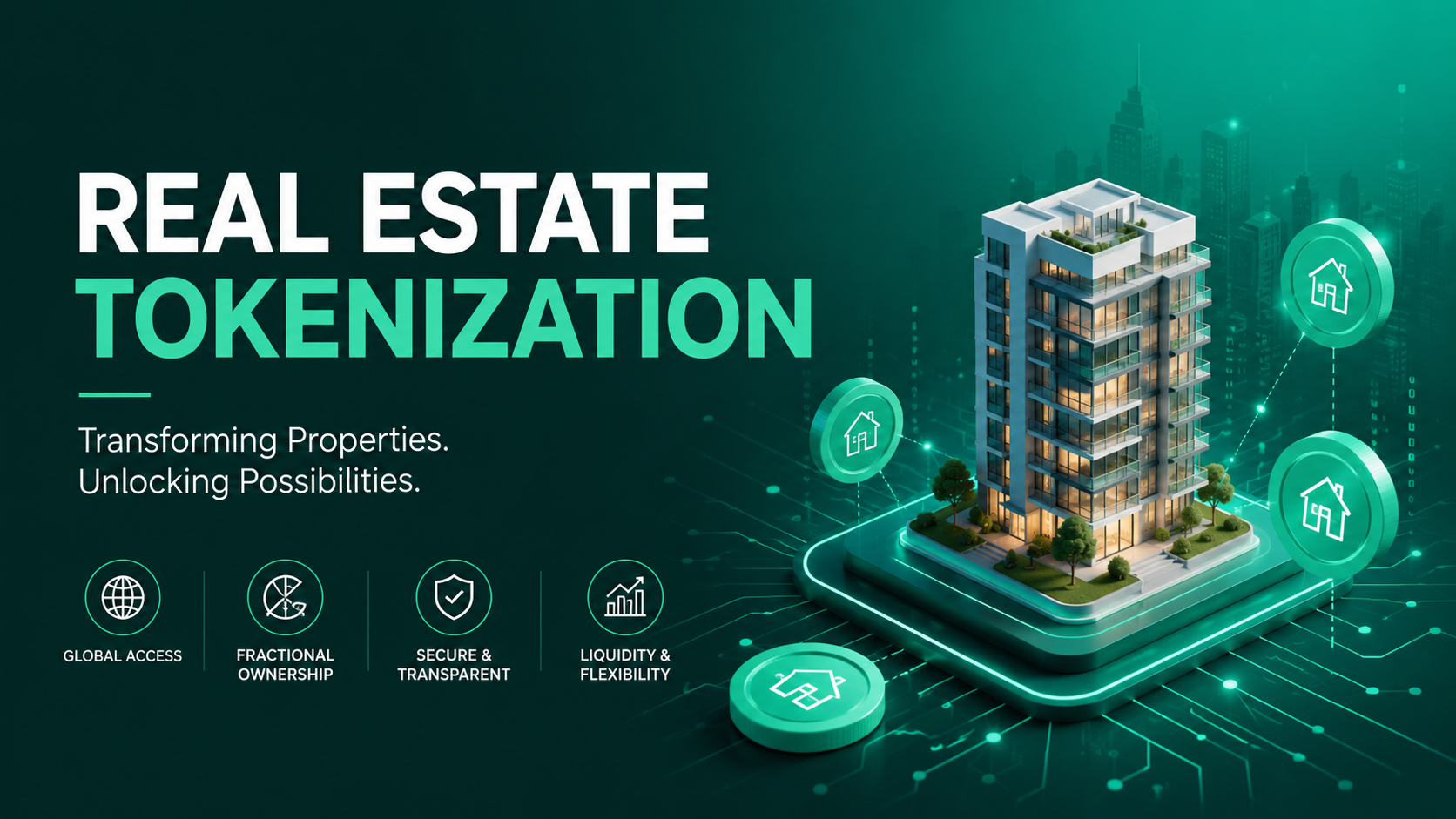
Real estate has traditionally been a physical, location-bound asset class driven by ownership deeds, manual verification, and long transaction cycles. However, the evolution of blockchain, tokenization, and Web3 infrastructure is redefining how property ownership and investment are structured.
By 2026, digital real estate assets ranging from tokenized properties to virtual land in digital environments are expected to play a more active role in global investment portfolios. These assets combine traditional real estate value with the efficiency, transparency, and programmability of blockchain systems, creating a new category of investable infrastructure.
What Are Digital Real Estate Assets?
Digital real estate assets refer to property rights or real estate-linked investments that exist in a blockchain-based or digitally native form. These can include:
- Tokenized physical real estate (residential, commercial, industrial)
- Fractional ownership of land and buildings
- Real estate-backed security tokens
- Virtual land in metaverse environments
- Digitally managed real estate investment structures
Unlike traditional property ownership, these assets are recorded on-chain, enabling fractionalization, faster transferability, and programmable financial interactions through smart contracts.
Why 2026 Is a Turning Point for Digital Real Estate
Several converging trends are expected to accelerate the adoption of digital real estate assets by 2026:
- Increased institutional adoption of tokenized real-world assets (RWAs)
- Improved regulatory clarity in multiple jurisdictions
- Expansion of blockchain infrastructure scalability
- Integration of traditional finance with decentralized systems
- Growth of secondary markets for tokenized assets
These factors collectively support a shift from experimental adoption to structured, large-scale deployment of digital real estate investment models.
1. Increased Liquidity in Real Estate Markets
Traditional real estate is one of the least liquid asset classes. Selling property often involves lengthy negotiations, legal procedures, and financing delays. Digital real estate assets solve this by enabling fractional ownership through tokenization. Instead of selling an entire property, owners can sell digital shares of the asset. This creates secondary market opportunities where investors can buy and sell tokens more easily, increasing overall liquidity and capital mobility.
2. Fractional Ownership Expands Investment Access
One of the most transformative aspects of digital real estate is fractional ownership. High-value properties that were previously accessible only to wealthy individuals or institutions can now be divided into smaller investment units. This allows retail investors to participate in premium real estate markets with relatively small capital contributions. Fractional ownership also enables portfolio diversification across multiple properties, reducing risk exposure while increasing investment flexibility.
3. Global Accessibility of Property Investments
Traditional real estate markets are geographically constrained. Investors typically focus on local or regional opportunities due to legal and financial barriers. Digital real estate removes many of these limitations by enabling global participation through blockchain networks. Investors from different countries can access tokenized properties, subject to compliance frameworks. This global accessibility increases capital inflow and creates more competitive and efficient property markets.
4. Transparency and Reduced Fraud Risk
Real estate transactions have historically been vulnerable to fraud, title disputes, and documentation inconsistencies. Blockchain-based digital assets solve this by maintaining immutable records of ownership and transaction history. Every transfer is recorded transparently and can be independently verified. This reduces risk for investors and improves trust in property markets, particularly in regions with fragmented or unreliable land registries.
5. Automation Through Smart Contracts
Smart contracts play a central role in digital real estate ecosystems. They automate processes such as:
- Ownership transfers
- Rental income distribution
- Compliance verification
- Investor payouts
By eliminating manual intervention, smart contracts reduce administrative costs and improve operational efficiency for property managers and asset owners.
6. Integration with Decentralized Finance (DeFi)
One of the most important developments in 2026 is the integration of digital real estate with decentralized finance systems. Tokenized properties can potentially be used as collateral for loans, included in liquidity pools, or integrated into yield-generating strategies. This transforms real estate from a passive asset into an active financial instrument that can participate in broader digital financial ecosystems.
7. Faster and More Efficient Transactions
Traditional property transactions can take weeks or even months to complete due to documentation, verification, and settlement delays. Digital real estate assets significantly reduce this timeline. Ownership transfers recorded on blockchain networks can occur almost instantly once conditions are met. This improves capital efficiency and allows investors to reallocate resources more quickly.
8. Institutional Adoption and Market Maturity
By 2026, institutional investors are increasingly exploring tokenized real estate as part of diversified investment strategies. Pension funds, asset managers, and real estate investment firms are beginning to recognize the benefits of blockchain-based ownership models, especially in terms of transparency, liquidity, and operational efficiency. This institutional involvement is helping mature the market and improve regulatory frameworks.
Challenges Facing Digital Real Estate Assets
Despite strong growth potential, several challenges remain:
- Regulatory uncertainty in certain jurisdictions
- Valuation standardization for tokenized assets
- Cybersecurity and platform risks
- Limited secondary market depth in some regions
- Investor education and market awareness gaps
Addressing these challenges will be essential for long-term scalability and trust.
Future Outlook: Real Estate as a Programmable Asset Class
Looking beyond 2026, digital real estate is expected to evolve into a fully programmable asset class. Properties will not only represent ownership but also generate automated financial flows, integrate with digital identity systems, and interact seamlessly with global financial networks. Emerging technologies such as AI-driven valuation models, cross-chain interoperability, and decentralized property exchanges will further enhance efficiency and accessibility. Over time, digital real estate may become a standard investment category within global portfolios, similar to stocks and bonds today.
Conclusion
Digital real estate assets are redefining property investment by making it more accessible, liquid, transparent, and efficient. Through tokenization and blockchain infrastructure, real estate is transitioning from a static, illiquid asset class into a dynamic and programmable financial ecosystem. By 2026, this transformation is expected to accelerate as regulatory clarity improves and institutional adoption expands. Investors and businesses that engage early in this evolving market may benefit from increased diversification opportunities, improved capital efficiency, and broader global access to real estate investments.