
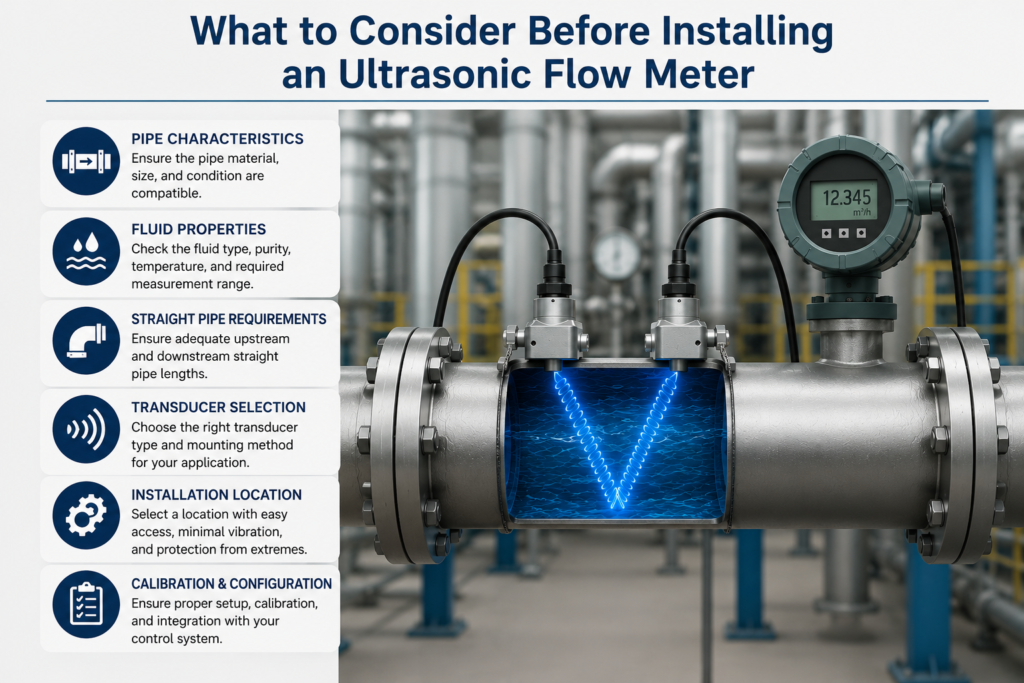
Selecting the right flow measurement solution is an important decision for any industrial operation. Accurate flow monitoring helps improve efficiency, reduce waste, and support better process control. An Ultrasonic Flow Meter is a popular choice because it offers reliable measurement without requiring extensive modifications to existing pipework. However, before installation, it is important to understand several factors that can influence performance, accuracy, and long-term value.
Taking the time to evaluate your requirements before installation can help ensure the system delivers consistent results and meets operational expectations for years to come.
Understand Your Application Requirements
Every facility has unique flow measurement needs. Before selecting a flow meter, it is important to consider the type of liquid being measured, operating temperatures, pressure conditions, and flow rates.
Some applications involve clean water, while others may contain chemicals, slurries, or wastewater. Understanding these conditions helps determine whether the chosen solution is suitable for the environment and capable of delivering accurate readings.
By clearly defining your operational requirements from the start, you can avoid costly adjustments and achieve better measurement performance.
Evaluate Pipe Conditions and Installation Location
The condition of existing pipework plays a significant role in measurement accuracy. Pipe material, diameter, wall thickness, and internal condition can all affect performance.
When planning installation, it is also important to identify a suitable location along the pipeline. Areas with excessive turbulence, bends, valves, or pumps positioned too close to the meter can impact readings. Selecting an appropriate installation point helps create stable flow conditions and improves overall measurement reliability.
Careful assessment of the installation environment contributes to smoother implementation and more dependable results.
Focus on Accuracy and Long-Term Performance
Flow measurement is often used to support critical operational decisions. For this reason, accuracy should remain a priority throughout the selection process.
Understanding the level of precision required for your application helps ensure the chosen solution meets operational goals. It is also worth considering future requirements, including potential process changes or increased production demands.
Investing in quality equipment from the beginning often leads to better long-term performance, fewer maintenance concerns, and greater confidence in collected data.
Ease of Use and Maintenance
Modern industrial equipment should simplify operations rather than add unnecessary complexity. Ease of use is an important factor when evaluating any flow measurement system.
Operators benefit from clear displays, intuitive interfaces, and straightforward configuration options. Systems that provide easy access to diagnostic information can also help reduce troubleshooting time and improve operational efficiency.
A well-designed Ultrasonic Flow Meter can support maintenance teams by reducing the need for intrusive inspections while helping operators monitor performance with confidence.
Customer Experience and Operational Confidence
Reliable equipment contributes directly to a positive customer experience. When flow measurement systems perform consistently, businesses can maintain production schedules, meet quality standards, and avoid unexpected disruptions.
Operational confidence comes from knowing that measurement data is accurate and dependable. This information supports better planning, process optimisation, and resource management across a wide range of industries.
Choosing equipment that aligns with operational objectives helps create a smoother experience for everyone involved, from engineers and operators to facility managers and business owners.
Versatility for Changing Industry Needs
Industrial environments continue to evolve as businesses seek greater efficiency and flexibility. Equipment that can adapt to changing operational requirements often delivers greater value over time.
Versatile flow measurement solutions can support a variety of applications, making them suitable for facilities that anticipate future growth or process modifications. This flexibility helps reduce the need for replacement equipment and supports long-term investment strategies.
As customer expectations continue to evolve, organisations increasingly look for technologies that provide both current performance and future adaptability.
Sustainability and Smarter Decision-Making
Sustainability has become an important consideration for many industrial operations. Accurate flow measurement can contribute to more responsible resource management by helping businesses monitor consumption and identify opportunities to reduce waste.
Better visibility into flow data allows organisations to make informed decisions that support efficiency goals while reducing unnecessary resource usage. These improvements can benefit both operational performance and environmental objectives.
Thoughtful equipment selection also helps minimise future replacement requirements, contributing to a more sustainable approach to asset management.
Considering Total Value Rather Than Initial Cost
While budget remains an important factor, focusing solely on upfront cost may not provide the best long-term outcome. Installation requirements, maintenance needs, reliability, and expected service life should all be considered when evaluating overall value.
Equipment that performs consistently over many years can often provide a stronger return on investment than lower-cost alternatives that require frequent attention or replacement.
A balanced approach helps ensure the selected solution supports both operational goals and financial objectives.
Conclusion
Installing an Ultrasonic Flow Meter involves more than simply selecting a device and placing it on a pipeline. Factors such as application requirements, pipe conditions, accuracy expectations, ease of use, versatility, and long-term value all contribute to successful performance.
By carefully evaluating these considerations before installation, businesses can make informed decisions that support efficiency, reliability, and sustainable operations. At Banksia Controls, we help customers identify practical flow measurement solutions that align with their operational needs and long-term objectives.