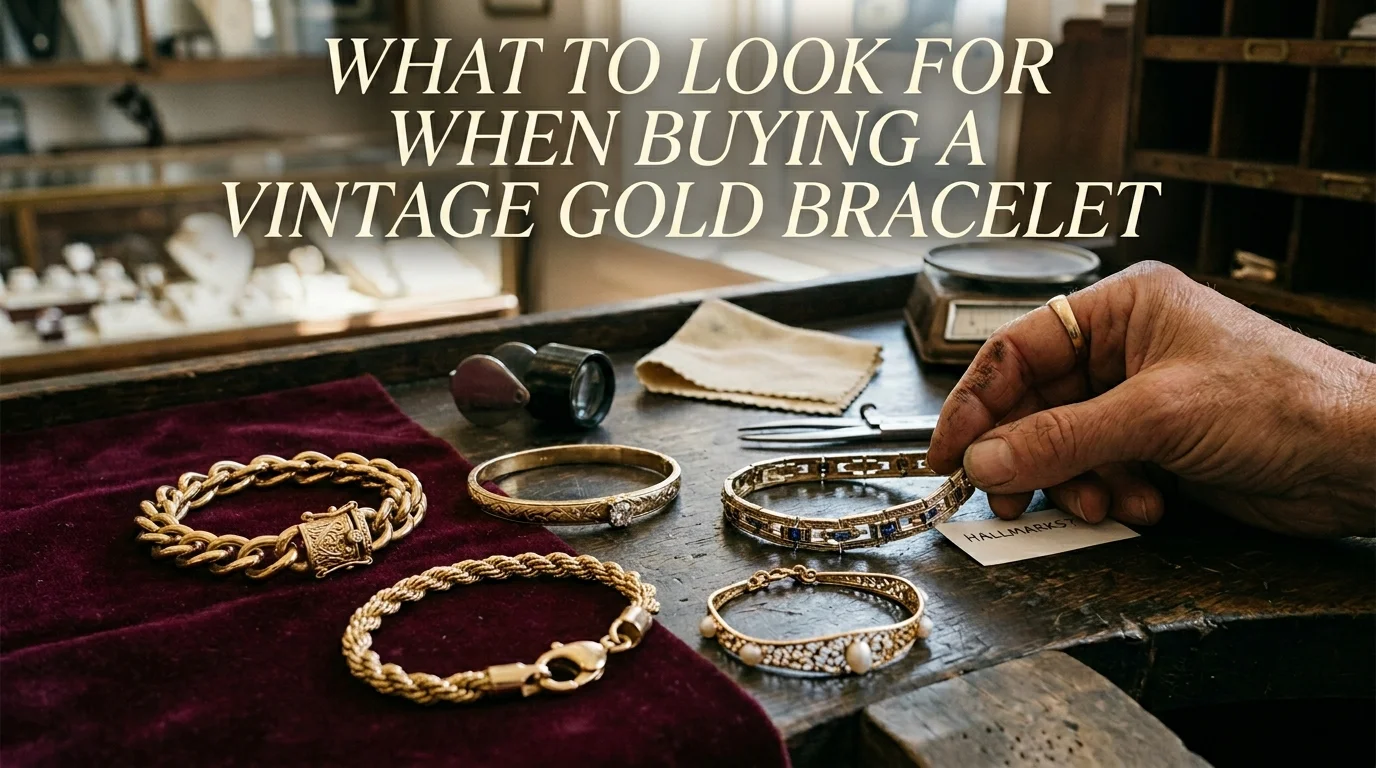
Vintage gold bracelets for women have this kind of distinct charm that modern pieces just can’t have, not really. There is that craftsmanship and the history stitched in, plus those standout designs from older times that you kind of never get the same vibe from in new jewelry. So yeah, they end up being treasured additions to pretty much any collection.
Still, buying vintage gold jewelry means you need a bit more know-how than just grabbing something at the mall. You’ve got to figure out what you’re actually looking at, what questions to ask the seller, and how to judge quality even from a distance, not by guesswork. This guide will take you through the key factors to think about before you invest in a vintage gold bracelet.
Understanding Gold Purity and Markings
The first thing you should check on any vintage gold bracelet is its purity marking, kind of like a little stamp that sort of tells the story. Gold purity is measured in carats, and you’ll usually find stamps like 10K, 14K, 18K, or 24K somewhere on the piece. Those tiny marks basically say how much real gold is in the bracelet compared to other metals that got mixed in.
Generally, higher karat numbers mean more gold there. So, a 24K item is pure gold, while 14K comes in at about 58.3% gold mixed with other metals, because pure gold is softer and doesn’t hold up as well. Most vintage bracelets end up in the 10K–18K neighborhood, simply because they need to survive everyday life, not just sit pretty.
Now, European pieces can be a bit sneaky about the marking system. You might see numbers like 585, which is roughly the same as 14K, or 750, which lines up with 18K. Some older pieces from certain countries used entirely different standards too. If you cannot find any marking, that does not always mean it’s fake, though. Very old items, or pieces from certain makers, may lack stamps, but in those cases you’ll definitely want expert verification, not just “hoping.”
Examining the Craftsmanship and Construction
Turn the bracelet over in your hands and take a close look at the links, joints, and those connection points. Quality vintage items usually have smooth, even soldering. The links should move freely, without sticking or catching at weird angles.
Next, check the clasp mechanism closely. It should close in a secure way, and it should show the kind of hand finishing you see in older jewelry. Vintage clasps often look different from modern ones; you may notice box clasps, push-button clasps, or ornate fold-over designs you just don’t see much anymore.
Also look for repair signs. A small repair can be totally fine if it was done well, but a string of sloppy fixes can mean there are structural issues lurking. Ideally, you want original construction to be present whenever possible.
Identifying Authentic Vintage Design Elements
Each era had its own signature look, and it’s usually pretty noticeable once you know what to look for. Art Deco bracelets from the 1920s and 1930s often show geometric patterns and bold, angular layouts. Victorian-era bracelets usually feature intricate engraving and romantic motifs. Retro pieces from the 1940s are often chunkier, with thicker, smoother gold areas.
Before you shop, research the time period you care about. This helps you spot “recreation” items trying to slip by as genuine vintage. Real vintage gold bracelets tend to display design cues that match the era they claim.
Patina is another hint, and it matters. Authentic vintage gold can develop a subtle warm glow over decades, and it’s hard to fake convincingly. This isn’t the same thing as tarnish, because gold doesn’t tarnish the usual way. It’s more like a gentle luster that comes from age and wear.
Assessing Condition and Wear
Some wear is normal and honestly expected for any vintage piece. Light scratches and minor dings usually just mean the bracelet has been enjoyed. Still, you want to separate “character marks” from actual damage that changes value or makes the bracelet less wearable.
Deep scratches, dents, or bent links are red flags. Missing stones, broken prongs, or metal weak spots often require professional repair, and that’s going to cost money. So, think about repair costs while you’re deciding, because it can change what a “good deal” actually is.
Check the bracelet’s weight too. It should feel substantial in your hand. If it feels unexpectedly light, it might be hollow (some vintage styles were intentionally made hollow to conserve gold), or it could mean it isn’t solid gold at all.
Choosing the Right Style for Gold Bracelets for Women
Think about how you’re actually going to wear it, not just how it looks in a photo. Tennis bracelets give classic elegance for dressy moments. Chain bracelets can work for everyday outfits and also for formal settings. Bangle bracelets often make a statement, and they sometimes include beautiful engraving or textured surface work.
Also consider your wrist size carefully. Vintage sizing doesn’t always line up with modern sizing, so it may run differently than you expect. The bracelet should sit comfortably, without sliding around too much or pinching your wrist uncomfortably.
Your personal style counts here a lot. A chunky retro gold bracelet might not match someone who loves delicate, feminine jewelry. Pick what you’ll genuinely wear, not just what sounds impressive on paper or “might” be an investment.
Verifying Authenticity and Value
Try to buy from reputable dealers who include authentication guarantees. Ask for documentation that covers age, origin, and any helpful history. Serious sellers should share that information without acting like it’s a burden.
If the bracelet is expensive, consider getting an independent appraisal. A qualified appraiser can confirm gold content, evaluate condition, and estimate fair market value. That helps you avoid overpaying, and it makes insurance later a lot easier.
Be careful with deals that seem too good. Most times they are too good—for a reason. Genuine vintage gold includes inherent material value, plus historical and artistic value, and sellers usually price it in a realistic way once they know what they’ve got.
Making Your Purchase with Confidence
Buying a vintage gold bracelet should not feel like a stressful puzzle. Start by learning about different periods and styles. When you can, handle pieces in person so you build an instinct for quality. Ask questions, and stick with sellers who give clear, honest answers.
Check return policies before you buy. Reputable dealers will stand behind what they sell, and they often provide reasonable return windows if something isn’t right. This matters a whole lot, especially if you’re buying online.
The perfect vintage gold bracelets for women combine beauty, quality, and personal meaning, not just a label. Take your time, do the research, and choose a piece that actually speaks to you. When you find the right bracelet, you’ll feel it. That blend of excellent craftsmanship, real vintage character, and personal appeal is exactly why vintage gold jewelry is worth looking for. Your new bracelet can bring you joy for years while also connecting you to the skilled artisans who made it decades ago, even if you never meet them.