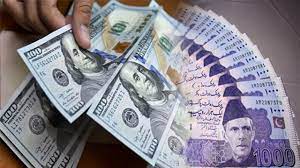
USD to PKR
Every morning, millions of Pakistanis from Karachi to New York refresh their screens for one number: the USD to PKR exchange rate. This figure is far more than a financial statistic; it is the invisible hand that decides how much a family pays for imported wheat, what a student spends on tuition in Toronto, and whether a textile exporter can afford next month’s payroll. The relationship between the United States dollar and the Pakistani rupee is a complex, living narrative shaped by geopolitics, central bank policies, and human sentiment. Unlike a fixed mathematical equation, the USD to PKR rate fluctuates minute by minute during trading hours, reacting to news of IMF bailouts, changes in global oil prices, or even political statements from Islamabad.
For a common citizen watching the dollar climb from 200 to over 300 rupees in a few short years, the experience can feel bewildering. Yet beneath the surface volatility lies a predictable rhythm: when Pakistan exports more, remittances flow in, or foreign investment rises, the rupee strengthens; when debt payments loom or political uncertainty reigns, the dollar surges. Understanding this daily dance is the first step toward making informed financial decisions, whether you are sending money home, planning a business expansion, or simply trying to stretch your monthly budget.
Beyond the Headlines: What Really Moves the USD to PKR Needle
Media headlines often simplify the USD to PKR movement with phrases like “rupee crashes” or “dollar rallies,” but the real drivers are far more nuanced. At the heart of the matter is the balance of payments, a straightforward concept: if Pakistan needs more dollars to pay for imports than it earns through exports and remittances, the rupee weakens. Consider the country’s heavy reliance on imported energy, machinery, and even edible oil. When global commodity prices spike, the demand for dollars explodes, putting immediate downward pressure on the USD to PKR rate. Conversely, when overseas Pakistanis send remittances during Eid or Ramadan, the influx of dollars can temporarily strengthen the rupee. Another powerful but often overlooked factor is speculation.
If currency traders believe the rupee will fall further, they hoard dollars, creating an artificial scarcity that drives the USD to PKR even higher. The State Bank of Pakistan intervenes by selling dollars from its reserves or hiking interest rates to make holding rupees more attractive. Yet these measures are not magic bullets; they buy time but cannot substitute for structural reforms. Political stability also plays a starring role. A government perceived as weak or likely to default can trigger capital flight, where wealthy individuals and companies convert rupees into dollars and send them abroad, adding severe strain to the USD to PKR equilibrium. Therefore, watching the exchange rate is like watching a weather vane that reflects Pakistan’s overall economic health.
The Exporter’s Gamble and the Importer’s Nightmare: Two Faces of USD to PKR
The same USD to PKR movement creates winners and losers across Pakistan’s economy, and understanding this duality is essential for any business owner. For an exporter of textiles, rice, or sports goods, a weaker rupee is a blessing. When the rupee depreciates, the dollars they earn from international sales convert into more local currency, allowing them to pay higher wages, reinvest in machinery, or lower their foreign prices to capture more market share. An exporter who priced his goods at one hundred dollars when the USD to PKR was two hundred rupees used to receive twenty thousand rupees. With the rate at three hundred rupees, the same one hundred dollars now yields thirty thousand rupees, a fifty percent revenue increase without any extra effort.
However, for an importer of raw materials, medicines, or machinery, the same depreciation is a nightmare. They must now spend far more rupees to buy the same quantity of dollars needed for their next shipment. This cost is inevitably passed down to consumers, fueling inflation. A pharmaceutical company importing active ingredients sees its costs rise, leading to higher medicine prices. A car assembler importing parts hikes vehicle prices. Even a small mobile phone shop owner must raise prices because phones are paid for in dollars. This two-faced nature of the USD to PKR creates constant tension in economic policy: the central bank cannot make the rupee too strong, or exporters suffer and unemployment rises; it cannot let the rupee fall too fast, or importers collapse and inflation spirals. The ideal path, rarely achieved, is a slow, predictable depreciation that exporters can plan for and importers can hedge against.
Remittances and the Overseas Lifeline: How USD to PKR Affects Every Household
For millions of Pakistani families, the USD to PKR rate is not an abstract concept but a monthly lifeline that determines how much food, education, and healthcare they can afford. When an overseas worker in Saudi Arabia, the UAE, or the United Kingdom converts their earnings into rupees through a formal channel, they are participating in the single largest source of foreign currency for Pakistan. A favorable USD to PKR rate—meaning a stronger dollar and weaker rupee—directly increases the purchasing power of these remittances. For example, if a father sends five hundred dollars home, his family receives a larger rupee amount when the rate is high, allowing them to cover rising utility bills or school fees. This is why news of rupee depreciation often brings mixed emotions: while it hurts urban importers, it benefits rural families dependent on remittances. However, there is a hidden danger.
If the USD dollar to PKR today rate in Pakistan becomes too volatile or is expected to weaken further, overseas workers may choose to hold their savings in dollars rather than converting them immediately, or worse, turn to illegal hawala networks that offer slightly better rates. This “flight from the rupee” starves the banking system of much-needed dollars, worsening the very shortage that caused the depreciation. Therefore, the State Bank constantly works to maintain a rate that encourages timely remittances without causing panic. For the average family receiving remittances, the wisest strategy is to avoid timing the market—converting dollars as soon as they arrive ensures predictability. Some banks now offer remittance-linked savings accounts that automatically convert at the daily USD to PKR rate without fees, protecting families from predatory exchange companies.
Travel, Tuition, and Turmoil: Navigating Personal Finance with USD to PKR
Beyond businesses and remittance families, the USD to PKR exchange rate profoundly impacts individual life decisions, from booking a pilgrimage to sending a child abroad for university. A Pakistani student planning to study in the United States or Canada must now budget for a reality where every dollar of tuition costs three hundred rupees or more, compared to just one hundred fifty rupees a decade ago. A one-year master’s program with thirty thousand dollars in tuition once required 4.5 million rupees; today, it demands over 9 million rupees before accounting for living expenses. This dramatic shift has forced many bright students to reconsider their dreams or aggressively seek scholarships. Similarly, medical travelers seeking treatment in Turkey or Thailand must calculate their healthcare budget in real time, as a weak rupee makes foreign hospitals far more expensive.
Even a simple family vacation to Dubai now involves checking the USD to PKR rate before exchanging currency at the airport, where rates are notoriously worse than the interbank level. To navigate this turmoil, personal finance experts recommend several practical steps. First, never keep large sums in cash rupees; instead, maintain a hybrid account that allows holding dollars and converting only when needed. Second, for recurring foreign payments like a child’s tuition or a software subscription, consider setting up a forward contract with your bank to lock in a favorable USD to PKR rate for up to six months. Third, avoid using credit cards for foreign transactions because the exchange rate applied is usually the highest rate of the day plus a hefty markup. By treating the USD to PKR movement as a risk to be managed rather than a surprise to be endured, individuals can protect their savings and life plans.
The Road Ahead: Forecasting USD to PKR in a Changing Global Order
Predicting the future of the USD to PKR rate is a favorite pastime of economists and taxi drivers alike, but the reality is that several structural forces will shape the next five years. First, the International Monetary Fund’s ongoing bailout programs come with strict conditions: Pakistan must maintain a market-determined exchange rate, meaning less artificial pegging and more daily fluctuations. This transparency is healthy in the long run but painful initially because it allows the true USD to PKR value to emerge, which many analysts believe is still higher than the official rate. Second, the global trend toward de-dollarization, where countries like China and Russia trade in their own currencies, could reduce the universal demand for dollars. If Pakistan can expand trade in Chinese yuan or Saudi riyals, pressure on the USD to PKR might ease slightly. Third, domestic reforms in the energy sector, agriculture, and information technology exports could transform Pakistan from a net importer to a more balanced economy.
The recent surge in IT remittances, where freelancers earn dollars from overseas clients without ever leaving their hometowns, offers a glimpse of a more resilient future. Fourth, political continuity remains the wildcard. A government that can credibly commit to reforms without facing early elections will rebuild investor confidence, bringing dollars back into the banking system and lowering the USD to PKR from crisis levels. For the average citizen, the wisest approach is not to obsess over daily moves but to understand that a weaker rupee is not a catastrophe but a signal to become more productive. The countries that have thrived with volatile exchange rates—from Turkey to Vietnam—are those whose people learned to export skills, save in multiple currencies, and reject panic. The road ahead for USD to PKR will have ups and downs, but with financial literacy and disciplined planning, Pakistani individuals and businesses can not only survive but thrive.