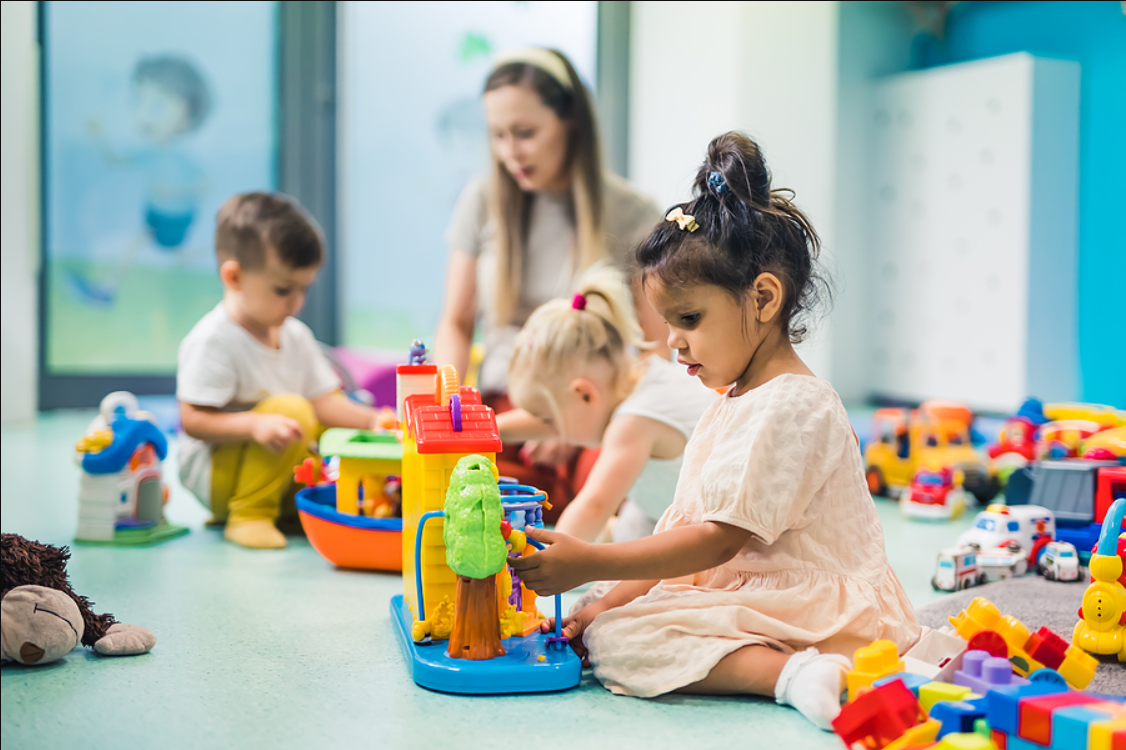
Most parents wonder when their child will be “ready” for social situations. The truth is, children start learning how to relate to others much earlier than school age. Every time a toddler shares a toy or a three-year-old says sorry to a friend, a social skill is being formed. Child daycare plays a big role in making that happen. It gives children a structured, safe space to be around other kids their age and to practice the everyday skills that shape how they connect with the world.
What Daycare Services Actually Teach
When parents think about child daycare, they often think about supervision and safety. Those things matter. But quality child daycare services do something deeper: they create the social conditions that children need to grow. In a daycare setting, children are not just playing. They are learning to wait their turn. They are figuring out how to join a group already in the middle of a game. They are experiencing what happens when another child takes their toy and how to respond to that. These situations happen naturally throughout the day, and each one is a lesson.
Sharing and Taking Turns
These two skills might sound simple, but they are genuinely hard for young children. The idea that someone else’s needs matter just as much as yours takes time and practice to understand. Child daycare provides that practice every single day. Children share art supplies, take turns on the slide, and wait for their name to be called at snack time. Over weeks and months, these small moments add up. A child who struggled to share at age two is often a natural collaborator by the time they reach kindergarten.
Learning to Communicate
Have you ever watched two toddlers try to play together without any words working between them? Communication in early childhood is a real challenge. Children in child daycare develop language skills faster because they have more people to talk to and more reasons to talk. They learn to ask for what they need instead of grabbing it. They learn that how you say something affects how people respond. They learn to listen as well as speak. These communication patterns, developed early in child daycare, stay with children long after they leave.
Building Confidence Through Friendship
Friendships in daycare are often a child’s first experience of choosing someone and being chosen back. That matters more than it might seem. When a child has a friend at daycare, they start each day feeling like they belong somewhere. That sense of belonging builds confidence. And confident children are more willing to try new things, speak up in groups, and handle situations where things do not go their way. Research consistently links positive early social experiences to better emotional resilience later in life.
What the Research Shows
The NICHD Study of Early Child Care and Youth Development, one of the most comprehensive child development studies ever conducted, followed 1,364 children from birth through their early school years across 10 sites in the United States. The study found that the quality of care children received in early settings including how caregivers interacted with them and whether they experienced language-rich environments directly predicted better social competence and cognitive performance. Higher quality child care consistently led to stronger outcomes on measures of social skills, communication and school readiness.
Emotional Intelligence Grows Here Too
Social skills are not just about getting along with others. They are also about understanding yourself. Child daycare helps children develop emotional intelligence and the ability to recognize feelings, manage them, and respond to others with empathy. When a child sees a classmate crying and walks over to check on them, that is emotional intelligence in action. When a child learns to take a breath instead of hitting when frustrated, that is self-regulation. These skills are built slowly, through repeated experience and gentle correction from caring adults.
Preparing for School and Beyond
Children who have attended quality child daycare tend to adjust to school more smoothly. They already know how to sit in a group. They are used to following a routine. They have experience with conflict and know that it can be worked through. Teachers notice the difference. Children with a strong daycare background are generally more comfortable raising their hand, working with partners, and navigating the social landscape of a classroom. The social foundation laid in those early years continues to support children well into adolescence and adulthood.
Final Words
Child daycare is about far more than keeping children safe while parents work. It is one of the earliest and most powerful environments for social learning. From sharing and listening to building friendships and managing emotions, children in quality daycare settings develop skills that shape who they become. If you are choosing a child daycare for your child, look at how caregivers interact with the children. A warm, structured, and language-rich environment is where social development really happens. And the skills your child builds there will stay with them for life.
Visit Blogging Webs for more informative blogs.