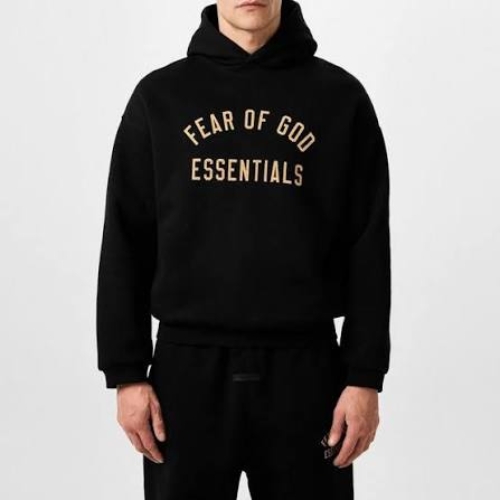
Streetwear styling used to follow a fairly predictable playbook: match your brands, stay within one aesthetic, keep everything visually consistent. That approach isn’t wrong, exactly, but it’s dated. The way people actually style outfits now — and the Essentials Hoodie paired with Comme des Garcons is a clear example of it — works almost the opposite way.
The Old Playbook, Briefly
For a long stretch, “good” streetwear styling meant staying inside one lane. Wear a brand’s Fear of god essentials hoodie with that same brand’s pants and sneakers. Keep the aesthetic uniform from top to bottom. Consistency was the goal, and mixing brands with clashing design philosophies was treated as a styling mistake rather than a choice.
That approach made sense when streetwear was more tribal — outfits signaled which specific scene or brand loyalty someone belonged to. It made less sense once that tribal structure started breaking down.
What Replaced It
Modern streetwear styling is built around contrast instead of consistency. Instead of matching everything to one aesthetic, the more current approach pairs pieces that are doing genuinely different jobs — one grounding the outfit, one adding a point of view — and lets the difference between them be the interesting part.
The Essentials Hoodie and Comme des Garcons pairing is close to a textbook example of this shift. Nobody would mistake these two for the same aesthetic. That’s not a flaw in the modern approach — it’s the entire mechanism.
Why Contrast Became the Modern Standard
A few things pushed styling in this direction:
- Wardrobes got more mixed. Fewer people build a closet around one brand exclusively, which naturally pushes styling toward combining pieces from different places.
- Social feeds rewarded distinctiveness. An outfit that looks like ten other outfits from the same brand doesn’t stand out; one built on an unexpected combination does.
- Comfort became non-negotiable. As comfort-first pieces like hoodies shopcommedesgarconn.com and tracksuits became everyday staples, styling had to find ways to make comfort-first basics still look intentional — pairing them with something design-forward is one of the more effective solutions.
What This Looks Like in Practice
Applying the modern approach to this specific pairing comes down to a few adjustments from the old playbook:
- Don’t try to match the hoodie and CDG piece stylistically — let them stay visually distinct
- Use proportion and color restraint to keep the contrast readable instead of chaotic
- Treat one piece as the outfit’s foundation and the other as its point of view, rather than treating both as equally weighted
- Resist the urge to add a third element “to tie it together” — the contrast between two pieces is usually enough on its own
Why This Approach Ages Better Than the Old One
Uniform, single-brand styling depends heavily on that brand staying relevant and in style. When it isn’t, the whole outfit starts to feel dated. A contrast-based approach is less fragile, because it isn’t tied to one brand’s specific trend cycle — the underlying principle (grounded base, expressive statement piece) holds up regardless of which specific brands happen to be in that role at any given time.
That’s part of why this particular pairing keeps getting revisited season after season instead of fading the way single-brand, matched outfits tend to.
If you’re adjusting to this more modern approach, starting with an Essentials Hoodie collection in neutral tones gives you a flexible foundation to build contrast-based outfits around, regardless of which statement pieces you eventually pair it with.
Styling for Now, Not for a Specific Trend
The real shift here isn’t really about these two specific brands — it’s about moving from matching to contrasting as the default styling instinct. The Essentials Hoodie and Comme des Garcons pairing happens to be one of the clearest examples of that shift in action, which is why it keeps getting used as the reference point for what modern streetwear styling actually looks like.
FAQs
1. Is matching brands and aesthetics considered outdated now, or still a valid styling choice? It’s not wrong, just less dominant than it used to be — contrast-based styling has become the more common modern approach, though matched, single-brand outfits still work for certain looks.
2. Why does contrast-based styling photograph better on social platforms? Distinctive, unexpected combinations tend to stand out more than uniform outfits, which is part of why they’ve become more common in style content generally.
3. Does this modern approach apply to brands other than Essentials and CDG? Yes — the underlying principle (a grounded base piece plus one expressive statement piece) applies broadly across streetwear, not just to this specific pairing.
4. How do I know if I’ve added too much contrast to an outfit? If no single piece reads clearly as the outfit’s focus, or if multiple bold elements are competing for attention, that’s usually a sign the contrast has tipped into visual clutter.
5. Will contrast-based styling eventually go out of style the way uniform matching did? It’s possible styling trends shift again over time, but because contrast-based styling isn’t tied to one specific brand’s popularity, it’s likely to remain a flexible approach even as the specific pieces used within it change.