When discussing the uniform styles of the Second World War, the olive drabs of the Americans, the field gray of the Germans, and the classic khaki of the British usually dominate the conversation. However, tucked away in the opening chapters of the conflict is a deeply fascinating, often overlooked masterclass in military tailoring: the attire of the Belgian Armed Forces.
In May 1940, the Belgian Army faced the overwhelming onslaught of the German Blitzkrieg. Though their active campaign during the invasion was brief, Belgian soldiers fought with immense bravery, and their distinct style survived through the Free Belgian forces who later integrated with the Allies. For historians, collectors, and living history enthusiasts, WW2 Belgian military uniforms represent a unique transitional period where 19th-century military elegance met the harsh, utilitarian demands of 20th-century industrialized warfare.
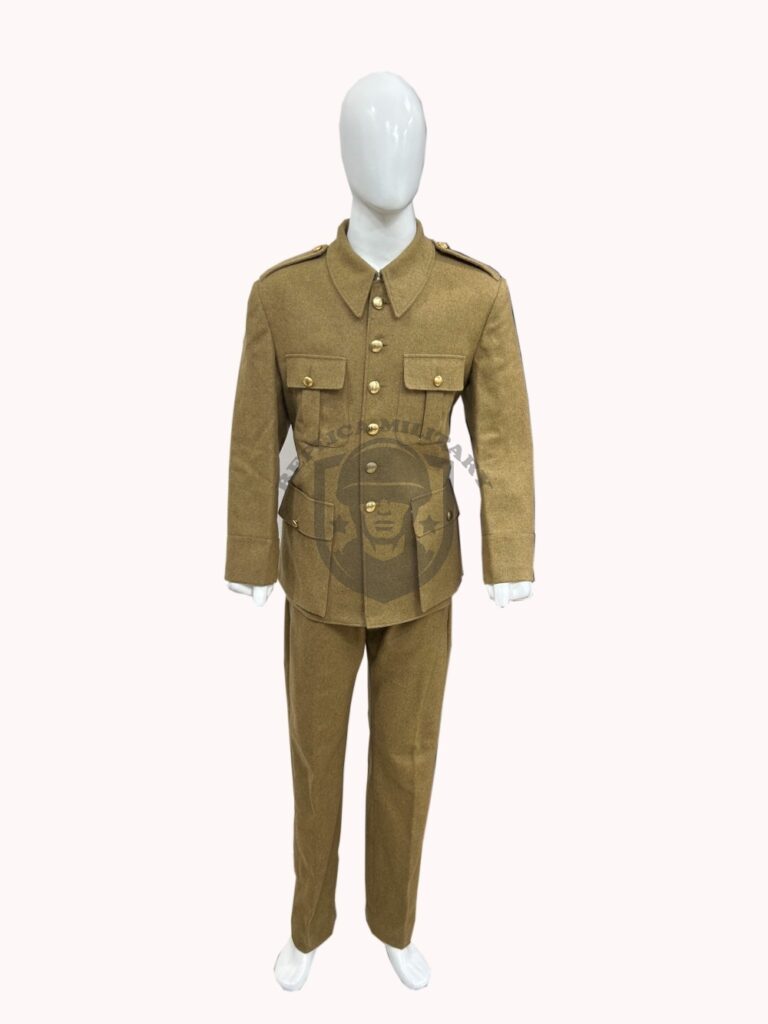
For those looking to recreate or preserve this unique chapter of military history, specialized historical outfitter Replicamilitary provides meticulously crafted reproductions that bring these rare garments back to life.
The Aesthetic Shift: From Khaki-Green to Utilitarian Field Gear
Prior to the outbreak of World War II, Belgium watched the changing landscape of European warfare closely. Moving away from the remnants of French-influenced design choices from the Great War, the Belgian military modernized its look in 1935, adopting a distinct color palette and cut that set them apart on the European battlefield.
+------------------+--------------------------------------------------------+
| Uniform Element  | Key Characteristics                                     |
+------------------+--------------------------------------------------------+
| Primary Color    | Rich, deep khaki-green (Chasseurs favored darker green)|
| Fabric Material  | Heavy-weight wool serge for harsh field conditions    |
| Tunic Design     | Closed high-collar style with covered button fly front |
| Unique Insignia  | Regal lion motifs on collar patches and brass buttons  |
+------------------+--------------------------------------------------------+
The standard-issue infantry tunic was characterized by its clean, minimalist front. Unlike the British or French tunics of the era, the Belgian model featured a hidden button fly, giving it a sleek, smooth appearance. It was paired with matching wool trousers and leather gaiters or puttees wrapped securely around the lower legs.
Iconic Elements: The Adrian Helmet and the Belgian Lion
No discussion of WW2 Belgian military uniforms is complete without mentioning their distinct headgear. The Belgian Army utilized a variation of the famous French-designed Adrian Helmet (the Model 1931).
What made the Belgian version completely unique was the addition of a striking, stamped brass or steel lion’s head emblem fixed directly to the front of the helmet. This roaring lion—the historic symbol of Belgian independence and resilience—instantly identified the soldier on the battlefield.
Additionally, specialized units added their own flair to the uniform. The Chasseurs Ardennais, an elite mountain infantry unit that fiercely resisted German panzer divisions, wore a deep green beret featuring a stylized wild boar insignia, a look that became legendary for its association with stubborn, unyielding defense.
Bringing History into the Modern Day with Replicamilitary
Because the Belgian campaign lasted less than three weeks before the country was occupied, surviving examples of original textiles are incredibly scarce. Many original uniforms were destroyed, confiscated, or lost to time, making it exceptionally difficult for museums and reenactors to source authentic pieces.
This is where the expertise of Replicamilitary bridges the gap. Recreating these garments requires specialized knowledge of obsolete weaving techniques and precise dye matching to achieve that elusive, historic Belgian khaki-green hue. By focusing on correct fabric weights, hidden fly closures, and accurate collar badge placement, these reproductions allow historians to tell the full story of the Second World War—ensuring that the defiance and sacrifice of the Belgian soldier are never forgotten.