Fire safety is one thing no building owner can afford to get wrong. But when it comes to choosing the right system, many facility managers still picture miles of conduit, drilled walls, and weeks of disruption. That’s where a wireless fire alarm system changes the game. It gives commercial buildings the same level of protection as a wired setup, minus the mess and the long installation timeline.
If you are planning a new fire safety project, or upgrading an old one, this guide will walk you through everything you need to know before you buy.
What Is a Wireless Fire Alarm System?
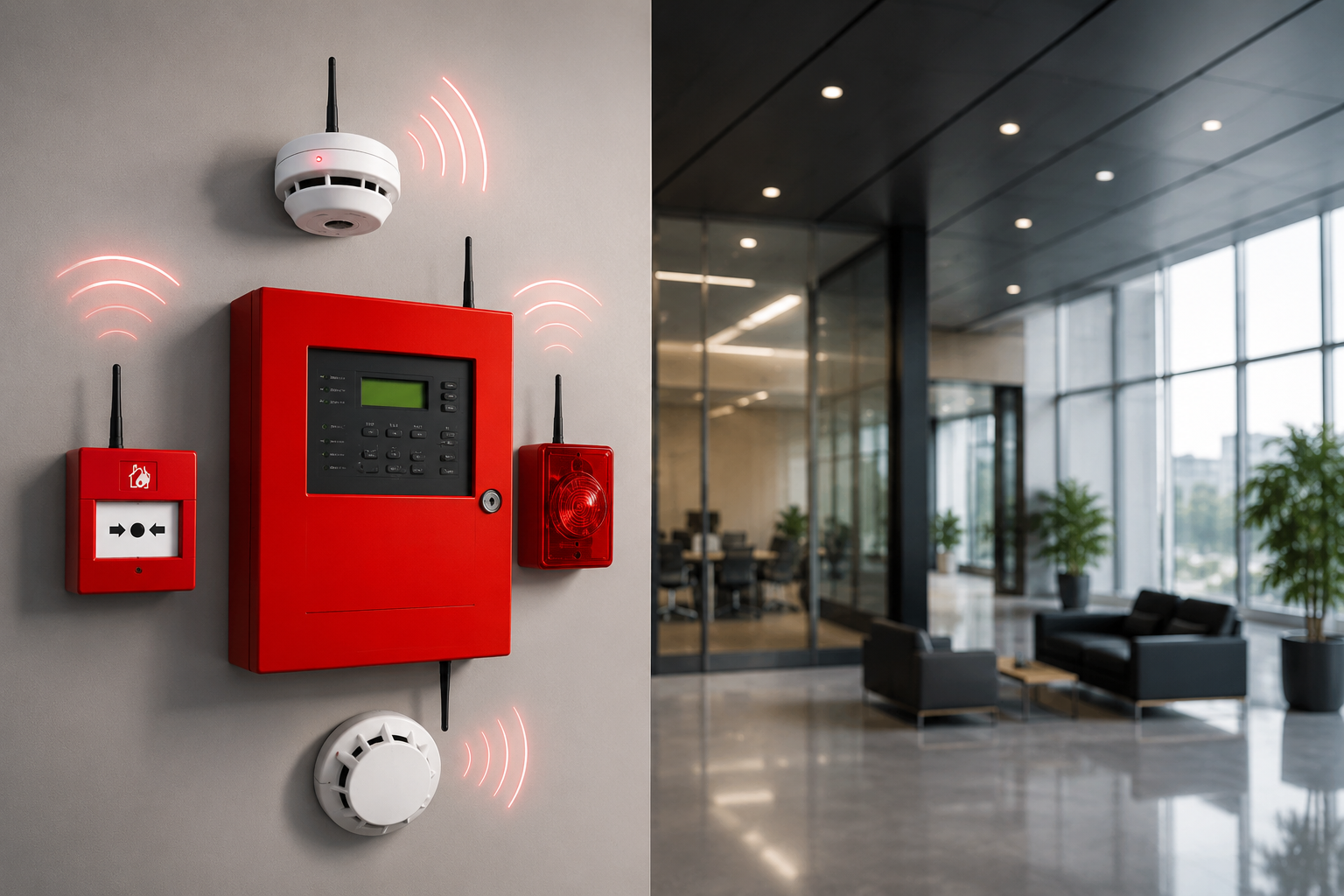
A wireless fire alarm system uses radio signals instead of cables to connect detectors, call points, and sounders back to the main control panel. Every device in the network, from a wireless smoke detector to a heat sensor, talks to the panel over a secure radio frequency. If smoke or heat is detected anywhere in the building, the signal travels instantly to the panel, which then triggers the alarm.
This is a big shift from traditional systems, where every device needs its own wire run back to a central point. With wireless technology, you skip the cabling entirely, which saves time, money, and a lot of headaches.
Why Commercial Buildings Are Switching to Wireless
1. Faster Installation
Wiring a large commercial building can take weeks. A wireless setup can often be installed in days, since there’s no need to route cables through walls, ceilings, or risers. This matters a lot for buildings that can’t afford long shutdowns, like hotels, hospitals, or retail spaces.
2. Lower Disruption to Ongoing Operations
If you’re retrofitting fire safety into an occupied building, tearing open walls to lay cable isn’t practical. A wireless system lets you add protection without disturbing tenants, staff, or daily business.
3. Easier to Expand or Modify
Buildings change. Floors get reconfigured, new tenants move in, and layouts shift. With a wireless system, adding or relocating a device is simple. There’s no need to run new cable every time something changes.
4. Ideal for Heritage or Complex Structures
Older buildings with protected interiors, unusual layouts, or hard-to-reach areas benefit hugely from wireless systems. You get full coverage without cutting into historic walls or navigating awkward ceiling voids.
5. Reliable Performance
Modern systems use encrypted, interference-resistant radio frequencies with built-in signal checks. Devices regularly confirm they’re still connected to the panel, so if a wireless smoke detector loses signal or its battery runs low, the system flags it immediately for maintenance.
Key Components to Look For
When comparing wireless fire alarm systems, look closely at the range of devices on offer. A well-rounded system should include:
- Smoke and heat detectors for general area coverage
- Manual call points for occupants to trigger an alarm manually
- Sounders and visual alarm devices to alert people during an evacuation
- Interface units that let wireless devices connect with existing wired panels, useful for phased upgrades
Established fire safety brands, such as Honeywell Buildings System Sensor range, offer a broad catalogue of detection devices designed to meet different building needs while staying compliant with local fire codes.
What to Check Before You Buy
Battery Life and Monitoring
Every wireless device runs on a battery, so check the expected battery life (usually several years) and how the system alerts you to low battery levels. Good systems monitor this automatically and send a warning well before a device goes offline.
Compliance with Local Fire Codes
Not all systems are approved for every region or building type. Make sure the manufacturer’s system meets the fire safety standards required in your country or state, and ask for documentation to prove it.
Building Size and Signal Range
Wireless signals can be affected by thick walls, metal structures, or very large floor plans. For big commercial properties, ask your supplier about signal boosters or repeater devices that extend coverage without weakening the network.
Integration with Existing Systems
If you already have a wired fire alarm system, check whether the wireless option can integrate with it. Many manufacturers offer hybrid setups, so you don’t have to rip out what’s already working.
Vendor Support and Training
Fire safety isn’t a one-time purchase. Choose a vendor with a strong distributor and support network, along with proper installer training. This ensures your system stays maintained and compliant for years to come.
Common Buildings That Benefit Most
- Offices and co-working spaces – quick installs with minimal disruption to tenants
- Hotels and hospitality venues – protection without visible cabling that spoils interior design
- Warehouses and industrial units – flexible coverage across large, open floor areas
- Data centers – fast deployment in sensitive environments where downtime is costly
- Heritage buildings – full compliance without damaging original structures
Final Thoughts
Choosing between wired and wireless fire safety isn’t just about cost. It’s about matching the system to your building’s structure, timeline, and long-term flexibility. A wireless fire alarm system offers commercial building owners a faster, less invasive, and highly reliable way to stay protected, especially when paired with a well-tested wireless smoke detector network and trusted, code-compliant hardware.
Before you commit, get quotes from more than one supplier, check certifications carefully, and always ask about after-sales support. A fire alarm system is only as good as the people who install and maintain it.