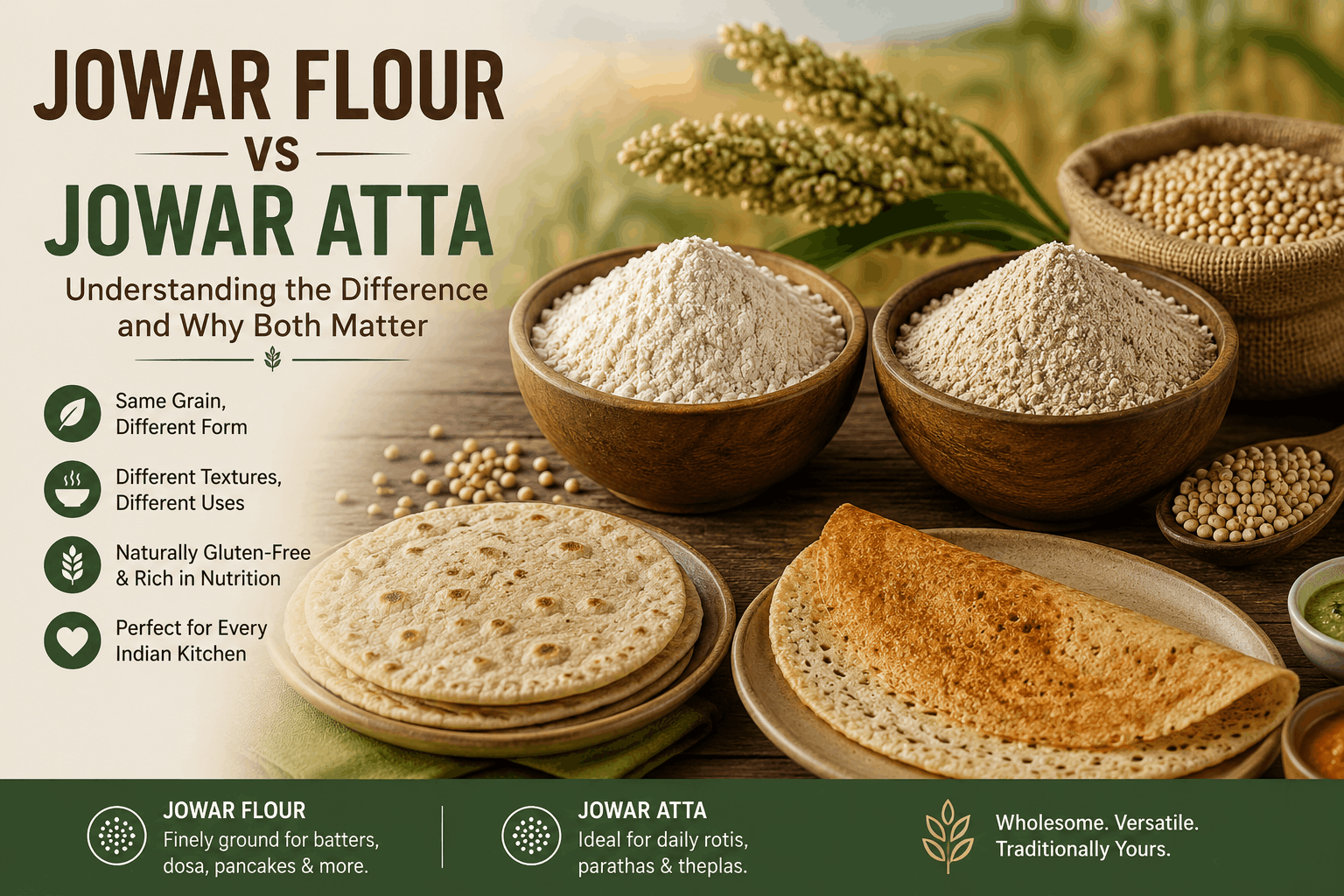
Jowar Flour and Jowar Atta: Understanding the Difference and Why Both Matter
Jowar is one of the most useful grains in Indian kitchens, yet many people still get confused between jowar flour and jowar atta. The two are made from the same grain, but they are often used slightly differently depending on texture, recipe, and regional cooking style. Knowing the difference helps you choose the right one for rotis, batters, bhakri, and everyday meals.
What Is Jowar?
Jowar, also known as sorghum, is an ancient grain that has been part of Indian food traditions for generations. It grows well in dry regions and has long been valued for its strength, simplicity, and versatility. Because it is naturally gluten-free, it has become even more relevant in modern diets.
The grain is commonly processed into flour in different textures. Some versions are finely ground, while others are slightly coarser depending on how they are meant to be used in the kitchen. That is where the naming difference between jowar flour and jowar atta begins to matter.
Jowar Flour Explained
Jowar flour usually refers to a finely ground version of sorghum. It is smooth enough to blend well into batters, soft doughs, and mixed flour recipes. This makes it a practical option for dishes where a lighter texture is preferred.
It can be used in many ways, including pancakes, dosas, porridges, rotis, and baked items. Because it mixes easily with other ingredients, it is often chosen by people who are just starting to cook with jowar. The finer grind also helps it work better in recipes that need even consistency.
Jowar Atta Explained
Jowar atta is the term more commonly used for flour intended for everyday flatbreads. In many North Indian homes, the word atta usually means flour used for roti, paratha, and related dough-based preparations. Jowar atta is therefore understood as jowar ground in a way that works well for that purpose.
The texture of jowar atta is generally fine but may still feel slightly more rustic than refined wheat flour. That is normal and actually useful, because it gives the dough enough body for bhakri and other traditional breads. In daily cooking, jowar atta is often chosen when the goal is a workable dough for flatbreads.
The Main Difference
The difference between jowar flour and jowar atta is usually more about usage and texture than the grain itself. Both come from sorghum, but jowar flour is often associated with broader culinary use, while jowar atta is more closely linked to roti and flatbread preparation. In simple terms, one name is used more often for general cooking and the other for daily dough-making.
This means the right choice depends on what you want to cook. If you are making a batter or a mixed recipe, jowar flour is often the better fit. If you want to prepare rotis or bhakri, jowar atta is usually the more natural choice.
How To Use Them In Daily Cooking
In a regular kitchen routine, jowar flour and jowar atta can both be useful. Jowar atta works well for rotis, bhakri, thepla-style breads, and simple dinner breads. It can also be blended with wheat flour if you want a softer dough and an easier transition.
Jowar flour is ideal for dishes where a smoother texture matters more. You can use it in dosa batter, pancakes, cutlets, or even certain baked recipes. If you are experimenting with healthier alternatives, it is helpful to keep both forms in the kitchen so you can choose based on the recipe.
For people looking to add more variety to their meals, jowar atta can support daily flatbread recipes, while jowar flour can be used in a wider range of cooking styles.
Why Jowar Matters Nutritionally
One reason jowar remains popular is its nutritional value. It is naturally gluten-free, which makes it suitable for people who want to avoid wheat. It also provides dietary fibre, which supports digestion and helps create a longer feeling of fullness after meals.
Jowar is also valued as a grain that fits into balanced eating. It has long been part of traditional diets because it is simple, filling, and easy to pair with vegetables, dals, and curd-based meals. Whether you use it as flour or atta, the grain itself brings the same basic benefits to the table.
Choosing The Right Form
If you are new to jowar, start by thinking about the dish first. For bhakri, rotis, or dough-based meals, jowar atta is the most practical choice. For batter recipes or mixed cooking, jowar flour may be easier to work with.
You do not need to treat them as two completely different ingredients. Think of them as two kitchen-ready forms of the same grain, each suited to a different kind of cooking. That small understanding makes jowar much easier to use every week.
Conclusion
Jowar flour and jowar atta are both valuable parts of a modern Indian kitchen. The difference lies mainly in texture, naming, and intended use, not in the grain itself. Once you understand that, it becomes much easier to choose the right version for the dish you want to make.
Both forms deserve a place in your pantry because they help bring tradition, nutrition, and flexibility together. Whether you are making rotis, bhakri, or batter-based recipes, jowar can fit naturally into everyday cooking.