LASIK eye surgery has become one of the most popular and effective vision correction procedures across the world. Millions of people choose LASIK every year to reduce their dependence on glasses and contact lenses. The procedure is quick, safe, and offers long-lasting results for many patients. However, like every medical treatment, LASIK also comes with certain risks and side effects that patients should understand before making a decision.
In this blog, we will discuss the major benefits of LASIK eye surgery, possible side effects, and important things to consider before undergoing the procedure.
What Is LASIK Eye Surgery?
LASIK (Laser-Assisted In Situ Keratomileusis) is a laser vision correction procedure used to treat common refractive errors such as:
- Nearsightedness (Myopia)
- Farsightedness (Hyperopia)
- Astigmatism
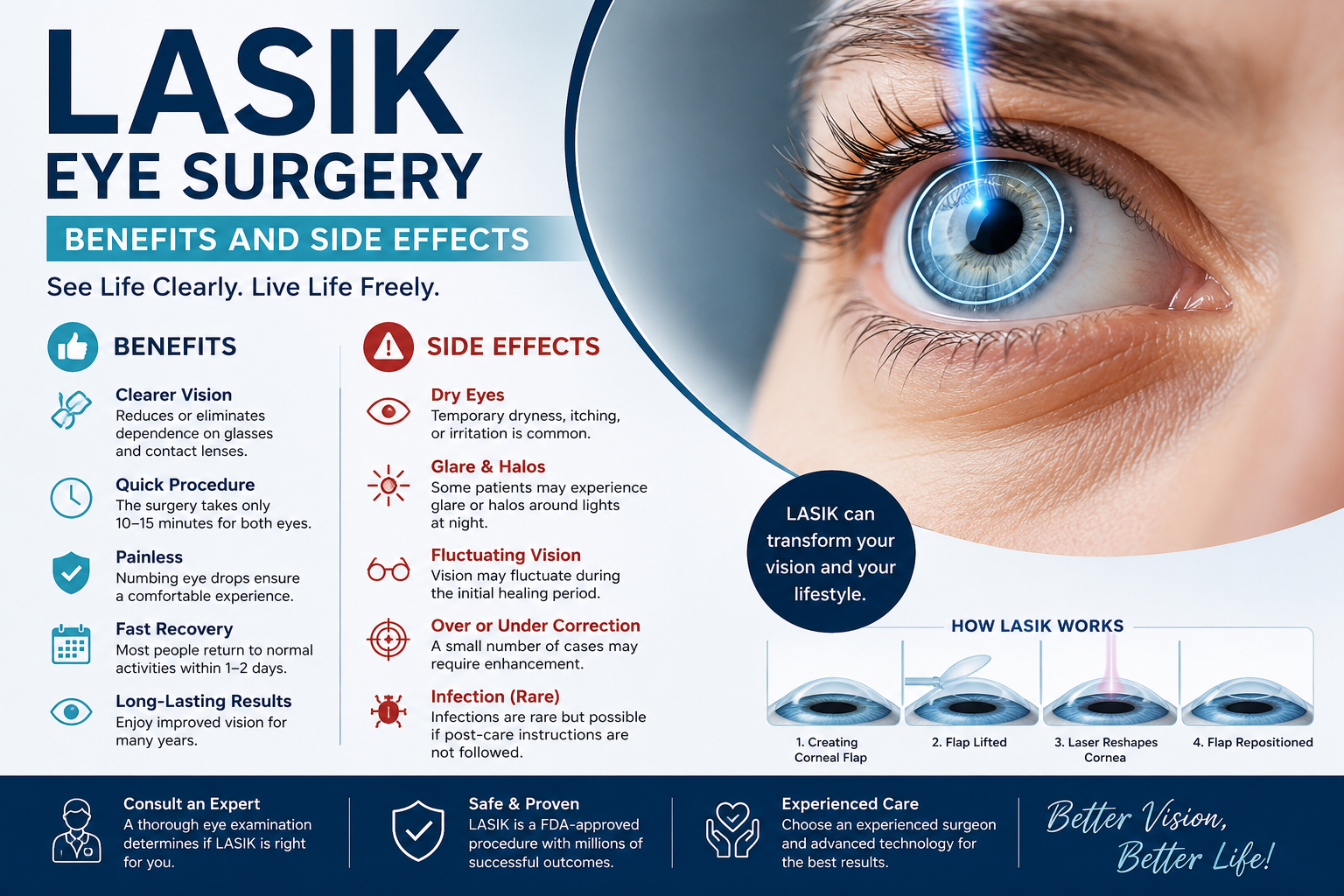
The surgery reshapes the cornea using advanced laser technology so that light entering the eye focuses correctly on the retina. This helps improve vision and reduces the need for glasses or contact lenses.
LASIK is generally completed within 15–20 minutes for both eyes, and most patients notice improved vision within a day or two.
Benefits of LASIK Eye Surgery
1. Freedom from Glasses and Contact Lenses
One of the biggest advantages of LASIK surgery is the reduced dependence on glasses or contact lenses. Many patients achieve 20/20 vision or better after the procedure. Daily activities such as driving, reading, sports, and traveling become easier and more comfortable.
2. Quick and Painless Procedure
LASIK surgery is minimally invasive and almost painless. Doctors use numbing eye drops before the procedure, which helps patients remain comfortable throughout the treatment. The laser treatment itself usually takes only a few minutes.
3. Fast Recovery Time
Most people recover quickly after LASIK. Many patients return to work and regular activities within 24–48 hours. Vision often improves significantly within the first few days.
4. Long-Lasting Results
LASIK offers long-term vision correction for most individuals. Once the cornea is reshaped, the results are generally permanent, although age-related vision changes may still occur later in life.
5. Improved Quality of Life
People who undergo LASIK often experience greater confidence and convenience. Activities like swimming, exercising, and outdoor sports become easier without worrying about glasses or contact lenses.
6. Safe and Advanced Technology
Modern LASIK procedures use highly advanced laser systems that provide accurate and customized treatment. With experienced surgeons and proper patient selection, LASIK has a high success rate and excellent safety profile.
Who Is a Good Candidate for LASIK?
LASIK may be suitable for individuals who:
- Are above 18 years of age
- Have stable vision for at least one year
- Have healthy corneas
- Do not suffer from severe dry eyes or eye diseases
- Are not pregnant or breastfeeding
A complete eye examination is necessary before LASIK surgery to determine whether the procedure is suitable for you.
Possible Side Effects of LASIK Eye Surgery
Although LASIK is considered safe, some patients may experience temporary or rare side effects.
1. Dry Eyes
Dry eyes are one of the most common side effects after LASIK surgery. Patients may feel irritation, burning, or discomfort for a few weeks or months. Doctors usually prescribe lubricating eye drops to manage this condition.
2. Glare and Halos
Some individuals notice glare, halos, or starbursts around lights, especially at night. These symptoms usually improve with time as the eyes heal.
3. Temporary Vision Fluctuations
Vision may fluctuate during the healing period. Some patients experience blurry vision or difficulty focusing initially, but this generally improves within a few weeks.
4. Sensitivity to Light
After surgery, eyes may become temporarily sensitive to bright lights or sunlight. Wearing protective sunglasses can help reduce discomfort.
5. Undercorrection or Overcorrection
In some cases, the laser may remove too little or too much corneal tissue, leading to undercorrection or overcorrection. Additional enhancement procedures may sometimes be needed.
6. Rare Complications
Serious complications from LASIK are rare but can include infection, flap complications, or vision disturbances. Choosing an experienced eye surgeon and following post-operative instructions carefully can significantly reduce these risks.
Tips for a Smooth Recovery After LASIK
Following proper aftercare instructions is essential for successful healing. Here are some important recovery tips:
- Avoid rubbing your eyes
- Use prescribed eye drops regularly
- Wear protective eye shields while sleeping
- Avoid swimming and heavy workouts for a few weeks
- Attend all follow-up appointments
- Protect your eyes from dust and bright sunlight
Most patients recover smoothly and enjoy improved vision shortly after surgery.
LASIK vs Other Vision Correction Procedures
While LASIK is highly effective, it may not be suitable for everyone. Alternative procedures such as PRK, SMILE, or implantable lenses may be recommended depending on the patient’s eye condition.
Advanced eye care centers also offer specialized treatments for cataracts and other eye disorders. Patients looking for robotic blade free cataract surgery in karnal can now access advanced cataract technology that improves safety, precision, and faster recovery for cataract patients.
Final Thoughts
LASIK eye surgery is a safe and effective option for people who want freedom from glasses and contact lenses. The procedure offers multiple benefits, including quick recovery, long-lasting results, and improved quality of life. However, understanding the possible side effects and undergoing proper evaluation is essential before choosing LASIK.
Consulting an experienced eye specialist can help determine whether LASIK is the right option for your vision needs. With modern technology and expert care, LASIK continues to transform the lives of millions by helping them achieve clearer and sharper vision.