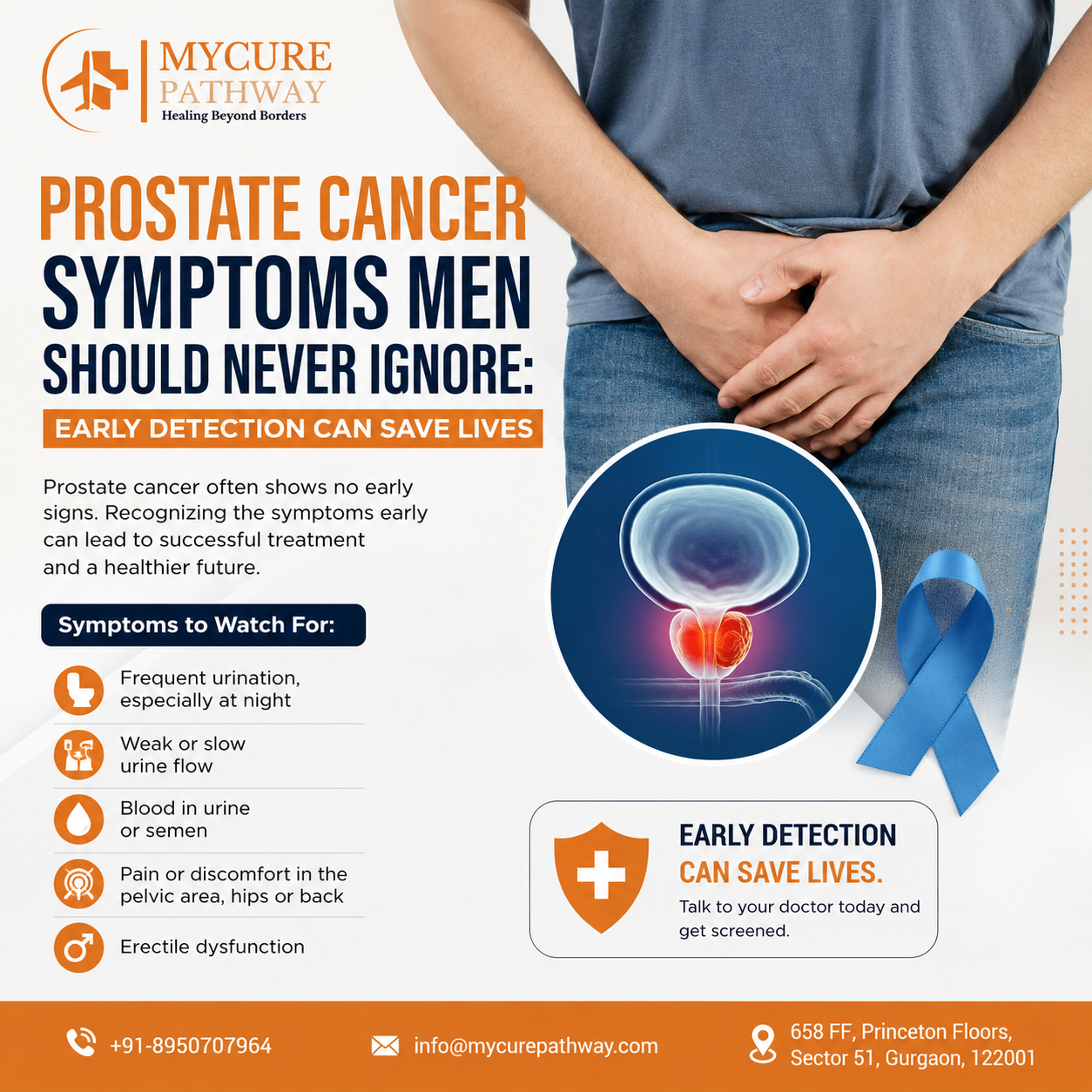
Men often ignore small health changes because they seem harmless at first. A weaker urine stream, waking up repeatedly at night to urinate, or unexplained pelvic discomfort may feel like normal signs of aging. However, these symptoms sometimes point toward Prostate Cancer, one of the most common cancers affecting men globally. According to the American Cancer Society, more than 333,000 new cases are expected in the United States in 2026 alone, highlighting the growing importance of awareness and early diagnosis.
Healthcare experts continue to stress that early identification dramatically improves treatment outcomes. Platforms like Mycure Pathway are helping patients understand symptoms, treatment pathways, and modern healthcare support systems in a more accessible way. Through trusted medical education and patient-centered guidance, Mycure Pathway and its academy are encouraging individuals to stop ignoring warning signs and seek professional care before complications arise.
Why Men Need to Pay Attention to Prostate Health
The prostate is a small gland, but its impact on overall male health is significant. It plays an important role in reproductive function, yet many men know very little about it until symptoms appear. Unfortunately, the disease can quietly develop for years without producing obvious discomfort. That silent progression is what makes awareness so critical. Many patients only visit a doctor after symptoms begin interfering with daily life, and by then the condition may already be advanced.
Modern medical reports show that cases are increasing worldwide, including in India where healthcare professionals are raising awareness aggressively. Recent research highlighted that the disease is now among the most common cancers diagnosed in Indian men. Older age remains one of the strongest risk factors, but genetics, lifestyle habits, and family history also influence risk levels. Men with a father or brother diagnosed with the disease often carry a higher lifetime risk.
Rising Cases Among Aging Men
As men age, the body naturally undergoes hormonal and cellular changes. While not every prostate issue is cancerous, age-related enlargement can sometimes mask more serious conditions. That is why routine checkups matter so much after the age of 50. Some high-risk individuals may even require earlier screening discussions with healthcare professionals.
Doctors worldwide emphasize that awareness saves lives. The encouraging news is that survival rates are extremely high when the disease is detected early and remains localized. The SEER Cancer Statistics database reports a five-year survival rate above 98% for many early-stage cases. This is exactly why recognizing symptoms early can make such a life-changing difference.
The Importance of Early Medical Attention
Many men delay appointments because they feel embarrassed discussing urinary or reproductive health concerns. That hesitation can become dangerous. Think of the body like a car engine warning light. Ignoring the signal does not make the problem disappear; it simply gives the issue more time to worsen beneath the surface.
Medical experts associated with Mycure Pathway encourage proactive healthcare decisions instead of fear-driven avoidance. Early conversations with urologists often provide reassurance, clarity, and access to modern screening tools. Even when symptoms turn out to be unrelated to cancer, prompt evaluation helps rule out serious conditions and reduces long-term complications.
Common Warning Signs That Should Never Be Ignored
Symptoms can vary from person to person, which is why paying attention to subtle body changes matters so much. Some men experience urinary difficulties first, while others notice pain, fatigue, or blood in urine. The challenge is that these symptoms are often mistaken for harmless aging issues.
One of the most searched topics online today involves prostate cancer symptoms, especially because early signs may appear mild or inconsistent. Healthcare providers repeatedly emphasize that recurring symptoms should never be ignored, particularly when they persist for several weeks.
Changes in Urination Patterns
Urinary problems are among the most common early warning signs. Men may notice difficulty starting urination, interrupted flow, weak stream pressure, or the feeling that the bladder never fully empties. Frequent nighttime urination is another major red flag. Although benign prostate enlargement can produce similar symptoms, persistent urinary changes always deserve professional evaluation.
Some individuals also report sudden urgency, where they struggle to hold urine comfortably. These symptoms may gradually worsen over time instead of appearing all at once. That slow progression often tricks people into adapting to discomfort instead of seeking treatment.
Doctors generally recommend paying close attention to the following symptoms:
- Weak urine stream
- Frequent nighttime urination
- Pain or burning sensation during urination
- Difficulty starting or stopping urination
- Sudden urgency to urinate
Blood in Urine or Semen
Seeing blood in urine or semen can feel alarming, and rightly so. While infections and non-cancerous conditions can sometimes cause it, blood should never be dismissed as “probably nothing.” This symptom requires immediate medical assessment because it may indicate serious underlying disease.
Some patients experience this symptom only once, while others notice recurring episodes. Even temporary bleeding deserves attention because it can reveal inflammation, infection, or malignancy. Men often delay evaluation because the symptom disappears quickly, but temporary improvement does not guarantee safety.
Healthcare education programs run through organizations like Mycure Pathway continue encouraging men to report visible bleeding promptly instead of waiting for symptoms to repeat.
Persistent Pain and Discomfort
Pain related to prostate conditions often develops in the lower back, pelvis, hips, or upper thighs. Some men describe it as a dull ache, while others experience sharper discomfort during movement or sitting. In advanced stages, pain may become more constant due to pressure on nearby tissues or bones.
Fatigue and unexplained weight loss may also appear in later stages. These symptoms tend to overlap with many other illnesses, which is why medical evaluation becomes essential for accurate diagnosis. Ignoring persistent pain is similar to ignoring smoke inside a building; something underneath may already be spreading quietly.
Many patients researching the early signs of prostate cancer are surprised to learn how easily symptoms mimic routine aging problems. That overlap is precisely why professional screening and awareness campaigns remain so important today.
Understanding Risk Factors and Lifestyle Influences
Risk factors do not guarantee disease development, but they significantly influence overall probability. Understanding these factors allows men to make smarter healthcare decisions and recognize when earlier screening may be appropriate.
Family history remains one of the strongest predictors. Men with close relatives diagnosed at younger ages face increased risk levels themselves. Genetics can influence how aggressively abnormal cells grow and spread within the body.
Age, Family History, and Genetics
Age remains the biggest risk factor. Most diagnoses occur in men over 50, and risk increases steadily with advancing years. However, younger men are not completely immune. Some hereditary gene mutations increase susceptibility significantly, particularly when multiple relatives share similar cancer histories.
Ethnicity may also influence risk levels. Research continues exploring why certain populations experience higher rates or more aggressive disease progression. Doctors increasingly encourage personalized screening approaches based on family history, ethnicity, and overall health profile.
Healthcare academies associated with trusted patient education networks continue promoting awareness about hereditary cancer risks because early family discussions can save lives across generations.
Diet, Obesity, and Physical Activity
Lifestyle choices affect nearly every aspect of long-term health, including prostate health. Diets high in processed foods, excessive red meat, and unhealthy fats may contribute to chronic inflammation and hormonal imbalance. Obesity also increases the likelihood of aggressive disease progression in many patients.
Physical activity, on the other hand, appears to support better overall health outcomes. Regular exercise improves cardiovascular health, hormone regulation, and immune function. Even moderate activities like walking, cycling, or swimming can provide meaningful long-term benefits.
Here is a simple comparison of lifestyle influences:
| Lifestyle Factor | Possible Impact on Health |
| Regular exercise | Supports hormonal balance and healthy weight |
| Obesity | Linked to more aggressive disease risk |
| High processed food intake | May increase inflammation |
| Balanced diet with vegetables | Supports overall wellness |
| Smoking | Associated with poorer recovery outcomes |
Maintaining healthy habits does not guarantee prevention, but it can improve resilience and support better recovery if treatment becomes necessary.
How Doctors Detect and Evaluate the Condition
Modern medicine has significantly improved screening and diagnostic technologies. Doctors now combine blood tests, imaging tools, physical examinations, and biopsies to evaluate suspicious findings with greater accuracy.
The phrase prostate cancer diagnosis often creates anxiety because patients fear painful procedures or life-changing news. However, understanding the process can reduce fear and help patients make informed decisions more confidently.
PSA Testing and Physical Examination
One of the most common screening methods involves measuring prostate-specific antigen (PSA) levels through a blood test. Elevated PSA levels do not automatically mean cancer, but they may indicate inflammation, enlargement, or abnormal cell activity.
Doctors may also perform a digital rectal examination to check for unusual firmness or irregularities within the gland. Although these examinations can feel uncomfortable, they usually take only a few moments and provide valuable clinical information.
Recent debates continue regarding large-scale PSA screening programs because false positives sometimes lead to unnecessary procedures. Still, many specialists believe targeted screening remains highly valuable for high-risk individuals and symptomatic patients.
Imaging Scans and Biopsy Procedures
If initial screening raises concerns, doctors may recommend MRI scans or biopsy procedures. MRI imaging helps identify suspicious areas within the gland and guides further testing decisions. Biopsies involve collecting small tissue samples for microscopic examination.
Advancements in imaging technology are improving diagnostic precision dramatically. Some modern therapies and diagnostic tools now allow more targeted treatment with fewer side effects than older approaches.
Patients often feel overwhelmed during this stage, which is why educational support platforms such as Mycure Pathway provide guidance that helps individuals understand terminology, treatment choices, and next steps more clearly.
Treatment Options and Modern Medical Advances
Treatment depends on several factors, including age, disease stage, overall health, and tumor aggressiveness. Some patients require immediate intervention, while others benefit from active surveillance where doctors monitor changes carefully over time.
Medical science continues evolving rapidly, offering more personalized and less invasive treatment approaches than ever before.
Surgery, Radiation, and Hormone Therapy
Surgery remains a common treatment option, especially for localized disease. Procedures may involve complete removal of the prostate gland when doctors believe the cancer has not spread significantly.
Radiation therapy is another widely used option. Newer techniques allow doctors to target tumors more precisely while protecting surrounding healthy tissues. Recently introduced SABR radiotherapy programs in the UK have reduced treatment sessions dramatically from around 20 visits to only five for many patients.
Hormone therapy works by reducing testosterone levels that fuel cancer cell growth. Some advanced cases require combinations of hormone therapy, radiation, and medication for better long-term outcomes.
Emerging Technologies and Targeted Treatments
The future of treatment is becoming increasingly personalized. Researchers are exploring targeted therapies, immunotherapy approaches, and advanced hormone-blocking medications that improve survival while minimizing side effects.
Recent studies involving drugs like apalutamide and expanded therapies such as Nubeqa are showing promising results in both advanced and high-risk cases. Researchers also continue developing predictive tools that help doctors tailor treatments more accurately based on patient-specific risk factors and long-term survival estimates.
These developments are giving patients more hope, more options, and better quality-of-life outcomes compared to older treatment approaches.
Final Thoughts
Ignoring persistent symptoms is never a wise strategy, especially when early intervention can dramatically improve survival outcomes. Men often prioritize work, family responsibilities, and daily obligations over their own health, but delaying medical attention can carry serious consequences.
The encouraging reality is that modern medicine continues making enormous progress in detection, treatment, and patient support. Healthcare education initiatives from organizations like Mycure Pathway and its academy are helping bridge the gap between fear and awareness by providing reliable information in a patient-friendly manner.
Awareness is not about creating panic. It is about empowering people to recognize warning signs early, ask better questions, and take proactive action before a manageable condition becomes life-threatening. When men listen to their bodies and seek timely care, early detection truly can save lives.
FAQs
Can younger men develop prostate-related issues?
Yes, although risk increases with age, younger men can still experience prostate conditions, especially if there is a strong family history or genetic predisposition.
Is frequent urination always serious?
Not always. Frequent urination can result from infections, enlarged prostate, diabetes, or excessive fluid intake. Persistent symptoms should still be evaluated by a doctor.
How often should screening be done?
Screening schedules vary depending on age, family history, and personal risk factors. Many doctors recommend discussing screening options after age 50 or earlier for high-risk individuals.
Are lifestyle changes helpful after diagnosis?
Yes. Healthy eating, regular exercise, maintaining proper weight, and avoiding smoking may support better recovery and overall health outcomes during treatment.
What foods may support prostate health?
Vegetables, fruits, whole grains, tomatoes, fatty fish, and foods rich in antioxidants are commonly associated with better overall prostate health.
Can early detection improve survival rates?
Absolutely. Early-stage disease often has very high survival rates because treatment can begin before the condition spreads to other parts of the body.