Padel doesn’t ask much of you at the start. A court, a partner, and a rented racket will get you through your first dozen sessions just fine. What it does ask for immediately and without compromise is the right footwear, the right kit, and a basic understanding of what separates gear that helps from gear that just costs money.
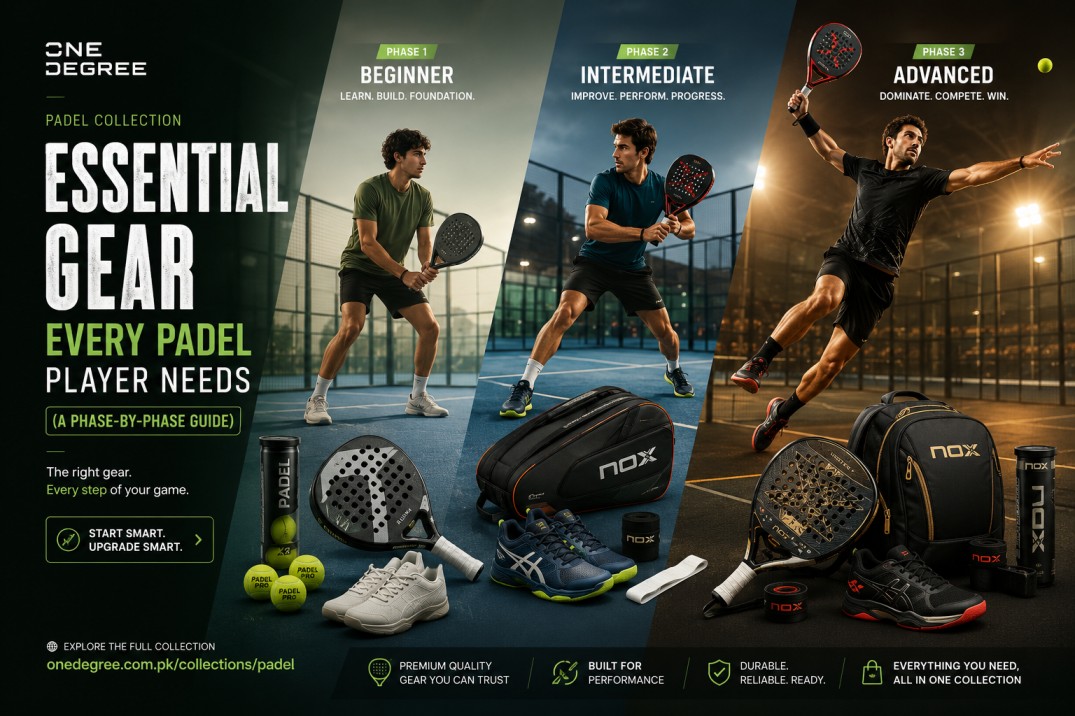
This is a staged guide. Phase one covers what every beginner needs before their first session. Phase two covers what serious players invest in once the game has them. Start where you are.
The Padel Boom and the “Rent vs. Buy” Reality Check
Padel is the fastest-growing racket sport in the world, and courts everywhere are struggling to keep up with demand. For anyone just getting started, the question of padel equipment for beginners comes up almost immediately, and the instinct is almost always to buy everything at once.
Resist it. Most courts stock rental rackets precisely because the learning curve is steep enough without adding an expensive, wrong-shaped frame to the equation. Rental lets you feel the difference between a heavier diamond-shaped racket and a lighter round one before your wallet gets involved.
This guide exists to walk you through padel gear essentials in the order they actually matter, so when you do spend, you spend right.
Phase 1: The Beginner’s Foundation (Comfort & Movement)
Your first few sessions have one job: help you understand the game. Footwork, positioning, and reading the walls. The gear you bring should remove friction.
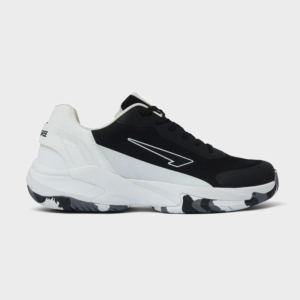
The One Non-Negotiable Padel Sneakers
This is the purchase that cannot wait. Running shoes, even expensive, well-cushioned ones, are genuinely dangerous on the sandy artificial turf that padel courts use.
Why Your Regular Trainers Won’t Cut It
Running shoes are built for forward momentum. Padel isn’t. The game demands constant lateral movement, wide steps, quick direction changes, low defensive stances, and a standard trainer has neither the sole grip nor the sidewall reinforcement to support any of that safely. On sandy turf, they slide. When it comes to padel shoes, rolled ankles are a matter of when, not if.
What to Actually Look For
Start with the sole: a herringbone or omni pattern bites into sandy surfaces cleanly rather than skimming across them. That single feature, more than anything else, is what makes a padel shoe, whether you’re buying the best padel shoes from a specialist retailer or searching for padel shoes online in Pakistan; that sole pattern is non-negotiable.
Complete the beginner setup with a structured padel court bag. What matters is separation: wet kit away from dry, a sleeve for your eventual racket, a durable base that survives being dropped courtside. Alongside it, pack a dedicated court towel in padel; managing sweat between points is part of the game, and towels live on the net post from session one. Together, these padel accessories form the unglamorous but essential backbone of a functional kit.
Phase 2: The Serious Player’s Arsenal (Precision & Protection)
At some point, the rented racket stops being enough. You know your game now, whether you’re a baseline grinder or someone who lives for the net, and your gear should start reflecting that. Phase two is about marginal gains and protecting the investments you’re making.
Your Racket and Its Thermal Paletero
Buying your first padel racket is a milestone, but the decision that follows it immediately is just as important. Shape determines everything: round frames are forgiving and ideal as a beginner padel racket, diamond shapes concentrate power in the head for aggressive players, and teardrop frames sit in between. Play with rentals long enough, and you’ll know which category you belong to.
What most new buyers skip entirely is the padel racket bag. A thermal-lined paletero is not an optional upgrade. The EVA foam core inside a padel racket is sensitive to heat; leave it in a hot car or an unventilated bag, and the core expands, permanently altering the feel and responsiveness of the frame.
A thermal lining holds the internal temperature stable and protects that investment for far longer. Buy the racket and the paletero together, or don’t buy the racket at all.
The Details That Separate Good Players from Frustrated Ones
Factory grips are a starting point, not a long-term solution. A padel overgrip lets you customise handle thickness to your hand size, absorb sweat during extended rallies, and reduce the vibration that over time contributes to tennis elbow. Replace it every three to five matches, depending on how much you sweat; a worn overgrip is a surprisingly common reason for loss of racket control that players rarely think to check.
Padel balls are worth understanding, too. They lose internal pressure after just a few matches, and that loss changes everything. The bounce off the glass flattens, the feel off the racket dulls. Serious players bring their own and rotate them deliberately rather than playing indefinitely with a dead can.
Then there’s padel eyewear. It is mandatory in competitive play, and with good reason, a ball coming off a glass wall at close range moves fast and arrives unpredictably. Look for a wraparound fit, an anti-fog lens, and a lightweight frame that stays in place through lateral movement. It’s the least glamorous item on this padel accessories list and one of the most important.
Quick Reference Padel Gear Checklist by Stage
| Beginner Bag | Serious Player Bag | |
| Footwear | Breathable / Lightweight / Durable | Mesh/TPU/Rubber |
| Apparel | Stretch, moisture-wicking tee and shorts | Good Professional Mobility kit |
| Bag | Structured padel court bag | Thermal paletero + backpack |
| Towel | Court towel | Court towel |
| Protection | Sports eyewear | Wraparound eyewear |
| Balls | Court Provided | Pressurized / Professional |
| Racket | Personal / Affordable | Personal / High End |
For the beginner column, footwear, apparel, and bags, One Degree covers the full padel equipment list, built specifically around what court sport actually demands.
What You Might Be Thinking
Can I wear tennis shoes for padel?
Clay-court tennis shoes can work reasonably well, as their sole pattern offers some grip on sandy surfaces. Standard hard-court tennis shoes are a different story; the sole is designed for a very different surface and won’t give you the lateral stability padel requires.
If you’re asking how to start playing padel without specialist kit, shoes are the one area where cutting corners carries real injury risk.
How often should I replace my padel overgrip?
Every three to five matches is a reliable general rule, though heavy sweaters may need to be changed sooner. A degraded overgrip reduces your feel on the racket and quietly increases the risk of repetitive strain. It’s one of the cheapest upgrades in the sport and one of the most consistently neglected.
Conclusion
The right gear won’t make you a better padel player on its own, but the wrong gear, or the right gear bought in the wrong order, will slow you down and cost you more in the long run. Start with your feet, dress for the intensity of the game, and let the court supply your racket until you know exactly what you need. Build from there, deliberately.
The players who improve fastest aren’t the ones who spent the most on day one; they’re the ones who spent their energy on court, not second-guessing their kit.