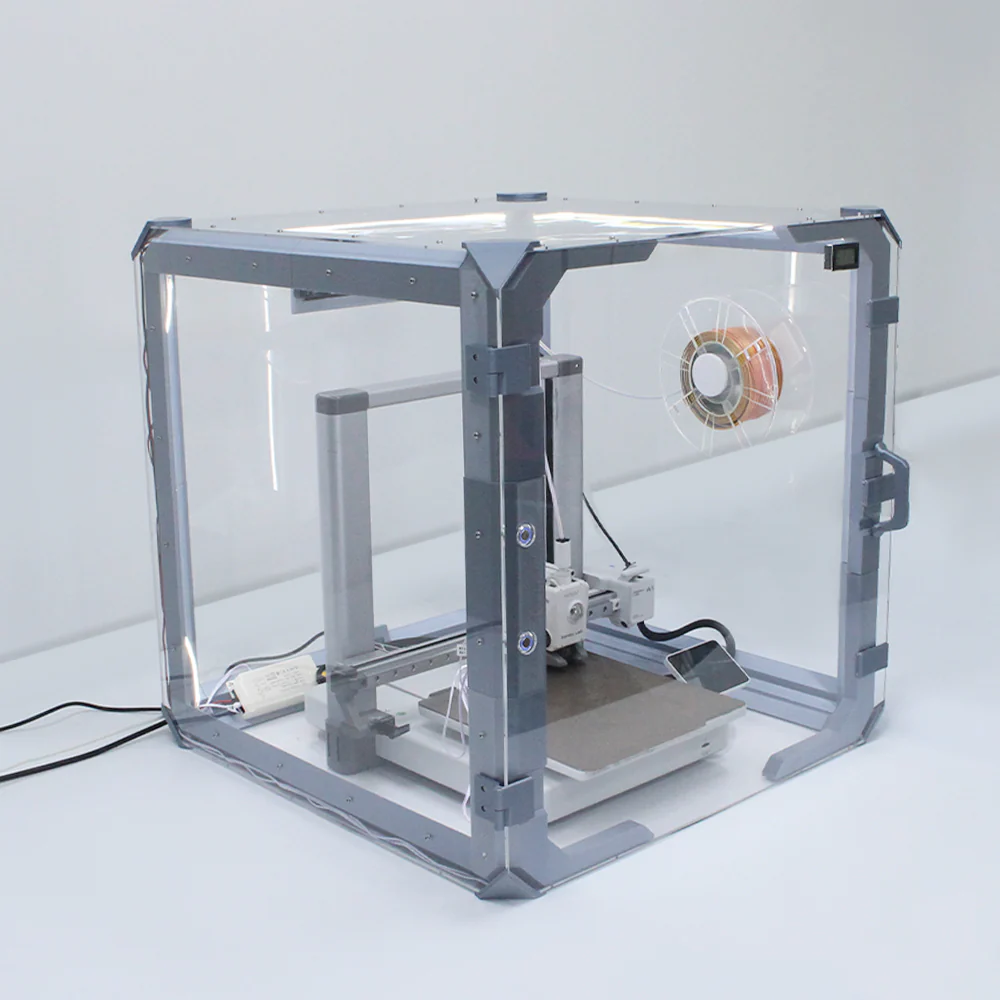
3D printing has become popular among hobbyists, engineers, and professionals because it allows users to create detailed prototypes, custom parts, and functional models. However, achieving consistent results depends on more than just choosing the right printer and filament. Factors like temperature changes, airflow, dust, and workspace conditions can affect print quality.
An enclosure for 3d printer helps create a more controlled printing environment by protecting the machine and maintaining stable conditions during the printing process. Whether you are dealing with warping issues or want a safer and cleaner workspace, an enclosure can be a valuable upgrade for your setup.
What Is a 3D Printer Enclosure?
A 3D printer enclosure is a protective structure that surrounds the printer to control environmental conditions while printing. It acts as a barrier against external factors such as sudden temperature changes, dust, and airflow.
Unlike open-frame printers, enclosed printing systems provide better control over the surrounding environment. This is especially helpful when working with advanced materials that require consistent temperatures.
A printer enclosure is commonly used for:
- Improving print consistency
- Reducing warping and layer separation
- Protecting the printer from dust
- Lowering operating noise
- Creating a safer printing area
Why Should You Use an Enclosure for 3D Printer Setup?
Not every user needs an enclosure. If you mainly print with PLA in a stable indoor environment, an open printer setup may work well. However, users working with temperature-sensitive materials can benefit significantly from a controlled printing space.
An enclosure for 3d printer helps maintain a stable environment around the print area, reducing problems caused by cooling too quickly or uneven airflow.
Better Temperature Control
Many materials shrink as they cool, which can lead to failed prints. An enclosure helps maintain consistent heat around the object, improving layer adhesion and reducing deformation.
Materials that often benefit from an enclosed environment include:
- ABS filament
- ASA filament
- Nylon
- Other engineering-grade materials
Reduced Warping and Print Failures
Warping occurs when different parts of a print cool at different rates. By reducing temperature fluctuations, an enclosure helps create more reliable results, especially for larger models.
Improved Safety and Protection
A printer enclosure creates a physical barrier around hot components, moving parts, and printing materials. This can be useful in homes, offices, or shared workspaces.
It also helps prevent:
- Dust buildup on printer components
- Accidental contact with hot surfaces
- Workspace clutter
Types of 3D Printer Enclosures
Different enclosure styles are available depending on your needs, budget, and printer type.
Soft Fabric Enclosures
Fabric enclosures are affordable and easy to install. They are popular among beginners who want basic temperature control without making major changes to their workspace.
Benefits include:
- Lightweight construction
- Easy storage
- Simple setup
- Budget-friendly design
Hard Shell Enclosures
Hard enclosures use materials such as acrylic panels, plastic sheets, or aluminum frames. They provide stronger protection and better durability.
They are suitable for users who want:
- Better insulation
- Improved protection
- Professional appearance
- Long-term use
DIY Printer Enclosures
Some makers build custom enclosures using materials like wood, acrylic, or aluminum profiles. DIY options allow users to create a design that matches their printer size and workspace.
Advantages include:
- Custom dimensions
- Flexible features
- Lower cost
- Upgrade possibilities
Features to Consider Before Buying
Choosing the right enclosure requires looking beyond size and appearance. Several features affect performance and usability.
Size and Compatibility
The enclosure should provide enough space for your printer, accessories, and future upgrades. Measure your printer dimensions before selecting a model.
Consider:
- Printer height and width
- Moving bed clearance
- Filament spool location
- Cable access
Ventilation and Filtration
Good airflow is important, especially when printing materials that produce odors or particles. Some enclosures include fans, filters, or ventilation systems to improve air quality.
Useful features include:
- Exhaust fans
- Carbon filters
- Adjustable vents
- Temperature monitoring
Visibility and Access
A good enclosure should allow easy monitoring and maintenance.
Look for:
- Clear viewing panels
- Front access doors
- Internal lighting options
- Easy printer adjustments
Is a 3D Printer Enclosure Worth It?
For many users, an enclosure is a practical investment that improves printing reliability and convenience. It becomes especially valuable when working with advanced materials or printing large models.
However, the right choice depends on your specific needs. Beginners printing simple PLA projects may not require advanced features, while professionals using engineering filaments can benefit greatly from better environmental control.
Final Thoughts
An enclosure for 3d printer can improve print quality, safety, and overall workflow by creating a more stable printing environment. From reducing warping to protecting your machine, an enclosure offers several advantages for both beginners and experienced users.
Before buying, consider your printer size, materials, ventilation requirements, and future printing goals. Choosing the right enclosure can help you achieve more consistent results and get the most out of your 3D printing setup.