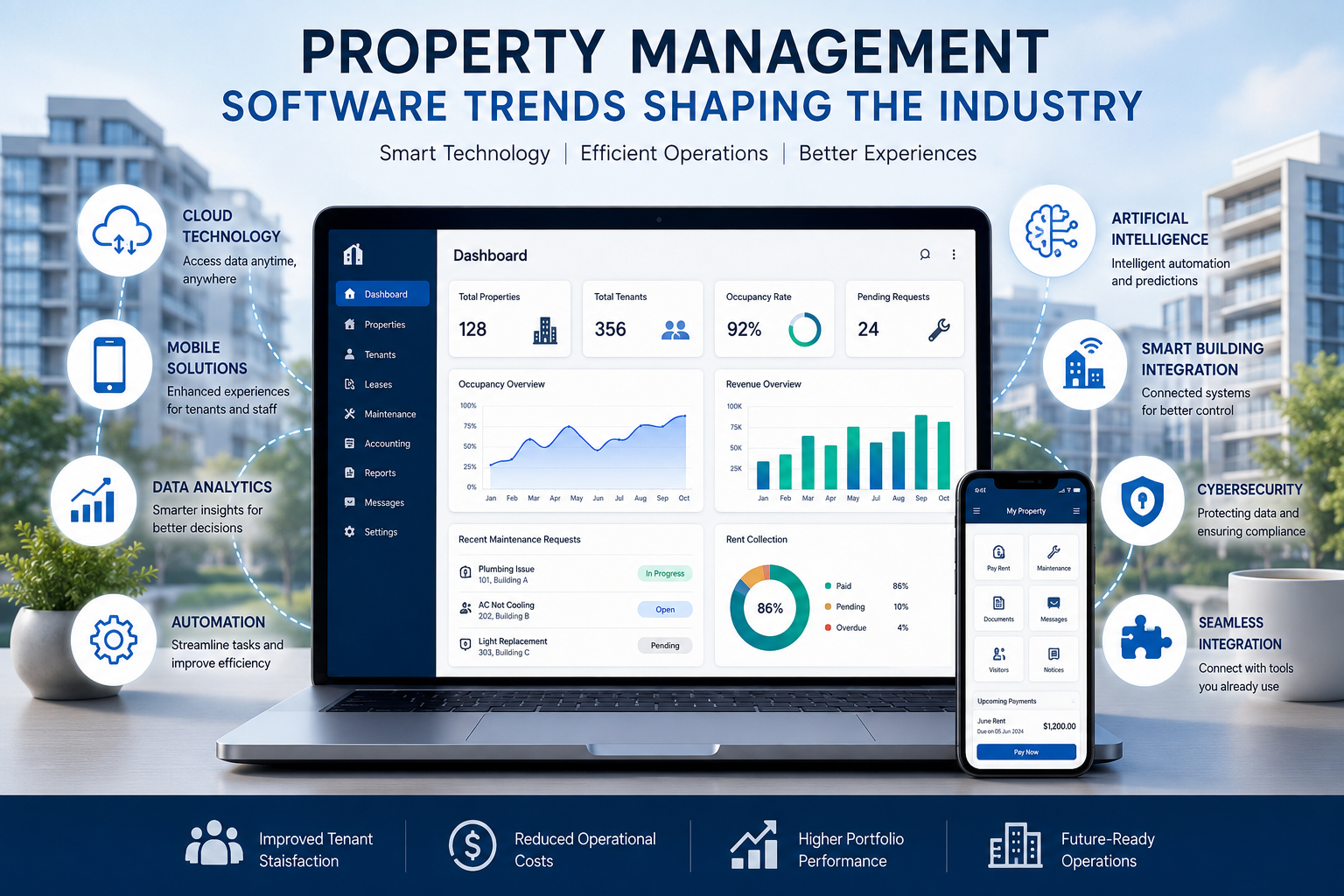
The property management industry is experiencing a significant digital transformation as businesses seek smarter ways to manage assets, tenants, finances, and maintenance operations. Modern platforms are helping property managers streamline workflows, improve communication, and make data-driven decisions. As real estate portfolios continue to expand, technology is becoming an essential component of operational efficiency rather than an optional advantage. The evolution of property management software development is enabling organizations to reduce administrative burdens, enhance tenant satisfaction, and adapt to changing market demands with greater speed and accuracy.
Key Industry Statistics Driving Property Technology Adoption
The growing adoption of digital property solutions is supported by several notable industry trends:
- A large percentage of property management firms now rely on cloud-based platforms to manage daily operations.
- Real estate technology investments continue to increase globally as organizations prioritize automation and data analytics.
- Tenant expectations for digital communication, online payments, and self-service portals have grown significantly in recent years.
- Organizations using automated workflows often report improvements in operational efficiency and reduced administrative costs.
- Predictive analytics and AI-powered solutions are becoming increasingly common in commercial and residential property management.
These statistics highlight how technology is reshaping the sector and creating new opportunities for innovation and efficiency.
Artificial Intelligence Is Transforming Daily Property Operations
Artificial intelligence is becoming one of the most influential trends shaping modern property management systems. Property managers are leveraging AI-powered tools to automate repetitive tasks, analyze large datasets, and improve decision-making processes.
AI can help identify maintenance issues before they become serious problems by analyzing equipment performance data and historical repair records. Predictive maintenance capabilities reduce downtime, minimize repair expenses, and improve tenant experiences.
Another important application involves automated communication. Intelligent chatbots can respond to tenant inquiries, schedule appointments, provide lease information, and assist with common requests around the clock. This improves response times while reducing the workload on management teams.
As organizations continue investing in property management software development, AI-driven features are expected to become standard components rather than premium additions. The ability to generate actionable insights from operational data gives businesses a competitive advantage in an increasingly complex market.
Cloud Platforms Are Improving Accessibility And Scalability
Cloud technology has fundamentally changed how property management systems are deployed and maintained. Traditional on-premise solutions often required significant infrastructure investments and ongoing maintenance. Cloud-based platforms eliminate many of these challenges while providing greater flexibility.
Property managers can access critical information from virtually any location using internet-connected devices. This accessibility is particularly valuable for organizations managing multiple properties across different regions.
Key benefits of cloud adoption include:
- Real-time data synchronization
- Lower infrastructure costs
- Enhanced collaboration among teams
- Automatic software updates
- Improved disaster recovery capabilities
- Greater scalability for expanding portfolios
Cloud architecture also supports seamless integration with third-party applications, enabling organizations to create connected digital ecosystems that improve operational efficiency. As portfolios grow, cloud-based systems can scale without requiring major infrastructure changes.
Mobile Solutions Are Enhancing Tenant And Staff Experiences
Mobile technology has become a central component of modern property management strategies. Both tenants and property managers expect convenient access to services through smartphones and tablets.
Mobile applications allow tenants to:
- Submit maintenance requests
- Pay rent online
- Access lease documents
- Receive important notifications
- Communicate directly with management teams
For property managers and maintenance staff, mobile solutions enable real-time access to work orders, inspection reports, scheduling tools, and property information. This immediate access improves productivity and reduces delays associated with manual processes.
The growing demand for mobile-first experiences is influencing tenant management software development across the industry. Organizations that provide intuitive digital experiences often benefit from improved tenant engagement and stronger retention rates.
As mobile technology continues evolving, property management applications are expected to incorporate additional features such as digital identity verification, mobile access control, and location-based services.
Data Analytics Is Driving Smarter Investment Decisions Today
Data has become one of the most valuable assets in the property management sector. Advanced analytics tools allow organizations to transform large volumes of information into meaningful business insights.
Modern systems collect data from numerous sources, including:
- Tenant interactions
- Financial transactions
- Maintenance records
- Occupancy rates
- Energy consumption metrics
- Market performance indicators
By analyzing these datasets, property managers can identify trends, forecast future performance, and optimize resource allocation. Data-driven decision-making helps organizations improve profitability while reducing operational risks.
Predictive analytics is particularly valuable for forecasting vacancy rates, estimating maintenance costs, and identifying investment opportunities. These capabilities allow organizations to proactively address challenges rather than simply reacting to them after they occur.
The integration of analytics tools into property management software development continues to enhance the strategic value of technology platforms within the real estate industry.
Smart Building Integration Is Redefining Property Management
The rapid expansion of smart building technologies is creating new possibilities for property management professionals. Internet of Things devices enable real-time monitoring and control of building systems, providing greater visibility into property performance.
Smart building integrations commonly include:
- Energy management systems
- Smart lighting controls
- Environmental monitoring sensors
- Access control solutions
- Security surveillance technologies
- Automated HVAC management
These connected technologies generate valuable operational data that can be analyzed to improve efficiency and reduce costs. Property managers can remotely monitor systems, identify abnormalities, and respond to issues more quickly than ever before.
Energy efficiency is a particularly important area of focus. Smart technologies help reduce energy consumption while supporting sustainability objectives. As environmental regulations become more stringent, organizations are increasingly investing in intelligent building management capabilities.
The convergence of property management platforms and smart building infrastructure is expected to accelerate significantly over the coming years.
Cybersecurity Measures Are Becoming Critical Business Priorities
As property management systems become more sophisticated and interconnected, cybersecurity has emerged as a major concern. These platforms often store sensitive information, including tenant records, financial data, lease agreements, and payment details.
Cybersecurity strategies now extend beyond basic password protection and antivirus software. Organizations are implementing comprehensive security frameworks designed to protect both data and operational systems.
Important security measures include:
- Multi-factor authentication
- Data encryption protocols
- Continuous security monitoring
- Regular vulnerability assessments
- Role-based access controls
- Secure cloud infrastructure management
Regulatory compliance requirements are also influencing software design and deployment strategies. Property management companies must ensure that their systems align with relevant data protection regulations and industry standards.
Strong cybersecurity practices not only protect sensitive information but also strengthen trust among tenants, property owners, and business partners.
Automation Tools Are Streamlining Complex Administrative Tasks
Automation is eliminating many of the manual processes that have traditionally consumed significant time and resources within property management operations. Automated workflows improve consistency, reduce errors, and allow teams to focus on higher-value activities.
Common automation applications include:
- Rent collection and payment processing
- Lease renewal notifications
- Maintenance scheduling
- Vendor coordination
- Financial reporting
- Document management
Automation can significantly reduce administrative burdens while improving operational accuracy. For example, recurring tasks can be completed automatically according to predefined rules, minimizing the risk of missed deadlines or human error.
Many organizations are working with a bespoke software development company to create customized automation solutions that align with specific operational requirements. Tailored systems often provide greater flexibility than generic platforms, particularly for businesses managing unique property portfolios.
As technology capabilities continue advancing, automation will play an increasingly important role in supporting efficient and scalable property management operations.
Custom Development Trends Are Shaping Future Industry Growth
The growing complexity of property management requirements is driving demand for highly customized technology solutions. Organizations increasingly recognize that different property types, business models, and operational structures require specialized functionality.
Custom development enables businesses to create platforms that address specific challenges while supporting long-term strategic objectives. Features can be tailored to match unique workflows, reporting requirements, compliance standards, and tenant engagement strategies.
Another area attracting significant attention is understanding the cost to build property management software. Development expenses vary based on factors such as feature complexity, integration requirements, security needs, scalability expectations, and deployment architecture.
Future development trends are expected to focus on:
- Advanced AI capabilities
- Greater automation
- Enhanced user experiences
- Deeper analytics functionality
- Expanded smart building integrations
- Improved interoperability between systems
Organizations that invest in adaptable and future-ready technology platforms will be better positioned to respond to evolving market conditions and customer expectations.
Emerging Digital Ecosystems Are Expanding Industry Capabilities
Property management software is no longer functioning as a standalone solution. Instead, modern platforms are becoming central hubs within broader digital ecosystems that connect various technologies, stakeholders, and business processes.
Integration capabilities are increasingly important because property managers rely on multiple systems to support daily operations. These may include accounting platforms, customer relationship management tools, smart building technologies, payment gateways, maintenance applications, and marketing solutions.
The ability to connect these systems creates several advantages:
- Improved data consistency across departments
- Reduced duplication of work
- Faster access to critical information
- Better reporting and analytics capabilities
- Enhanced user experiences for tenants and staff
Application programming interfaces and integration frameworks are enabling seamless communication between platforms. This interconnected approach helps organizations create more efficient workflows while supporting future technology adoption.
As the real estate industry continues evolving, digital ecosystems will become increasingly important in supporting innovation, operational agility, and long-term business growth.
Conclusion
Technology continues to reshape the way properties are managed, maintained, and optimized. From artificial intelligence and automation to cloud computing, analytics, and smart building integration, modern solutions are helping organizations operate more efficiently while meeting rising tenant expectations. Security, mobility, and customization are also becoming essential considerations as digital transformation accelerates across the real estate sector. Businesses that understand and adapt to these emerging trends will be better equipped to improve performance, enhance user experiences, and navigate the changing demands of the industry in the years ahead.