
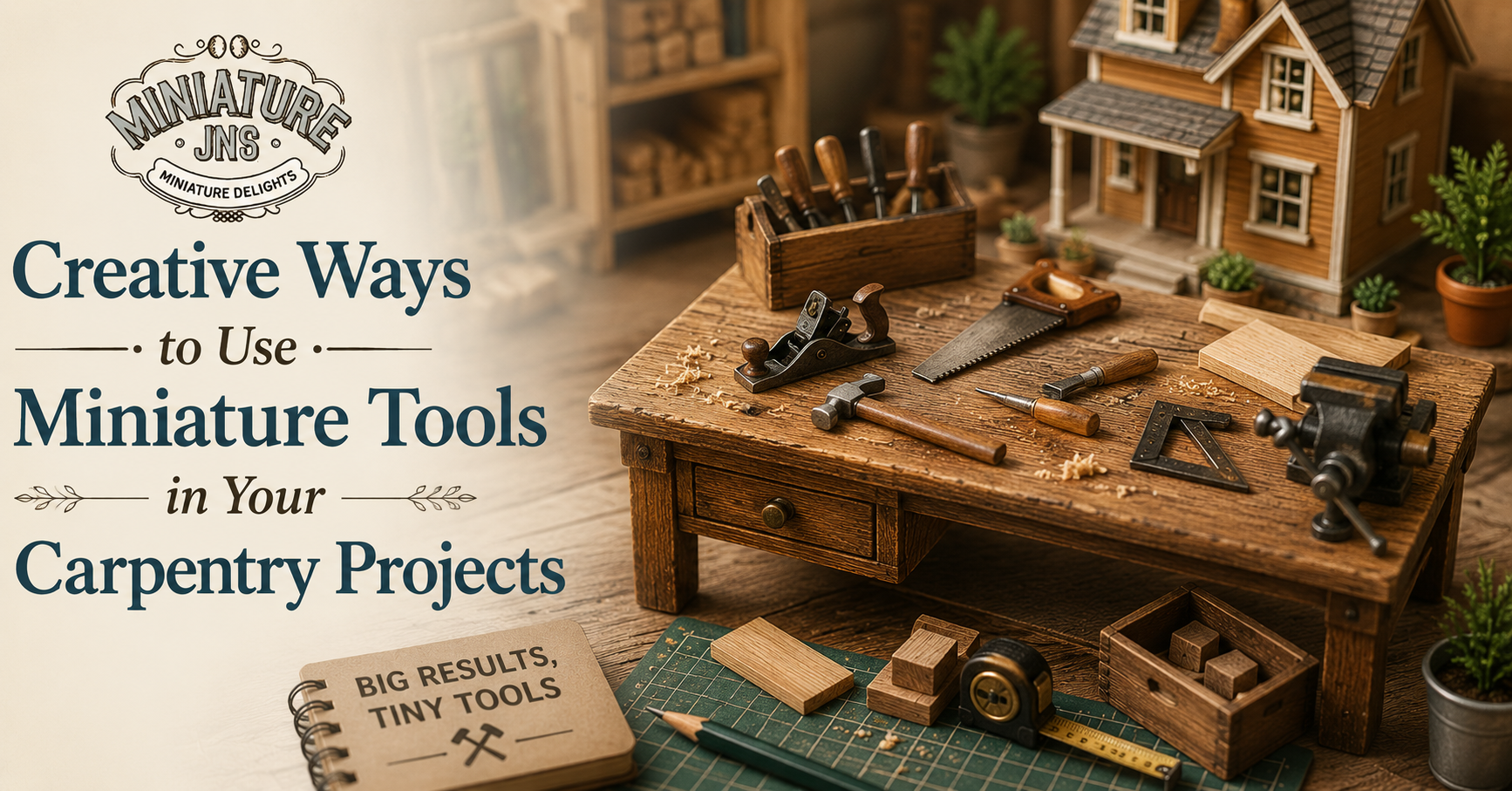
Miniature carpentry projects can bring a small space to life. A tiny room, workshop, shed, or garage can feel more real when it has the right details. Furniture and walls are important, but small working items can make the scene feel active. Tools are one of the best details to use because they show that someone is building, fixing, or creating something inside the scene.
A miniature carpentry project does not have to be large to look impressive. Even a small corner can tell a strong story when it is arranged with care. A tiny workbench, wood pieces, shelves, and tools can create the feeling of a busy workspace. This is why many collectors enjoy using dollhouse tools in their displays. They add purpose, shape, and movement to a room.
Miniature JNS offers small pieces that can help collectors build detailed scenes with a realistic look. When you choose the right items and place them naturally, your carpentry project can feel like a real workshop in miniature form.
Create a Realistic Workshop Corner
One creative way to use tools is to build a small workshop corner. This can be done inside a dollhouse garage, basement, shed, or spare room. You do not need a full room to make this idea work. A small table or shelf area can become a complete work corner if the details are placed well.
Start with a workbench or a simple wooden table. This will become the main point of the scene. Add a few pieces of wood on top to show that a project is in progress. You can place a tiny ruler, hammer, saw, or small box nearby to make the table feel used. The goal is to make the viewer believe that someone just stepped away from the work.
A set of miniature tools for dollhouse scenes can help make this type of corner more believable. These small pieces can show what kind of work is being done. A saw may suggest cutting wood. A hammer may suggest building a chair or shelf. A small brush may show painting or finishing work. Each tool adds meaning to the space.
The background also matters. A plain wall can look empty, so consider adding a small rack, pegboard, shelf, or storage area. Tools can be placed on the wall to create a neat and useful look. Some tools can also sit on the bench to show daily use. This mix of order and activity makes the scene feel natural.
You can also add small wood scraps, tiny nails, a paint can, or a folded cloth. These details help the workshop feel busy without making it messy. A realistic workshop should look used, but it should still be easy to understand.
Add a Project in Progress
Another creative idea is to show a project that is not finished yet. This can make your miniature carpentry scene more interesting. Instead of showing only finished furniture, show the process behind it. A half-built chair, a small frame, a shelf being repaired, or a table with loose parts can make the display feel alive.
This approach gives your scene a story. The viewer can imagine what the worker is making and what will happen next. A simple piece of wood leaning against the bench can suggest the start of a new project. A tiny chair without one leg can suggest repair work. A few boards laid side by side can show that something is being measured or planned.
Tools should be placed close to the project. If a chair is being repaired, a hammer or glue bottle can be near it. If wood is being cut, a saw can be placed beside the boards. If the project is being painted, a small brush and paint can will make sense. Natural placement is important because it helps the scene look real.
You can also use small marks, rough edges, or unfinished colors to show that the project is still in progress. A half-painted cabinet or unpolished table can add charm. Not every miniature item needs to look perfect. In a carpentry scene, a little roughness can make the display more believable.
This idea works well for collectors who enjoy storytelling. A finished room can look beautiful, but a room with work happening can feel more personal. It gives the scene a sense of time and action.
Use Tools as Decorative Details
Tools do not always have to be placed in a workshop. They can also be used as decorative details in other rooms. A small tool box near a door can suggest a home repair. A tiny hammer on a shelf can show that someone is fixing something. A few small items in a garage can make the space feel useful and lived in.
Dollhouse tools can also work well in rustic rooms, farmhouses, cabins, and old-style displays. In these settings, tools can become part of the home’s character. A small saw on a wall, a tiny toolbox under a table, or a measuring tool near a window can add a practical touch.
This type of detail is useful because it makes the scene feel less staged. Real homes often have small signs of daily life. Someone may be fixing a chair, hanging a picture, or repairing a cabinet. When tools appear in the right place, they help tell that everyday story.
However, it is important not to overuse them. Too many tools in a room can make the display feel crowded or confusing. Choose only the pieces that support the story. If the room is a kitchen, one small repair detail may be enough. If the room is a garage, you can use more tools because they fit the space naturally.
Think about balance. A tool should not take attention away from the main scene unless it is meant to be the focus. It should support the room and make it feel more complete.
Build a Tool Storage Display
Tool storage can be just as interesting as the tools themselves. A wall rack, shelf, cabinet, or open box can make your carpentry project look organized. It can also give you a creative way to display small items without spreading them across the whole room.
A tool rack on the wall can make a workshop look neat and professional. A small shelf with jars, boxes, and tools can add depth. A toolbox can sit open on the floor or bench, showing that work is happening. These small storage details help the scene feel planned and realistic.
A set of miniature tools for dollhouse displays can be arranged in many ways. Some can hang on the wall, some can rest on the table, and some can be stored in a box. This variety makes the scene more natural. In real workshops, not every item is placed in the same way, so a mix of storage styles can look better.
You can also create a small before-and-after feeling. Place clean tools on a shelf and used tools near the project. This shows that the space is both organized and active. The viewer can understand that the person working there knows where everything belongs but is still in the middle of a task.
Miniature JNS can help collectors find small details that match different room styles and project ideas. The best results come from choosing pieces that fit the size, theme, and mood of the display.
Make the Scene Feel Personal
The most creative miniature carpentry projects often feel personal. They do not look like random pieces placed together. They look like a small space owned by someone with habits, work, and personality. Tools can help create this feeling when they are used with care.
You can decide who the workshop belongs to. It may belong to a careful woodworker who keeps everything neat. It may belong to a busy builder with wood pieces and tools spread around. It may belong to a hobby lover who works on small furniture during quiet evenings. Once you know the person behind the scene, choosing and placing items becomes easier.
Small personal touches can make a big difference. A cup on the bench, a tiny notebook, a sketch of a cabinet, or a chair being repaired can make the room feel warm. These details help the viewer imagine life inside the scene.
A realistic miniature carpentry project is not only about tools. It is about how the tools are used, where they are placed, and what story they help tell. Start with a simple idea, choose the main work area, add a project in progress, and place each small item with purpose.
When done well, a miniature carpentry scene can feel full of charm and activity. It can show work, care, creativity, and daily life in a very small space. With patient planning and thoughtful details, your project can become a tiny workshop that looks real, natural, and full of character.