Search a person’s name or a company’s name on Google, and what comes up in the first few results often shapes a decision before a single conversation happens. A hiring manager, an investor, or a potential customer forms an opinion within seconds of scanning search results, reviews, and social mentions. This is the space where online reputation management operates.
For businesses and professionals in Delhi’s competitive market, understanding how ORM works is no longer optional. Whether it’s a negative review sitting on page one of Google, a social media complaint gaining traction, or outdated information misrepresenting a brand, the internet’s memory is long. This article breaks down what online reputation management actually means, how ORM services in India function in practice, and what to expect when working with an ORM company India businesses typically approach for this kind of work.
What Is Online Reputation Management?
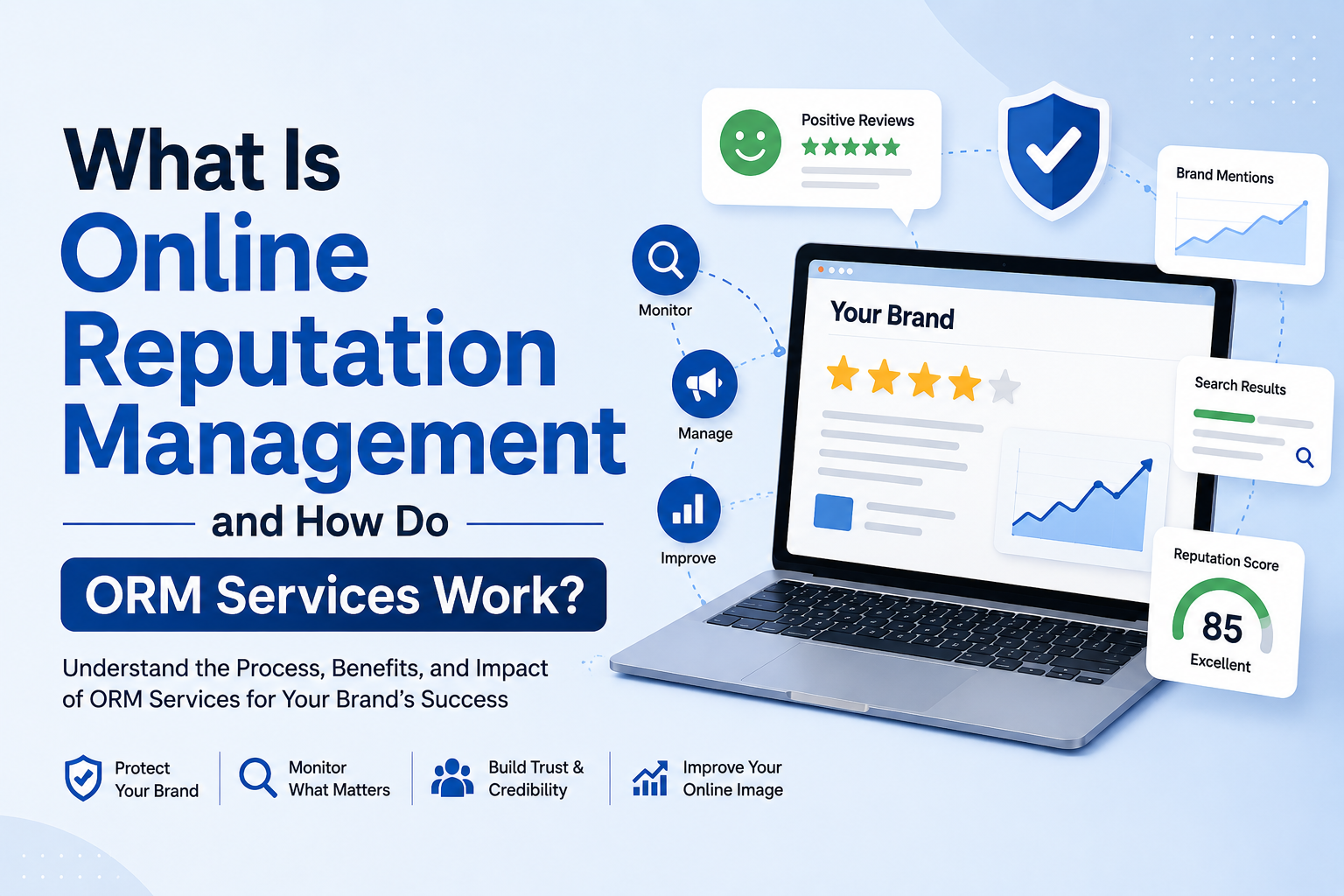
Online reputation management (ORM) is the practice of monitoring, influencing, and shaping how an individual or business is perceived online. It combines search engine optimization, content strategy, review management, and digital PR to ensure accurate and balanced information appears when someone is searched online.
ORM is not about hiding facts or manipulating the truth. It’s about ensuring that search results, reviews, and online conversations reflect a fair and current picture, rather than being dominated by outdated, incomplete, or unverified content.
Why Online Reputation Matters Today
Search behavior has changed. People no longer just Google a name; they also ask AI tools like ChatGPT, Perplexity, or Google’s AI Overviews to summarize what’s known about a brand or person. This makes reputation management relevant not just for traditional search rankings, but for how generative AI engines interpret and present information.
A few reasons ORM has become essential:
- Customers research businesses online before making purchase decisions
- Job candidates and business partners check digital footprints before engaging
- Negative content can rank for years if left unaddressed
- AI-generated answers pull from the same online sources that ORM strategies target
How Do ORM Services Work?
ORM services typically follow a structured, multi-step process rather than a one-time fix. Reputation building is gradual and requires consistent monitoring.
1. Reputation Audit and Monitoring
The first step involves analyzing existing search results, review platforms, social mentions, and news coverage. This audit identifies:
- What ranks on the first two pages of search results
- Sentiment across reviews and social platforms
- Sources of negative or outdated content
- Gaps where positive, authoritative content is missing
Monitoring tools track brand mentions continuously, so new issues are caught early rather than after they’ve spread.
2. Content Strategy and Search Optimization
Once the audit is complete, ORM services focus on building and optimizing content that reflects accurate, positive, and relevant information. This includes:
- Optimizing owned properties like websites and business profiles
- Publishing authoritative content such as press features, expert articles, or professional profiles
- Strengthening Google Business Profile and other local listings
- Ensuring consistency of information (NAP: Name, Address, Phone) across platforms
This step follows core SEO principles, since ranking positive or neutral content above negative content is central to ORM.
3. Review Management
Reviews significantly influence both customer trust and search visibility. ORM services typically help businesses:
- Respond to reviews professionally, including negative ones
- Encourage genuine customer feedback through structured processes
- Address recurring complaints reflected in reviews
- Monitor review platforms relevant to the industry (Google, Justdial, Glassdoor, and others depending on the sector)
Review management is not about removing legitimate criticism; it’s about demonstrating responsiveness and resolving concerns publicly.
4. Negative Content Suppression (Not Removal)
A common misconception is that ORM removes negative content. In most cases, content cannot be legally removed unless it violates platform policies or defamation laws. Instead, ORM works by:
- Publishing stronger, more relevant content that outranks negative pages
- Improving the authority of positive sources through backlinks and citations
- Addressing the root cause of complaints where possible
Removal is only pursued through legal or platform-reporting channels when content is defamatory, fake, or violates the terms of service.
5. Ongoing Monitoring and Reporting
Reputation is not static. ORM companies in India typically provide monthly reporting that tracks:
- Search result changes
- Review sentiment trends
- New mentions across platforms
- Progress against reputation goals
This ongoing cycle is what separates ORM from a one-time PR campaign.
Who Needs ORM Services?
ORM is relevant across sectors, but demand is particularly high among:
- Businesses facing recurring customer complaints online
- Professionals such as doctors, lawyers, and consultants
- Startups and D2C brands building early digital trust
- Public figures and executives managing personal branding
- Companies recovering from a specific incident or controversy
ORM Services in Delhi: Local Context
Delhi’s business landscape includes a dense mix of startups, established enterprises, service providers, and professionals, all competing for visibility in a crowded digital space. Local search behavior, searching for services “near me” or with city-specific terms, makes local SEO and Google Business Profile management a core part of ORM strategy in this market.
Because Delhi has a high concentration of competing businesses in similar categories, reputation differentiation often becomes a deciding factor for customers choosing between comparable options. This is why many businesses in the region look for ORM services in Delhi that understand local search patterns, regional review platforms, and industry-specific reputation risks.
An online reputation management company in Delhi typically brings this local understanding together with broader digital strategy, since national and regional visibility both play a role in how a brand is perceived. Maverick India is among the companies operating in this space, working with businesses and professionals on reputation monitoring, content strategy, and review management tailored to their specific digital footprint. Like other ORM companies in India, its process is built around continuous monitoring rather than a single intervention.
How to Choose an ORM Agency
Whether the search is for an online reputation management company or a specialized ORM agency in India, a few factors are worth checking:
- Transparency in methods: Ethical ORM avoids fake reviews, black-hat SEO, or manipulative tactics
- Reporting clarity: Regular, measurable updates on search rankings and sentiment
- Industry experience: Familiarity with sector-specific reputation challenges
- Legal understanding: Awareness of when content removal requires legal routes versus SEO-based suppression
Frequently Asked Questions
What does an ORM company actually do?
An ORM company monitors online mentions, manages reviews, builds authoritative content, and applies SEO strategies to ensure accurate and balanced information appears in search results and AI-generated summaries.
Can negative reviews or articles be removed from Google?
Only in specific cases involving defamation, policy violations, or fake content, and typically through legal or platform-reporting processes. Most ORM strategies focus on outranking negative content rather than removing it.
How long does online reputation management take to show results?
Timelines vary by case complexity, but noticeable changes in search visibility typically take a few months, since search engines need time to index and rank new content.
Is ORM only for businesses with a reputation crisis?
No. Many businesses and professionals use ORM proactively to build a strong digital presence before issues arise, rather than reacting after a crisis.
How is ORM different from regular SEO?
Regular SEO focuses on ranking for keywords related to products or services. ORM specifically targets search results and mentions tied to a brand or individual’s name, combining SEO with review management and content strategy.
Final Thoughts
Online reputation management is a continuous process built on monitoring, content strategy, and consistent engagement across platforms, not a quick fix for a single bad review. For businesses and professionals in Delhi navigating a competitive digital environment, understanding these mechanics helps set realistic expectations before choosing to work with any ORM service provider.
If you’re exploring how ORM services could benefit your business, Maverick India can help you begin with a comprehensive audit of your current online presence. This provides a clear picture of your digital reputation and helps identify the right strategies to strengthen your brand’s credibility and visibility.