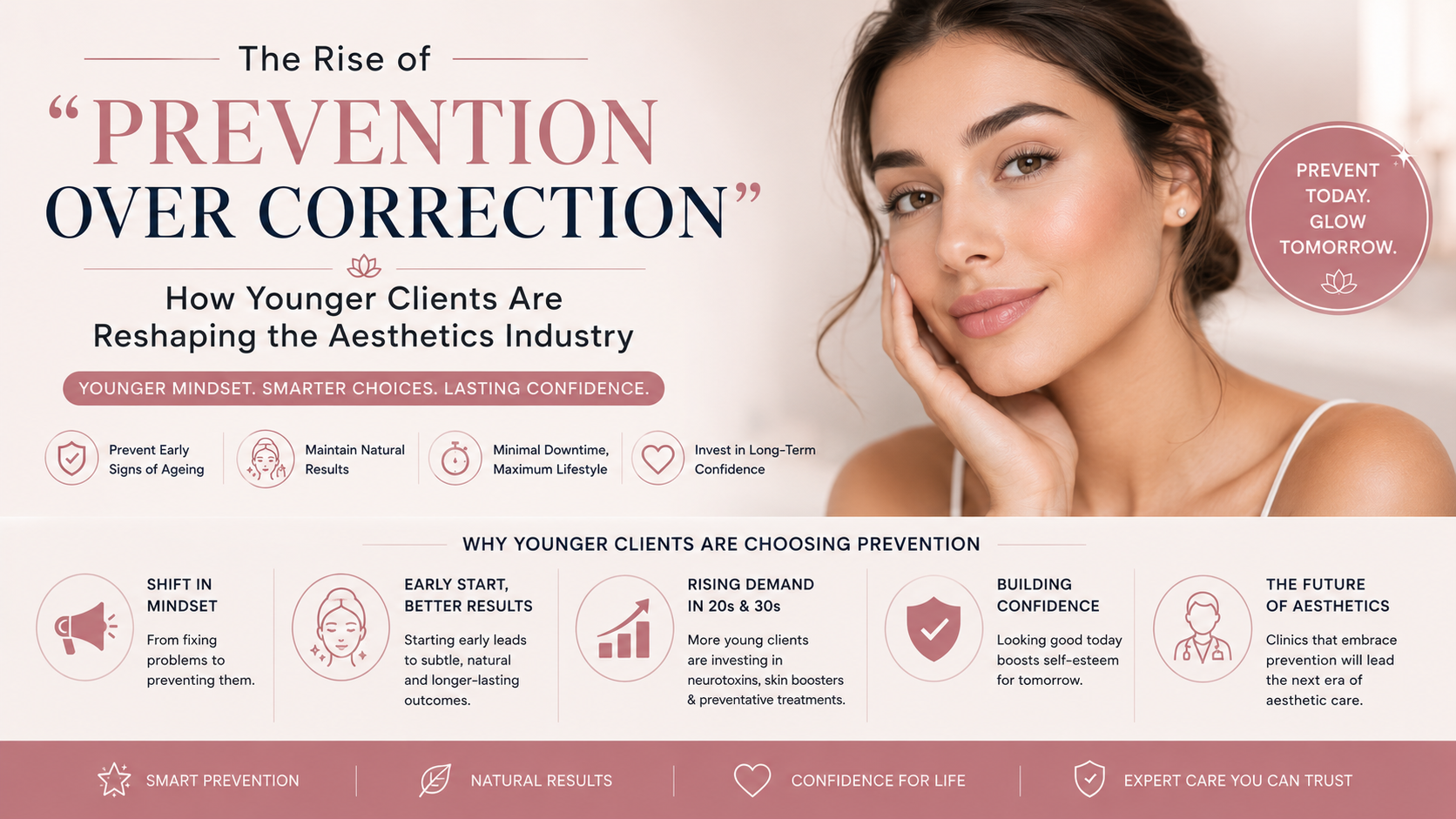
A quiet shift has been happening inside aesthetic clinics over the last few years. Walk into a consultation room today and you’re just as likely to meet a 26-year-old asking about “preventative” treatments as a 55-year-old looking to correct existing lines. This change in who’s booking appointments — and why — is reshaping how clinics plan their services, train their staff, and market themselves.
It’s a shift that’s easy to miss if you’re only looking at overall booking numbers, because the total volume of treatments has simply kept climbing year after year. But look closer at who is actually sitting in the chair, and the story becomes far more interesting. The average age of a first-time client has been dropping steadily, and the language clients use to describe what they want has changed just as much as the treatments themselves.
From Damage Control to Maintenance
For a long time, cosmetic treatments were framed as a response to visible ageing. Someone would notice deeper lines or sagging skin and then seek out a solution, often after years of feeling self-conscious about it. That reactive mindset is fading. In its place is a more proactive one, largely driven by younger clients who’ve grown up watching influencers and dermatologists talk openly about skin health, collagen, and “getting ahead” of wrinkles before they set in.
This generational mindset shift is one of the biggest reasons the aesthetics industry has broadened so quickly. It’s no longer a service reserved for older clients wanting to turn back the clock — it’s increasingly viewed as routine self-care, not unlike a gym membership, a skincare routine, or regular dental check-ups. The framing has moved from “repair” to “maintenance,” and that single change in perception has opened the door to an entirely new customer base.
Social media has played an outsized role in normalising this conversation. Where cosmetic treatments were once discussed in hushed tones or kept private, today they’re openly documented, compared, and reviewed online. Clients arrive at consultations already familiar with terminology, before-and-after examples, and even specific practitioner recommendations gathered from online communities. This has raised the baseline level of client education across the board, and clinics have had to adjust how they communicate as a result.
Why Anti-Wrinkle Treatments Fit This New Mindset Perfectly
This is precisely why Anti-Wrinkle Treatments have become such a natural fit for the preventative approach. Because the treatment relaxes the muscle movements that eventually cause static lines, starting early can genuinely slow the formation of deeper wrinkles later on. For younger clients in particular, this “preventative” framing feels less about vanity and more about long-term skin maintenance — a subtle but important distinction that has made the treatment far more approachable to a wider audience.
There’s also a practical appeal at play. Anti-wrinkle treatments require no downtime, produce results that look natural when done well, and fit easily into a lunch break or a weekend errand run. For a generation that values convenience and efficiency in almost every part of life, from food delivery to online banking, a treatment that delivers visible results without disrupting a weekly schedule is an easy sell.
Clinics that understand this mindset shift are adjusting their messaging accordingly. Rather than marketing purely around “fixing” wrinkles, many now talk about maintaining skin quality, softening the very first signs of expression lines, and supporting a naturally youthful look over time. Consultation scripts have changed too — practitioners are spending more time explaining the science of muscle movement and collagen breakdown, rather than simply pointing out problem areas, because younger clients respond far better to education than to being told what’s “wrong” with their appearance.
A Generational Comparison Worth Understanding
It’s worth pausing on just how different the motivations are across age groups, because it changes how a clinic should approach each conversation. Older clients booking anti-wrinkle treatments are often looking for a visible, immediate improvement to lines they’ve noticed for some time — a sense of restoring what was once there. Younger clients, on the other hand, are rarely trying to reverse anything. They’re trying to keep their skin looking exactly as it does now, for as long as possible.
This difference matters because it changes what “success” looks like for each client. A 24-year-old client isn’t going to be impressed by a dramatic transformation — in fact, that would likely alarm them. What they want is something so subtle that friends and family don’t notice a change at all, just a sense that their skin looks well-rested and healthy. Clinics that fail to recognise this distinction risk over-treating younger clients and creating exactly the “overdone” look this generation is actively trying to avoid.
The Knock-On Effect for Other Treatments
Once a client feels comfortable booking one preventative treatment, they tend to become curious about others. It’s common for someone who starts with anti-wrinkle injections to later ask about enhancing lip shape or volume, especially as they become more familiar with the clinic and more confident about subtle, natural-looking results. This is where interest in Dermal Lip Filler often enters the picture, as clients look to soften and balance their overall facial appearance rather than focus on just one area.
This cross-treatment interest tends to build gradually rather than all at once. A client might return for their second or third anti-wrinkle appointment before ever asking about lip enhancement, simply because trust in the clinic and practitioner needs time to develop. For clinics, this presents a real opportunity to build long-term client relationships rather than one-off transactions, provided the recommendations feel client-led rather than pushed. Practitioners who take the time to understand what a client is genuinely curious about, rather than defaulting to a standard upsell script, tend to see far better long-term retention.
What Clinics Need to Get Right
Attracting a younger, more informed clientele comes with its own set of expectations. These clients tend to research heavily before booking, compare practitioner credentials, and expect honest conversations about realistic outcomes rather than exaggerated promises. They’re also less tolerant of anything that feels like a hard sell, and far quicker to leave a negative review if they feel pressured into a treatment they didn’t ask for.
Transparency has become non-negotiable. Clients increasingly expect to see clear pricing, understand exactly what a treatment involves before they arrive, and know who will actually be performing the procedure. Clinics that bury this information or rely on vague marketing language tend to lose potential clients before they even book a consultation, simply because there are always alternatives a quick search away.
Staff training matters more than ever, too. Practitioners now need to be just as comfortable explaining the science behind a treatment as performing it, since younger clients often ask detailed questions about how a product works, how long results last, and what the long-term effects of repeated treatment might be. Clinics that invest in this kind of practitioner education tend to build stronger client trust than those relying purely on marketing to attract bookings.
This is where clinics with strong clinical reputations have an advantage. Cavendish Clinic is a good example of the kind of established, trust-first approach that resonates with this newer generation of clients — one that prioritises safe, considered treatment plans over quick upselling. As more young clients enter the market with high expectations for transparency and safety, this kind of credibility will likely separate clinics that build lasting client bases from those that don’t.
A Market That’s Only Getting Younger
The preventative aesthetics trend shows no sign of slowing. As awareness spreads and social stigma continues to fade, clinics can expect an even younger, more research-driven client base walking through their doors in the years ahead. This isn’t a passing fad driven by a single viral trend — it reflects a genuine, lasting shift in how people think about skincare and self-maintenance, one that’s likely to keep expanding as today’s younger clients grow older and bring the next generation along with them.
The clinics best positioned to benefit will be the ones that adapt their consultations, education, and treatment planning to match this proactive, long-term mindset — rather than treating every client as if they’re there to fix a problem that’s already appeared. That means rethinking marketing language, retraining staff to lead with education over sales, and building the kind of transparent, trustworthy reputation that a more informed generation of clients now expects as standard.