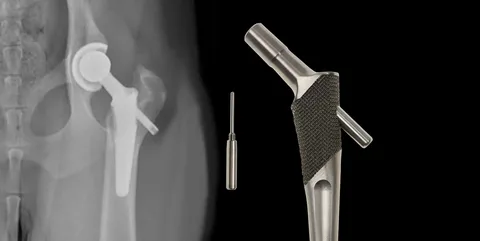
Medical implant manufacturing demands extreme precision, consistency, and strict quality assurance because even the smallest error can affect patient safety and treatment success. Medical implant machining plays a critical role in producing components such as orthopedic screws, hip joints, dental implants, and spinal devices that must meet tight dimensional and material standards.
In modern healthcare industries, advanced machining technologies combined with rigorous quality control systems ensure that every implant performs reliably inside the human body. This article explores how high accuracy is achieved and maintained throughout the production process of medical implants.
Precision Engineering in Medical Implant Machining
Precision engineering is the foundation of medical implant machining, ensuring that every component meets exact specifications. Manufacturers rely on CNC machining, multi-axis milling, and micro-machining techniques to achieve micron-level accuracy required for implants.
Because implants must fit perfectly within the human body, even a deviation of a few microns can lead to complications such as poor healing or implant failure. This makes precision not just a technical requirement but a medical necessity.
Key aspects of precision engineering include:
- Use of multi-axis CNC machines for complex geometries
- Tight tolerance control within microns
- High-speed machining for improved surface finish
- Advanced CAD/CAM software integration
The engineering process begins with digital modeling, where every curve and dimension is simulated before production. This ensures that the final implant design is both functional and safe.
In addition, manufacturers frequently perform virtual testing to eliminate design flaws before physical machining begins. This reduces waste and improves production efficiency while maintaining high accuracy standards.
Advanced Materials Used for Implant Manufacturing
Material selection is a crucial part of medical implant machining, as implants must be biocompatible, corrosion-resistant, and durable under human body conditions. Common materials include titanium, stainless steel, cobalt-chrome alloys, and PEEK polymers.
Each material presents unique machining challenges due to its hardness, heat resistance, or flexibility. Therefore, specialized cutting tools and optimized machining parameters are required to maintain accuracy and prevent material deformation.
Important material considerations include:
- Biocompatibility with human tissue
- Resistance to corrosion and wear
- Strength-to-weight ratio optimization
- Heat resistance during machining
Titanium is one of the most widely used materials due to its excellent strength and compatibility with bone structures. However, it requires slow and controlled machining to avoid tool wear and surface defects.
Manufacturers also use surface treatments such as anodizing or polishing to enhance implant performance. These processes improve integration with human tissue and reduce the risk of rejection or infection.
Quality Control Systems in Medical Implant Machining
Quality control is a non-negotiable aspect of medical implant machining, ensuring that every product meets strict regulatory standards such as ISO 13485 and FDA requirements. Inspection is performed at multiple stages of production to detect errors early.
Modern quality control systems rely heavily on automation and digital inspection tools. This includes coordinate measuring machines (CMM), laser scanning, and real-time monitoring systems.
Key quality control techniques include:
- In-process inspection during machining
- Dimensional verification using CMM machines
- Surface roughness testing
- Statistical process control (SPC)
Each implant undergoes rigorous testing to ensure it meets design specifications. Even minor deviations are corrected before the product moves to the next production stage.
In addition, manufacturers maintain detailed documentation for traceability. This ensures that every implant can be tracked from raw material to final delivery, improving accountability and patient safety.
Role of CNC Technology in Achieving High Accuracy
CNC technology is at the heart of modern medical implant machining, enabling automated, precise, and repeatable manufacturing processes. Multi-axis CNC machines can produce highly complex geometries that would be impossible with traditional methods.
These machines are programmed using advanced software that controls every movement with extreme precision. This reduces human error and ensures consistency across large production batches.
Key benefits of CNC technology include:
- High repeatability and consistency
- Ability to produce complex shapes
- Reduced human intervention
- Faster production cycles with precision
CNC machining also allows for micro-level adjustments during production. This ensures that every implant matches the exact design requirements, improving performance and reliability.
Furthermore, real-time monitoring systems integrated with CNC machines detect tool wear and deviations instantly. This helps maintain quality and prevents defective products from being produced.
Surface Finishing and Final Inspection Processes
Surface finishing is a critical step in medical implant machining, as it directly affects implant performance, biocompatibility, and longevity. A smooth surface reduces friction and improves integration with human tissue.
Final inspection ensures that all machining and finishing processes have been completed correctly. This step is essential for regulatory approval and safe medical use.
Key finishing and inspection processes include:
- Polishing and electropolishing for smooth surfaces
- Cleaning and sterilization preparation
- Coating applications for improved compatibility
- Final dimensional and visual inspection
Surface treatments such as titanium anodization or hydroxyapatite coating help enhance bone integration. These treatments also reduce the risk of inflammation or rejection after implantation.
Final inspection includes both manual and automated checks to ensure compliance with medical standards. Only implants that pass all tests are approved for packaging and distribution.
Conclusion
High accuracy and strict quality control are essential in medical implant machining, as they directly impact patient safety and treatment success. From precision engineering and advanced materials to CNC technology and final inspection, every stage of production plays a vital role in ensuring implant reliability.
As medical technology continues to advance, manufacturers are increasingly adopting smarter automation systems, real-time monitoring, and advanced materials to improve precision further. This continuous improvement ensures that modern implants are safer, more durable, and more effective than ever before.