
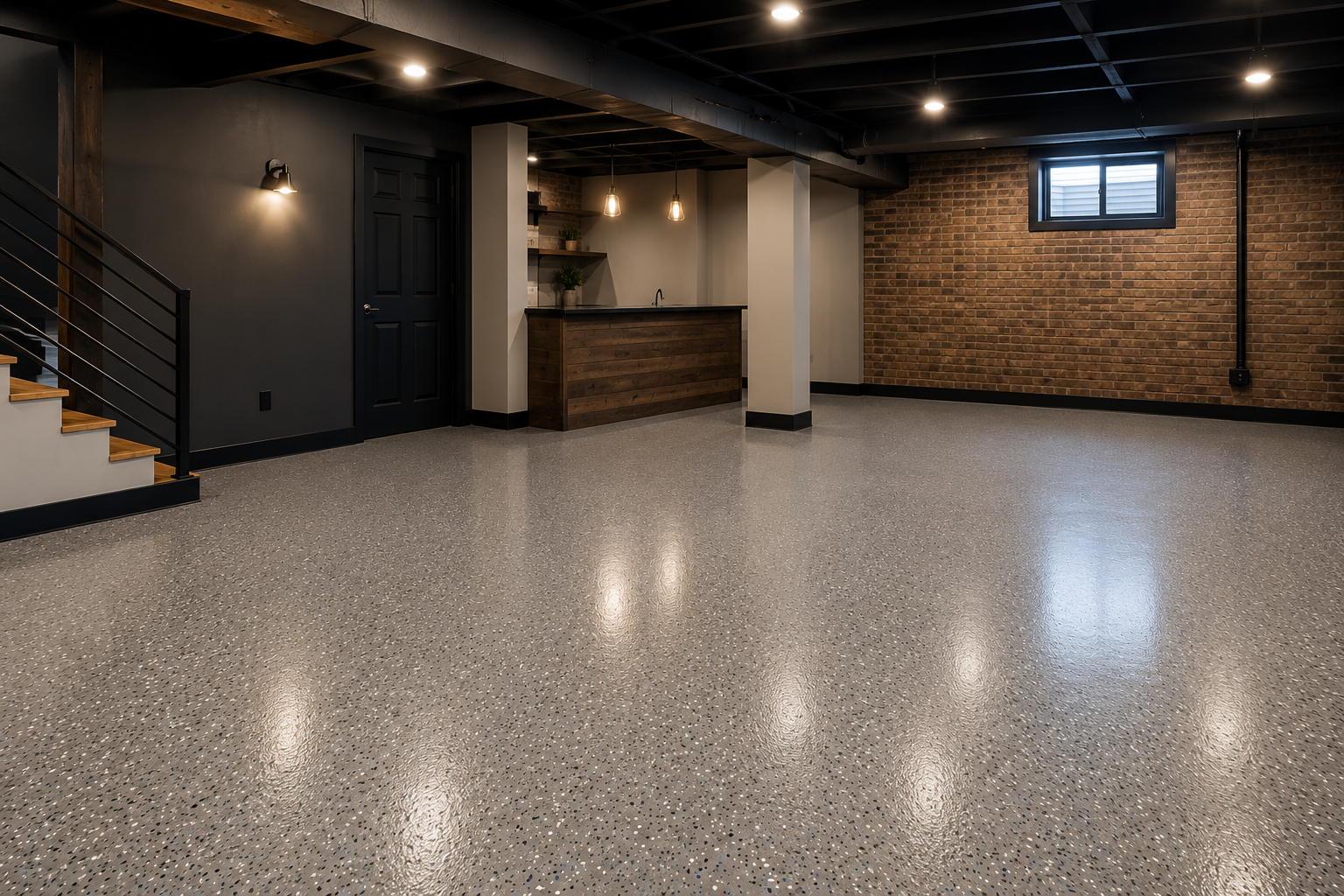
Nobody grows up dreaming about basement floors, and yet here you are, reading about them. Respect. If you own a home in Pennsylvania, your basement has probably been quietly working against you for years. Humid summers, brutal freeze-thaw winters, and moisture sneaking up through the concrete. Leave it alone long enough and that bare concrete starts cracking, dusting up like a chalkboard eraser, staining, and eventually growing mold and mildew you never invited over. A professional basement floor coating fixes all of that and turns a sad, unfinished basement into a room you’re actually okay showing people.
Why Pennsylvania Basements Are So Prone to Floor Damage
Pennsylvania’s climate is not kind to concrete. Here’s why:
- Freeze-thaw cycles: Water gets into tiny pores in the concrete, freezes, expands, and cracks the surface. This happens over and over all winter.
- High humidity: PA summers dump moisture into your basement air. That leads to dampness, efflorescence (that white chalky residue on concrete), and eventually mold.
- Older housing stock: A lot of homes around Philadelphia, Pittsburgh, and the surrounding suburbs have basements decades old, with concrete that was never sealed or finished properly.
- Hydrostatic pressure: Homes on hillsides or with a high water table deal with moisture pushing up from below the slab. Untreated concrete can’t really handle that.
Ignore this long enough and you end up with pitting, spalling, and cracking.
What Is a Basement Floor Coating?
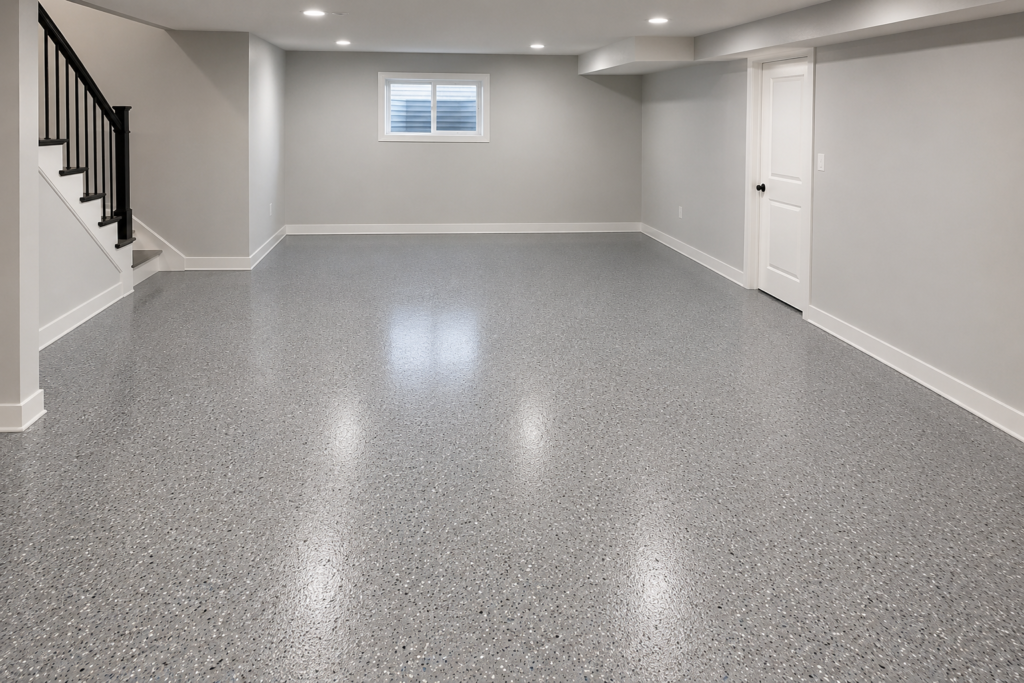
A basement floor coating is a protective layer that goes over your existing concrete slab. Unlike paint, which sits on top and peels off pretty fast, a real floor coating bonds chemically with the concrete and forms a seamless, durable barrier against moisture, wear, and chemical damage.
Not all coatings work the same way for a basement, though.
Epoxy coatings are the popular, budget-friendly option. The downside is they’re sensitive to moisture during installation and can yellow or go brittle over time, which is a real issue in a basement where humidity is basically constant.
Polyurea coatings are built for exactly the conditions Pennsylvania basements deal with. They cure fast, stay flexible so they don’t crack when the slab shifts, and handle the moisture vapor that gives epoxy trouble.
Why Polyurea Is the Smart Choice for PA Basements
For Pennsylvania homeowners specifically, polyurea basement floor coatings have a few real advantages over epoxy:
- Moisture tolerance: Polyurea can be installed even with some residual moisture in the slab, which is common in PA basements.
- Flexibility: It expands and contracts with the concrete, so it’s less likely to crack during freeze-thaw seasons.
- Fast curing: Many polyurea systems cure within hours, not days, so there’s less downtime in your home.
- UV and chemical resistance: It won’t yellow or degrade from household chemicals, road salt tracked in during winter, or minor spills.
- Slip resistance: Textured polyurea finishes give better footing, which matters in a space that can get damp.
If you’re weighing your options, a polyurea basement floor coating is worth a serious look, since it’s built specifically for the conditions Pennsylvania basements face year round.
Benefits Beyond Protection
A coated basement floor changes how you actually use the space, not just how long it lasts.
- Easier cleaning: Spills and dust wipe up in seconds instead of soaking into porous concrete.
- Brighter space: Light-reflective coatings make basements feel less like storage and more like usable square footage.
- Increased home value: A finished, protected basement floor is appealing to future buyers, especially in a state where basement moisture is a common concern.
- Healthier air quality: Sealed concrete resists mold and mildew growth, which can affect air quality throughout the house.
What to Expect From a Professional Installation
A basement floor coating project usually goes like this:
- Assessment and moisture testing: A professional checks the slab’s condition and moisture levels and recommends the right coating system.
- Surface preparation: Usually diamond grinding or shot blasting to open up the concrete’s pores so the coating can bond properly.
- Crack and joint repair: Existing cracks or control joints get filled and repaired before coating.
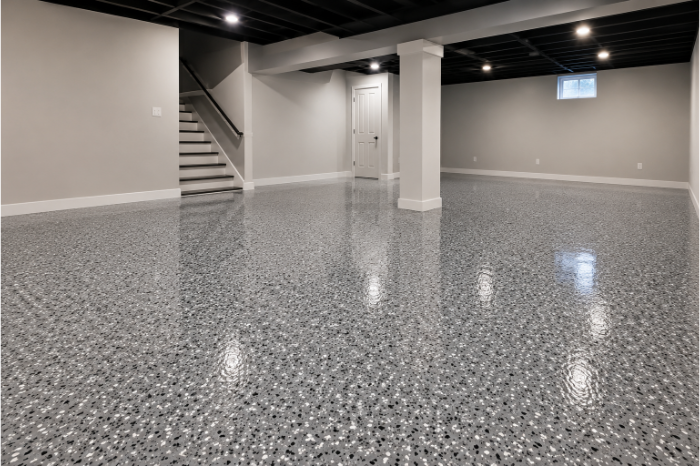
- Application of the coating system: Base coats, color flakes or quartz if you want them, and topcoats go on in sequence.
- Curing: Depending on the system, your floor may be ready for foot traffic within a day.
Skipping proper prep work is the biggest reason DIY jobs and cheap coatings fail. A professional installation makes sure the coating actually bonds to the slab instead of peeling within a year or two.
Choosing a Basement Floor Coating Company in Pennsylvania
When you’re looking at local contractors, check for:
- Experience specifically with basements, not just garages
- Use of moisture-tolerant systems like polyurea
- Clear answers about slab prep and warranty coverage
- Local reviews and photos from finished Pennsylvania basements
A company that understands the state’s climate challenges, freeze-thaw cycles, humidity, and older housing stock, is going to give you a better recommendation than one that treats every basement the same.
Basement Floor Coating Across Pennsylvania
Basement moisture and freeze-thaw damage aren’t limited to one part of the state. Homeowners run into these same issues whether they’re in Philadelphia, Pittsburgh, Allentown, Erie, Reading, Scranton, Bethlehem, Lancaster, Harrisburg, York, Wilkes-Barre, or smaller towns across the Lehigh Valley, the Poconos, and central PA. Older row homes in Philly, hillside properties around Pittsburgh, and historic homes in Lancaster and York all deal with the same basic problem: concrete that was never built to handle Pennsylvania’s weather. A polyurea coating works the same way no matter which part of the state you’re in, since it’s designed around the climate itself, not just one city’s conditions.
A bare, untreated basement floor is one of the more overlooked problems in a Pennsylvania home. Between the humidity, the freeze-thaw stress, and the moisture pushing up from below, regular flooring just doesn’t hold up down there. A polyurea coating handles all of it and gives you a floor that’s tough, easy to maintain, and built for the long run. If your basement floor has seen better days, it’s a good time to get it looked at.